
- /
- Article / What is a Battery Test Chamber? Types, Features, and Industrial Applications
What is a Battery Test Chamber? Types, Features, and Industrial Applications
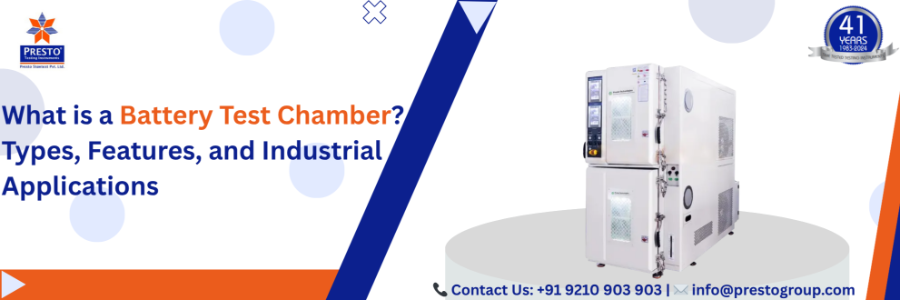
One battery failure can result in devastating destruction, generating massive recalls and undermining consumer confidence. This test is not overcome on the public highway, but in the lab, within a highly technical and controlled environment called a Battery Test Chamber/Equipment. These sophisticated devices are the energy storage industry's behind-the-scenes heroes that drive cells and packs to their very limits so that engineers can assure their performance and safety specifications.
To any energy professional, it is vital to comprehend the intricacies of such chambers for product quality maintenance, market Authoritativeness, and due diligence evidence (Experience, Expertise, and Trustworthiness).
What Does a Battery Test Chamber Measure?
Essentially, a Battery Test Chamber/Equipment is a high-precision device used to mimic actual and stressful environments in order to measure battery performance, life, and safety margin. It evaluates how batteries respond to inputs under controlled conditions such as temperature, humidity, vibration, and most importantly, abuse.
The result from these chambers is used to create a reliable Battery safety and reliability test chamber procedure that ensures the end product complies with regulation standards such as IEC, UL, and UN 38.3.
Primary Functions of Battery Testing:
Performance: Capacity fade measurement, charging efficiency, and power delivery through thousands of cycles.
Endurance: Measuring lifecycle performance in harsh Environmental test chamber for batteries environments (e.g., how well a battery functions during an Arctic winter or a desert heat).
Safety: Intentionally causing failure to learn and minimize risks.
How It Works: Specialized Chambers for Specialized Risks
Not every testing chamber is the same. The need for complex and potentially hazardous testing of high-energy battery packs requires various kinds of specialized equipment.
1. Environmental Chambers (Endurance)
The Environmental test chamber for batteries replicates operating conditions. The chambers are used to carefully control temperature and humidity by the manufacturer, enabling them to perform large charge and discharge cycles on modules, cells, or entire packs with constant monitoring of all the variables. Testing within these chambers confirms the predicted lifespan of the battery and assists in refining the cooling systems integrated into EV battery test chamber packs.
2. Abuse Chambers (Safety)
Safety testing frequently involves destructive techniques to confirm protective features. This is addressed by the Battery abuse test chamber (mechanical, thermal, electrical). These stress chambers not only need to provide the stipulated abuse (such as a short circuit or physical puncture) but, more importantly, contain the resultant fire, explosion, or chemical venting safely.
Some of the abuse tests include:
Mechanical: Nail penetration and crush tests.
Electrical: External short circuit and extreme overcharge.
Impact on Industry: From EVs to Grid Storage
The call for high-testing requirements has grown exponentially, especially for the automotive industry. Each large EV battery test chamber has to replicate on-road driving stresses, such as quick acceleration and rapid charging cycles, all while controlling exact temperatures to extend the life and safety of the car's heart.
This niche need has produced an increase in highly competent equipment suppliers. For example, the image of an experienced Battery test chamber producer in India tends to depend on its capacity to tailor chambers conforming to global standards (such as USABC or Freedom Car) while providing localized after-sales support and competitive pricing.
Case Study: Obtaining Next-Gen Safety Certification
A startup company that was working on a high-density power tool battery encountered an obstacle: the new cell design didn't pass the crush test, causing a small fire, despite the internal safety circuit being active.
The Solution: They collaborated with a renowned Battery test chamber manufacturer in India to obtain a dedicated Battery abuse test chamber (mechanical, thermal, electrical). Through high-speed video and sophisticated thermal imaging within the chamber, their engineers determined that the failure resulted from too rapid internal pressure development during the crush event, overloading the venting mechanism. Through iterative design modifications of the cell packaging from the detailed data of the Thermal runaway test chamber for batterie, they were able to redesign the structure of the vents successfully. This precise process not only gained certification but developed substantial Expertise and Trustworthiness in their safety commitment with the brand.
Different Types of Battery Test Chambers by Presto Group
1. Battery Impact Test Chamber
This chamber tests how batteries respond to mechanical shocks, drops, or impacts. It ensures battery safety and prevents explosion or leakage risks during handling and transportation.
2. Battery Rapid Temperature Test Chamber
Used to evaluate battery performance under sudden temperature fluctuations, this chamber helps identify thermal stability and reliability in extreme environments.
3. Battery Dry Oven
Designed for drying and aging batteries, it maintains precise temperature uniformity. Ideal for removing moisture and enhancing the chemical stability of battery components.
4. Battery Altitude Chamber
Simulates high-altitude and low-pressure environments to assess battery safety in aerospace and transport applications. It ensures batteries perform reliably under reduced air pressure.
5. Walk-In Battery Test Chamber
This large-capacity chamber allows testing of multiple batteries or large battery packs simultaneously under controlled environmental conditions. Perfect for industrial-scale testing.
6. Battery Crush Test Chamber
Evaluates the structural strength of batteries by applying compressive force. It ensures batteries can withstand pressure without leakage, fire, or explosion.
7. 2 Zone Battery Test Chamber
Features two independent temperature zones for testing batteries under varying conditions. Ideal for advanced research and comparative analysis of battery performance.
The Investment in Reliability
The cost of battery failure—expressed in recalls, lawsuits, and reputation damage—is many times larger than the upfront investment in quality assurance equipment. If the Battery testing machine price is considered, intelligent manufacturers do not think of it as a cost centre but rather as a necessary risk avoidance.
Buying a certified Battery safety and reliability test chamber is the only method of assuring regulators, partners, and consumers that your energy product is safe, long-lasting, and future-ready.
Do you want to certify your next-gen battery system under the toughest conditions? Get in touch with an expert today to consult on choosing the best Battery Test Chamber/Equipment for your particular application and regulatory requirements.
Get the Best Battery Test Chamber for Reliable Performance Testing!
Ensure the safety, durability, and efficiency of your batteries with Presto’s advanced Battery Test Chamber — engineered for precise environmental simulation and long-term reliability. Whether you’re testing lithium-ion, nickel-cadmium, or other battery types, our chambers deliver unmatched accuracy and performance.
Looking for the best Battery Test Chamber price?
Our experts will help you choose the perfect model tailored to your testing needs and budget.
Call us now: +91 9210 903 903
Email: info@prestogroup.com
Get a free quote today and experience why leading industries trust Presto for quality and innovation in testing instruments.