- /
- Blog / ASTM D523 and ASTM D2457 Standard for Gloss Meter
ASTM D523 and ASTM D2457 Standard for Gloss Meter
.png)
The ASTM D523 test method explains the measurement of gloss on non-metallic samples for geometries of 20, 60 and 85 degrees. The ASTM D2457 standard test method is used to measure the gloss of solid plastics and plastic films (opaque and transparent both).


There are four separate gloss angles for the different specimens, such as 60° for intermediate gloss films, 20° for high-gloss films, 45° for intermediate and low gloss films, and 75° for plastic siding and soffit.
How is Gloss Measurement done?
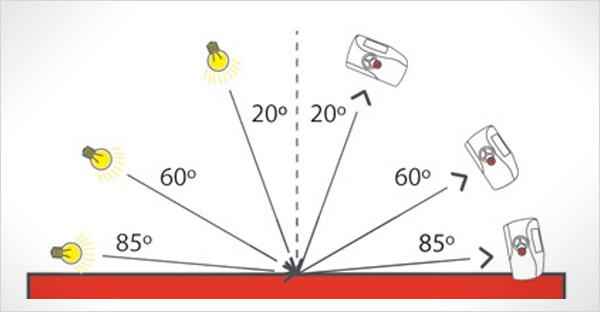
The specular gloss measurement is performed for the light reflected from the material surface. The gloss is the result of the moulding process and can be inherent to the material. The gloss is significant for product and process development as well as for performance testing. The angle of reflection that is 20°, 60°, and 85° must be specified for the gloss measurements. The proper angle, calibration, and inspection according to standard supplied with the gloss meter are important before placing the measuring device on the test sample to take a reading.
Gloss Meter Tri-angle for that perfect Gloss Evaluation
The Gloss Meter Tri-angle is used to perform the gloss measurement of various types of materials such as paint, paper, ceramics, plastics, and metals. The compact and portable instrument measures the geometry 20°, 60° and 85°. The tool has extensive use for measuring the surface quality and shining complying with the international standards of ISO2813, GB/T 9754, besides ASTM D523, ASTM D2457.
Key Features:
• Capacitive touchscreen featured
• Software-based output of test results
• Simultaneous measurement by triple standard angles- 20°, 60°, and 85°
• Aesthetic design with ergonomics structure
• Display multiple sets of data for easy and quick comparison
• USB communication interface
• User-friendly data management allows user to check, delete, export or print record
• Protective cover for the measuring aperture
• Print facility available (through software program)
• Option for export to pdf & word file for all test results
• Statistical model to display deviation, conclusion, diagram area etc. of test records
• Portable with handy battery available for traveling purpose.
Conclusion
Precise gloss measurement according to ASTM D523 and ASTM D2457 is very important for checking how good the surface of plastics, paints, ceramics, and metals looks. Presto’s Gloss Meter Tri-angle is a device that can measure gloss at several angles at once. Because of this, gloss measurement is useful for making products and for testing how well they work.
Get in Touch
If you are searching for a gloss meter that meets ASTM D523 and ASTM D2457 standards, the Presto Stantests Gloss Meter Tri-angle gives gloss readings from multiple angles for many kinds of materials. It provides results. Works well on many surfaces. If you need measurements, this gloss meter is a good choice.
+91 9210 903 903
Reach out today to learn more about the Gloss Meter Tri-angle and its features.
FAQs
Q1. What does the ASTM D2457 standard cover?
This article explains how to measure gloss on plastics and plastic films. It covers both transparent and opaque types, all about gloss.
Q2. Which gloss angles are used for different specimens?
60° is used for intermediate gloss films, 20° for high-gloss films, 45° for intermediate and low gloss films, and 75° for plastic siding and soffit.
Q3. What materials can the Gloss Meter Tri-angle test?
It can measure gloss on paint, paper, ceramics, plastics, and metals.
Q4. What key features does the Gloss Meter Tri-angle offer?
It offers simultaneous measurement at three angles, a capacitive touchscreen, USB connectivity, PDF/Word export, statistical analysis, and portable battery operation.
Recent Blogs
- Industrial Leak Testing: Methods, Technologies, Benefits, and Industry Applications
- Autoclave in Laboratories and Industry: Principle, Procedure, Components, and Applications
- Uses of BST in Packaging, Paper, and Corrugated Box Testing
- Leak Testing Procedures for Packaging Materials in Accordance with ASTM D6653
- Bursting Strength Testing: ASTM, ISO, and TAPPI Standards for Packaging Evaluation