
- /
- Publications / Shoulder prostheses tensile testing
Shoulder prostheses tensile testing
.png)
Shoulder prostheses tensile testing
.png)
Shoulder prostheses tensile testing
Solution
- Software-controlled twin-column test stand.
- Custom-designed fixture to accurately support and align the shoulder joint.
Benefits
- Application-specific setup aligned with anatomical movement and structure.
- Highly repeatable test procedures for reliable comparison.
- Cyclic testing enables detailed evaluation of long-term performance and durability.
- A practical and user-friendly system suited for orthopedic testing, supporting evaluation of bone and tendon fixation around implanted prosthetic components.
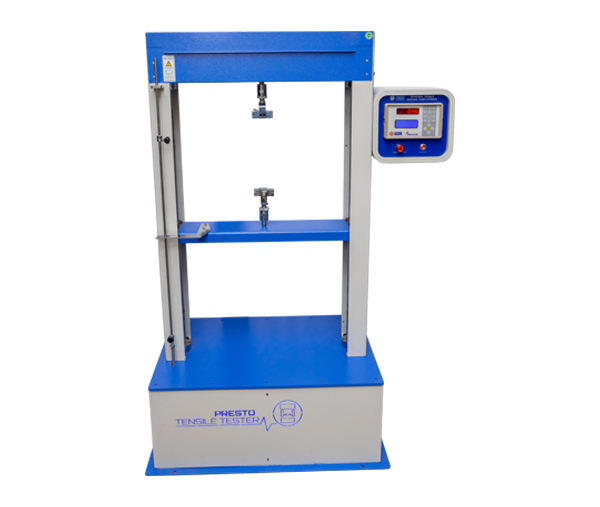
The Presto Stantest twin-column tensile testing system has demonstrated itself to be very useful in the orthopedic field with the study of shoulder prostheses and soft tissue repair applications. The system is used to accurately simulate natural shoulder motion with the application of custom-designed fixtures and software-controlled cyclic testing to assess the amount of fixation of the bones and tendons around the prosthetic components. You can conduct physiological loading, tensile, and durability testing in the controlled setup with repeatable testing and detailed information on the forces that can be analyzed. The user-friendly use and application-specific fixture design make it very suitable for comparing the performance of the prostheses and the long-term stability. The system has facilitated easier and reproducible testing of shoulder reconstruction implants for orthopedic research teams and has aided the improved and more durable development of prosthetic solutions.
Requirement
An orthopedic research team focused on developing advanced shoulder prostheses for reconstruction procedures required a reliable testing solution. These types of prostheses are typically utilized in instances of fractures that occur due to falls, especially among the aged, and injuries brought about by high-impact events or by degenerative disorders like arthritis.
One of the most important factors in the development of prostheses is the fact that the implant should integrate with the surrounding bones and soft tissue. The mechanical forces of the prosthesis, tendons, and bone structure should be similar to the functioning of the shoulder so as to restore mobility and strength.
In order to justify this study, it is necessary to create artificial loading in real life and measure the performance of the prosthesis in the case of repetitive movement. This includes assessing fixation strength, resistance to cyclic loading, and long-term durability under physiological stress conditions.
Solution
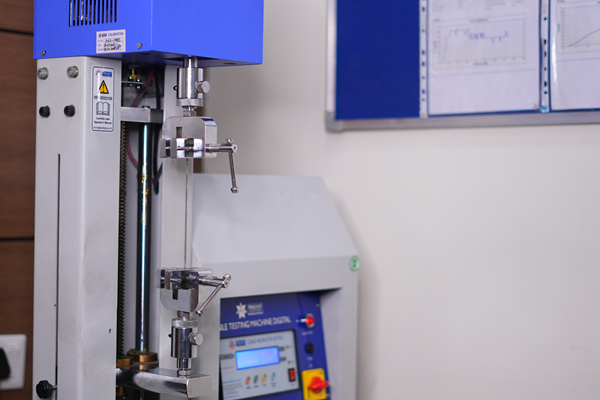
Presto Stantest provides a twin-column, software-controlled force testing system configured for orthopedic applications. The system is used to replicate natural shoulder motion by applying controlled tensile forces along the direction of muscle pull.
During testing, the prosthetic assembly is securely mounted using a custom fixture that maintains correct anatomical orientation. The system applies tension at a constant rate to evaluate the integrity of the repair site. Cyclic testing functionality allows the prosthesis to be repeatedly loaded between defined limits, simulating extended usage conditions.
Test data is captured and managed through integrated software, enabling detailed analysis of force behavior over multiple cycles. This approach provides measurable insight into the comparative strength and performance of different prosthesis designs, supporting informed development decisions.
Test equipment
- MultiTest 10-x twin-column test system (latest equivalent available)
- 2500 N load cell
- Data acquisition and analysis software
- Custom fixtures for accurate positioning of joint specimens
Test standards
.png)

1.png)
.png)
.png)