
- /
- Publications / Wood for Furniture and Flooring: Large-Scale Bend and Peel Testing
Wood for Furniture and Flooring: Large-Scale Bend and Peel Testing
.png)
Large-Scale Bend and Peel Testing
.png)
Wood for Furniture and Flooring: Large-Scale Bend and Peel Testing
Solution
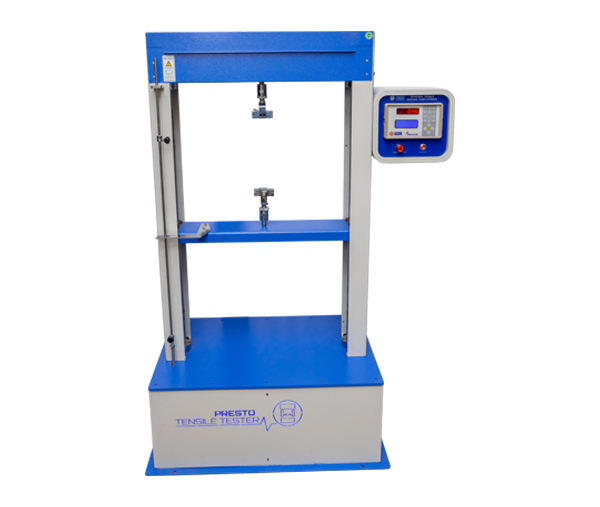
- Software-controlled tensile testing system of high capacity using twin columns.
- Heavy-duty bend fixture for structural evaluation
- Custom-designed roller-guided peel test jig
Benefits
- Automated running of tests according to international standards
- High accuracy and repeatability for both industry and customer-specific requirements
- Automatic calculation of key mechanical properties
- Consistent and customizable reporting formats
Wood-based panels for furniture and flooring purposes have been accurately bend- and peel-tested with the Presto Stantest twin-column testing system. Software-controlled operation combined with heavy-duty bend fixtures and custom peel test jigs, the system can be used to achieve repeatable results of the bending strength, stiffness, and adhesion performance of laminate. The automated testing system automatically calculates mechanical properties as per international standards, including BS EN 310, and generates clear graphical data and easily customized reports. Particle board, veneered board, and laminated boards, which are used for cabinets, shelving systems, and floor products, can be efficiently evaluated in terms of structural quality. The system has made the quality inspection process easier, ensured the consistency of inspection, and helped manufacturers ensure high durability of their products and secure their market share in the domestic and international markets.
Requirement
Wood-based panels, especially particle boards, are fully utilized in furniture and flooring applications because they are cheap and versatile. These boards are engineered by pressing wood chips and resin under pressure and heat to make the backbone of numerous load-bearing structures of modular furniture units.
In the case of large-scale manufacturers, which deal with supplying the world markets, it is vital to ensure that mechanical performance is maintained. The particle boards ought to have the capability of showing adequate bending ability, rigidity, and adhesive ability on the surfaces to meet challenging demands. This applies especially to such goods as kitchen cabinets, shelf systems, and flooring materials, where such factors of reliability and durability are of great importance.
To provide ongoing quality, the manufacturers must possess well-developed testing procedures that could be used to test the internal soundness of the board and the integrity of bonded surface layers, such as laminates or veneers.
Solution
The performance characteristics of wood-based panels are determined by the combination of both methods of bend and peel tests.
Bend Test (EN 310)
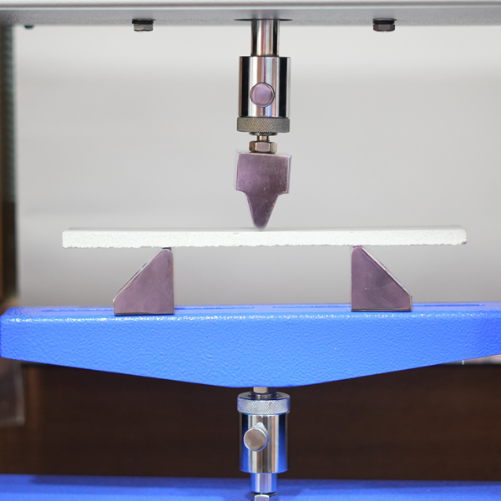
The bending strength and modulus of elasticity are determined using a three-point bend. method as defined in EN 310. The test specimen is supported on cylindrical rollers across a fixed span, while a controlled load is applied at the midpoint until deformation or failure occurs.
When the load is measured, it is important to have a heavy-duty bend with a fixed span to ensure that the load is evenly distributed. The key parameters, like flexural strength and stiffness, are automatically calculated by the testing software, which gives a clear indication of the ability of the board to carry the load.
Peel Test (IKEA Standard)
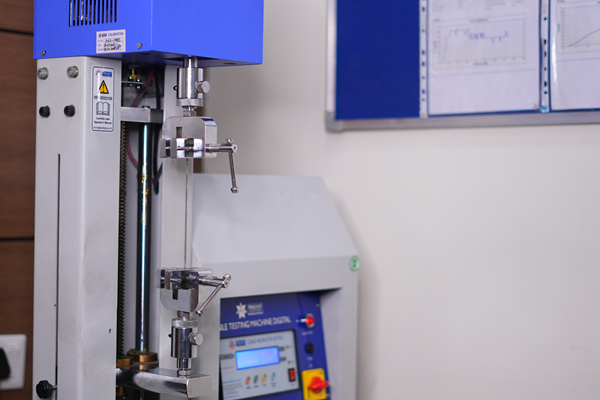
Peel tests on melamine-faced or veneered boards are used to test the adhesion of surface laminates. A specialized peel setup enables the bonded layer to be detached at a fixed angle, usually 90 degrees, whereby the test conditions are always the same.
The peel force variations are captured during the test by the software, which determines weak or strong peel adhesion areas. The resultant data is applied in the determination of average peel strength, whereby the bonding process should be of the right performance as mandated.
Presto Stantest Testing Approach
Presto Stantest provides integrated testing solutions for wood and engineered panel evaluation, combining precision hardware with advanced software control. The twin-column test platform has been designed in such a way that it provides stable and controlled load placement, which is appropriate in both the bending and peel tests.
The system accommodates various fixtures, all based on test standards that are specific, allowing flexibility to the various applications. The testing process is automatized through data acquisition and analysis, and the graphical outputs are clear to give clear insight on material behavior.
Custom reporting is provided, enabling manufacturers to produce standard test reports that are consistent with internal quality standards and international compliance benchmarks.
Test Equipment
- Tensile and compression testing machine in twin columns
- Load cells of high precision (to 10 kN and 2.5 kN capacity)
- Bend fixture with a defined span and roller supports
- Custom peel test jig
Applicable Test Standard
BS EN 310 – Determination of modulus of elasticity in bending and bending strength of wood-based panels
Test standards

1.png)
.png)
.png)