
- /
- Article / Accurate Wall Thickness Measurement with Magna Mike
Accurate Wall Thickness Measurement with Magna Mike
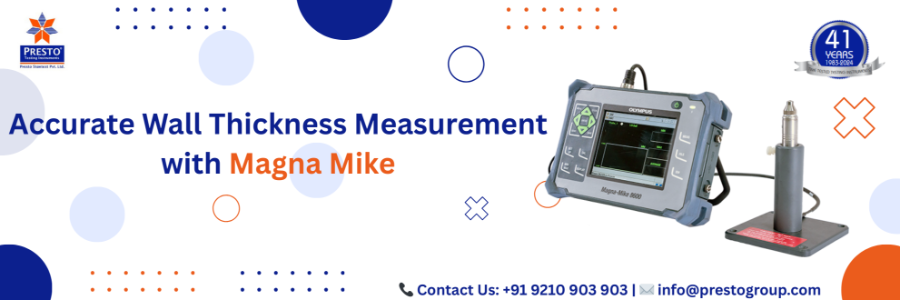
When it comes to fields like engineering, construction or manufacturing, measuring accurate wall thickness is highly required. What would happen if the wall were slightly thicker or slimmer?
Well, many occurrences can take place. But most importantly, it can affect the safety, durability, and performance. If the wall is slightly thicker than required, it can lead to higher material usage, unnecessary weight, and increased production costs. On the contrary, a thinner wall may not withstand the intended pressure, load, or stress, leading to cracks, leaks, or even catastrophic failure. In short, in both cases, it's you who will bear the whole loss. That's why industries like oil & gas, construction, aerospace, and even bottle manufacturing take these measurements very seriously. And how do they do that? Nope.
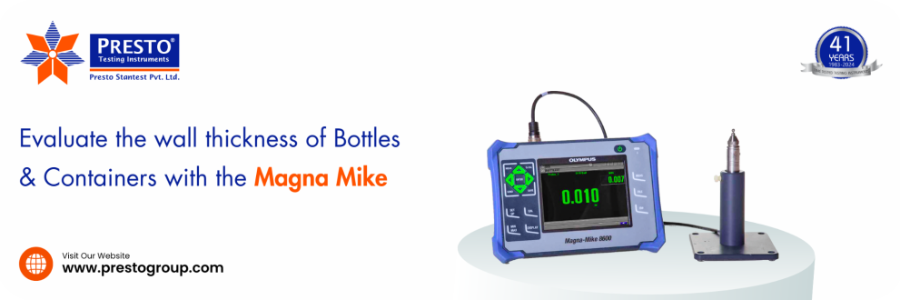
They don't cut or damage the product, rather use Magna Mike, which uses magnetic principles to measure thickness quickly and precisely, making it a trusted tool in quality control.
Role of a Wall Thickness Gauge in Quality Control
In industries where precision is the key to success, equipment like a wall thickness gauge acts as the guardian angel. It checks the thickness of the wall of a material without cutting it. Widely used in industries like engineering, construction, packaging, plastics, oil & gas, and automotive, the wall thickness gauge checks the strength and uniformity of products like pipes, bottles, tanks, and metal or plastic components.
Magnetic Thickness Testing in Production
Don’t think too much. Just flow with the terms: Magna Mike. Magna stands for magnetic force, and Mike is the shortened form of micrometre, which traditionally means a precise measuring device. So this instrument works on the principle of magnetic thickness testing.
In fact, not only this, tools like magnetic float level indicator, magnetic stud finders a.k.a. wall scanners, magnetic proximity switches, and float-type fuel gauges in vehicles also work on the same principle.
Magnetic thickness testing is especially helpful for containers with complex shapes where other instruments may not deliver consistent readings.
Measuring Bottle Wall Thickness for Safety
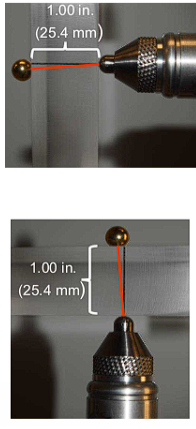
Accurate measurement of bottle wall thickness is vital in industries like beverages, medicine, and cosmetics. If a bottle wall is too thin, it may fail under pressure. If it is too thick, raw material costs rise unnecessarily. This instrument provides reliable readings that help manufacturers strike the right balance between durability and cost. This balance supports both safety and efficiency in large-scale production.
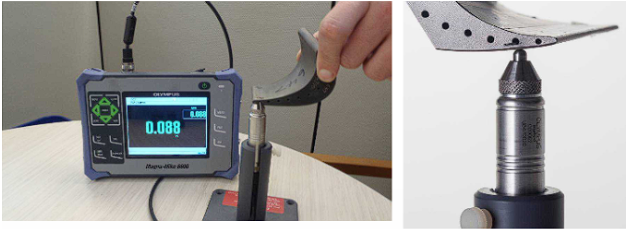
For PET bottles, the correct measurement of bottle wall thickness is quite important because it directly affects their strength, durability, safety, and cost-efficiency. PET bottles are widely used for beverages, oils, medicines, and other consumer goods, so even small variations in thickness can make a big difference.
If a PET bottle wall is too thin, it cannot handle the internal pressure, resulting in the bottle bursting. If it’s too thick wall, it increases material usage unnecessarily. PET resin is costly, and when millions of bottles are produced, even a slight excess in thickness can result in huge financial loss. While to measure the bottle burst scenario, the bottle burst tester is available from Presto, it’s necessary to measure the wall thickness of the bottle in both cases.
Benefits of Non-Destructive Testing
When it comes to NDT or non destructive testing, Magna Mike is the perfect example. It neither slices the PET bottles nor damages them. Rather just by using a magnetic probe and tiny steel ball, it measures the wall thickness of bottles, containers, and non-ferrous materials. These are some common methods of non destructive testing:
- Ultrasonic testing
- Magnetic particle testing
- Radiographic testing
- Visual testing
- Liquid penetrant testing
- Magnetic thickness gauge
Ultrasonic vs Magnetic Methods
When it comes to non destructive testing, both UT and magnetic methods are the best, depending on the materials. While UT uses high-frequency sound waves that travel through material, the magnetic method uses magnetic attraction. In the case of the ultrasonic method, the time taken is used to calculate the thickness, while in the latter, it's about the distance between the magnet and the ball, which is placed inside or behind the material.
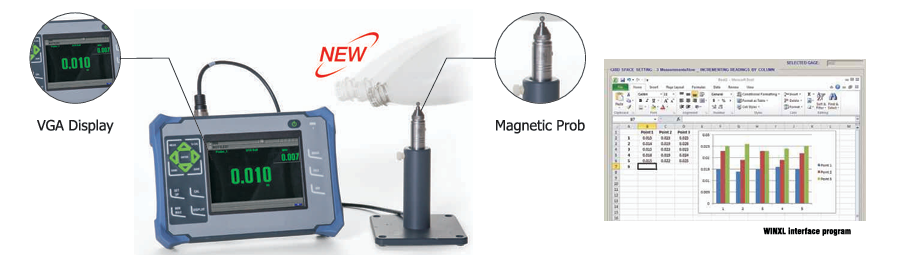
When it comes to the point of ultrasonic vs magnetic methods, just learn that the UT is great for metals, plastics, composites, and materials where sound waves can pass through, whereas the magnetic method is the perfect one for non-ferrous materials such as plastic bottles, containers, and non-metallic packaging.
However, talking about the ultrasonic vs. magnetic methods, you should know the limitations of both. The ultrasonic method requires good surface contact, like a gel-type couplant, while the magnetic method, although does not require any gel-type couplant, needs access to place the small target ball inside or behind the material. And it's no way suitable for very thick or magnetic materials. To the contrary, the UT method is less effective on thin, flexible, or irregularly shaped products like PET bottles.
PET Container Test in Packaging
The PET container test is a routine step in packaging plants. PET is popular because it is light, strong, and recyclable, but its quality depends a lot on having the right wall thickness. By checking this, the manufacturers can make sure their produced bottles can handle sealing, climates, not average situations, transport, and other everyday usages without issues like leaks, dents, or cracks.
Applications in Industrial Metrology
In industrial metrology, the magnetic wall thickness gauge has a broad role. From thin plastic films to thick automotive parts, it supports precision measurement and monitoring of material thickness. Several industries use it to meet strict standards around the globe, lower errors and perfectly optimise the usage of raw materials. This makes it a valuable part of industrial metrology.
Precision Measurement for Reliable Output
While guessing has a significant part to play in the modern world, when it comes to manufacturing, we don't rely on this. That's best suitable for the corporate homework. But in production, reliable precision measurement has a more significant role to play.
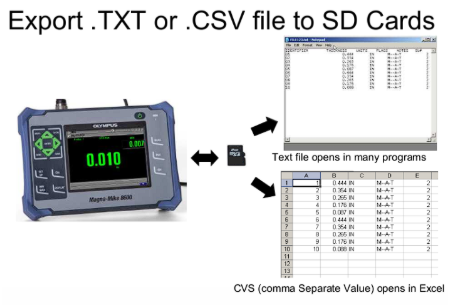
Even small variations in thickness disrupt the performance of the containers, bottles and pipes in different circumstances. However, by using this gauge from Presto Group, you can rely on the precision measurement to reduce recalls and keep the operations smooth.
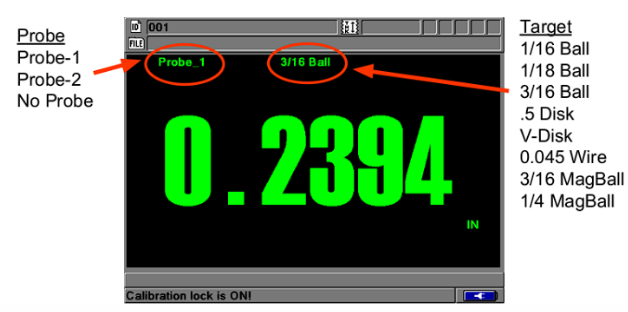
Upon finishing the test, you can export the report either in .txt or .csv files to microSD cards.
Common Queries on Magna Mike Thickness Gauge
Q1: Can Magna Mike test unusual bottle shapes?
Ans: Yes, it works perfectly for both standard and irregular containers.
Q2: Why is this method preferred for PET bottle testing?
Ans: It gives quick and accurate readings without damaging the bottles, making it practical for high-volume production.
Q3: How Much Does This Magna Mike Cost?
Ans: In India, the Magnamike, depending on its features, costs between Rs 89,000 and Rs 240,647.
Looking for the best Magna Mike Thickness Gauge? Contact us today at +91 9210 903 903 or email info@prestogroup.com. Get expert guidance, competitive pricing, and reliable support for all your testing needs. Act now—request your quote!