
- /
- Article / How ASTM D256 Izod Impact Testing Enhances Material Reliability in Oil & Gas
How ASTM D256 Izod Impact Testing Enhances Material Reliability in Oil & Gas
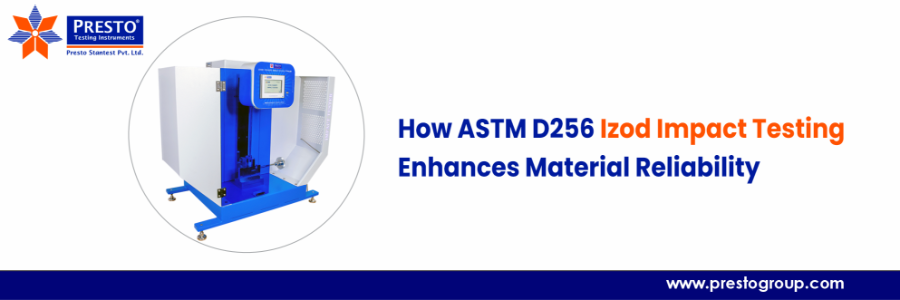
In the unique settings of the crude oil and natural gas industry - from the tremendous pressure encountered during deep-sea drilling to endure chemical-resistance in process plants local corrosion- operations are undertaken at the maximum of materials' capability and, nevertheless, are secure. Material failure can have severe effects: environmental harm, decreased output, and direct financial loss can all stem from the failure of a material. This is why assurance of reliability is critical. Standards tests (sample G65, or ASTM D256 Izod impact testing), can provide industry assurance of safe and robust equipment and structures for longevity.
What is Izod Impact Testing?
Izod impact testing is, in essence, a method of determining the impact strength or toughness of materials. It measures the energy absorbed by a notched specimen when struck by a swinging pendulum. This test yields a quantitative value of the material's resistance to fracture under high-speed loading conditions. In this respect, it becomes especially important for materials that are subjected to sudden impacts and stresses-common events in the unforgiving oil and gas industry. Izod impact tests deliver proof of a variety of materials, from plastics and composites to even a few types of metals, providing invaluable data to engineers on how these materials will act out in the field.
Who benefits from Izod impact testing in oil & gas?
In fact, almost all stakeholders involved in the oil and gas industry take advantage of the results obtained from robust material testing, and Izod impact test is for them. Manufacturers of pipes, valves, seals, and protective coatings confirm the quality and performance of their products using this test. With this data, engineers will find appropriate materials for a particular application in order to make sure the components can tolerate extreme conditions during operation. Drilling rigs, refineries, and pipeline service companies also use these tests to mitigate risks associated with mechanical failures, facilitating better personnel safety and preventing harm to the environment. Along with using these standards to enhance compliance and best practices in the industry, in fact, regulators often require compliance with standards.
What is the functioning of an Izod impact testing machine?
The Izod impact testing machine is essentially a pendulum weight in a vertical arc swinging into the specimen that is held in a vertical orientation in a vise. The specimen must be prepared in a standard manner with a notch to provide consistent stress concentration and encourage fracture that is brittle in nature. After the pendulum hits the specimen, it breaks the specimen, and then the amount of energy that was absorbed by the material is determined by the height that the pendulum swings after breaking the specimen. Using an Izod impact test formula based on the height the pendulum swung before and after hitting the specimen, along with the mass and recording the dimensions of the specimen, will provide the exact impact strength. Many of today's advanced IZOD/CHARPY Impact Testers will include high-precision sensors and software that will provide very accurate and repeatable results, while further easing the actual test and data analysis process.
Izod and Charpy test difference
Although both Izod and Charpy tests are considered impact tests, the difference between the Izod and Charpy tests is significant. For the Izod test, the impact sample is clamped in a vertical position and the pendulum strikes the notched side. In a Charpy test, the sample is supported horizontally on either end, and the pendulum strikes the opposite side of the sample. The difference in sample orientation and impact location creates different stress distributions along the sample, resulting in different fracture characteristics. Both of these tests yield valuable insight into toughness; however, the choice between both tests often depends upon the material under consideration, application, and relevant industry standards. For some applications related to oil and gas, particularly dealing with highly anisotropic materials, an understanding of both test results can be useful. Material Reliability Improved by Knowledgeable Decisions ASTM D256 Izod impact testing is a process that provides extremely valuable data to improve the reliability of materials.
The impact resistance of a material will guide the engineer in making appropriate design and selecting decisions. For example, if an area of the application would be subjected to sudden impacts from dropping tools or debris, a material with a high Izod impact strength could be useful. The testing can also provide insight into the behaviour of materials during dynamic loads, as well as provide assurances that components would not fail from a random and unexpected load. Ultimately, this Izod impact testing helps contribute to safer operation with less expensive downtime, extending the service life of critical infrastructure in the harsh environment of the oil and gas industry. Impact Testing: The Future As the oil and gas industry extends into more difficult environments with the use of new materials, the importance of sophisticated material testing will only continue to rise.
Innovations in IZOD/CHARPY Impact Testers have been directed toward completely automatic and very accurate measurements that are able to handle larger ranges of materials and environmental conditions. The inclusion of artificial intelligence and machine learning could enhance predictive capabilities even further, allowing for even greater precision in material selection and even more accurate reliability predictions. However, the continual rigor of standard testing, such as ASTM D256 Izod impact testing, will continue to be the foundation for long-term success and safety in this important global industry.
Looking for reliable, high-precision material testing solutions? Presto delivers trusted instruments that ensure accuracy, durability, and compliance across industries. Connect with our experts today for guidance and customized support. Call +91 9210 903 903 or email info@prestogroup.com to get the perfect testing solution for your needs.