
- /
- Blog / Digital BS Testing Machines Features, Benefits, and Advantages
Digital BS Testing Machines Features, Benefits, and Advantages
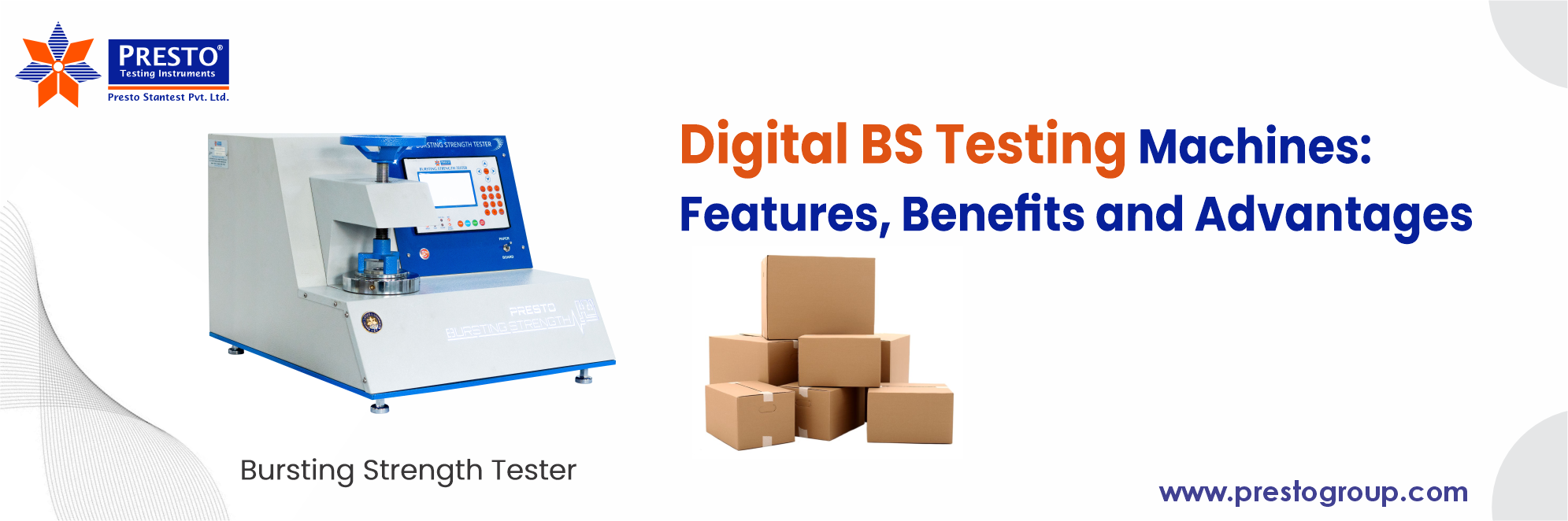
Digital BS testing machines are widely used by manufacturing industries mainly involved in packaging and paper to check how much pressure a sheet or board can handle before it bursts. In the process of testing, the machine pushes pressure into a rubber diaphragm and product placed in between until the sample breaks, and it records the exact value. This helps manufacturers to record the weight packaging can handle to avoid weak cartons, torn labels, and damaged shipments.
The same testing is done faster by a modern bursting strength tester giving more consistency than older dial-type models. Manufacturers prefer digital systems as readings can be easily stored, shared, and compared across batches.
What Is A Digital BS Testing Machine?
A digital BS testing machine, called as a digital bursting strength tester, measures bursting strength by applying hydraulic pressure to a clamped specimen. The moment the material ruptures, the system captures peak pressure automatically and shows it on the display.
This method is commonly used for paper, corrugated board, liners, and certain textile or nonwoven samples, depending on the clamp and test range. For packaging labs, it works like a quick health check that tells whether the material is strong enough for handling, stacking, and transport.
Key Features of Digital BS Machines
Features decide whether the machine gives stable numbers every day or keeps drifting with small errors. In real factories, burst testing is repeated many times, so even a small inconsistency can create confusion between shifts.
Digital pressure sensing and accuracy
Digital sensors improve repeatability because they remove guesswork from pointer readings. A good packaging strength tester typically includes calibrated pressure transducers and stable hydraulics so results stay consistent over long runs.
Strong clamping system
Clamping affects results more than many people expect. If a sample slips, it can fail early and show a low value. Reliable machines use uniform clamping pressure, proper rubber gasket support, and consistent specimen holding to reduce variation in the paper bursting strength test.
Peak hold, auto stop, and overload safety
Peak hold locks the highest value right at burst, so operators do not miss it. Auto stop prevents continued pressurizing after rupture, and overload protection helps avoid diaphragm or sensor damage, especially when testing thick boards using a box bursting strength tester.
Data storage, reporting, and connectivity
Many labs want digital logs for audits. A machine with internal memory, USB or PC software, and optional Choice Connect style reporting makes it easier to trace batch performance and share results with procurement or production teams.
Multi standard test support
Industries often follow specific methods for specific industries. For example textile and fabric industries prefer burst tests, the ASTM D3786 bursting test as a common reference. Whereas paper and packaging, labs follow ISO or TAPPI methods depending on customer requirements. The key point is that the machine should match the method, clamp size, diaphragm type, and pressure range required by the standard.
Benefits In Day To Day Production
Digital machines help factories reduce rejection and improve consistency. When bursting strength is tracked across lots, quality teams can catch issues early, like weak pulp mix, incorrect moisture, poor corrugation bonding, or over-recycled fiber content.
They also save time. Operators can run tests quickly, store results automatically, and avoid handwritten logs. This process reduces disputes between supplier and buyer if the material meets the agreed strength range.
Advantages Over Older Analog Models
A digital unit mainly wins on clarity and control. It shows values clearly, stores peak results, and supports automated reporting, which helps when multiple shifts use the same machine. Its ease of using makes training easier, as new operators can follow on-screen prompts rather than learning how to read a dial precisely.
Digital systems often allow calibration reminders, password control, and setpoint limits. These features are useful in audited environments where test traceability and controlled documentation matter.
How Buyers Choose The Right Model
Technical needs, compliance requirements, and long-term operating cost helps in choosing the right modal. Buyers also consider how often they will run the test, because a high volume lab needs more durability and faster workflows. It helps to shortlist requirements first and then match them to machine specifications. Once the selection logic is clear, purchase decisions become more objective and less based on brand name alone.
Match the material type and range
Thin paper needs a different range than heavy corrugated board. Selecting the correct pressure range avoids low resolution readings and prevents overload. For corrugated cartons, a dedicated box bursting strength tester configuration often makes sense because it supports higher strength samples.
Check compliance requirements
If the lab must run ASTM D3786 bursting test or similar methods, the buyer should confirm clamp size, diaphragm type, and test speed requirements. Standards are not just names, they define important setup details.
Consider service and spares
Long term use depends on diaphragm quality, gasket life, hydraulic stability, and sensor support. Buyers often shortlist a dependable bursting strength tester manufacturer with local service response and clear calibration support.
Budget and total cost of Machine
People generally focus only on bursting strength tester price, but ownership cost includes calibration, diaphragm replacement, downtime risk, and operator time. A slightly higher priced machine may cost less over a year if it stays stable and easy to maintain.
Common Use Cases In Packaging And Paper
Digital systems are used by paper mills to verify liner and medium strength before corrugation. They are also used by carton converters to validate finished boards and ensure shipping boxes meet customer requirements. In printing and labeling, burst testing helps confirm that papers can survive handling without tearing during processing.
For suppliers, consistent results from a reliable packaging strength tester can strengthen customer trust. For buyers, it provides a quick incoming inspection tool to accept or reject lots before they enter production.
Conclusion
A digital BS testing machine is a practical quality tool that measures how much pressure a material can take before it fails. A well selected bursting strength tester improves repeatability, speeds up testing, and supports better documentation. When features like strong clamping, peak hold, data logging, and standards readiness are in place, it becomes easier to control material quality and reduce packaging failures. Choosing the right range, confirming method compatibility, and buying from a reliable support network typically delivers the best long term value.
Contact Presto Group Today!
Now eliminate packaging flaws even before they result in expensive repairs. Pick from our range of bursting strength testers to keep tabs on material strength and safeguard products without compromising on quality.
Call us: +91 9210903903
Email: info@prestogroup.com
Visit: www.prestogroup.com
Recent Blogs
- Why ASTM D642 Standard Matters in Box Compression Testing
- Flexible Packaging & Pouch Testing Instruments Seal Strength, Barrier & Durability Testing
- Testing Instruments & Lab Equipment Complete Guide to Industrial and Packaging Testing Machines
- Paper GSM Testing Machine Measuring Paper Weight for Packaging Quality Control
- Compression Testing Machine Operating Method & Packaging Strength Testing Applications