
- /
- Blog / Significance of Quality of salt used in Salt Spray Chamber
Significance of Quality of salt used in Salt Spray Chamber
Gaurav Malhotra
04-1-2023
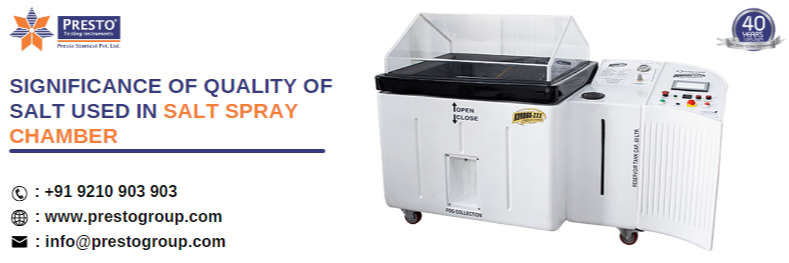
Salt Spray Chamber is highly reliable lab testing equipment that is used to simulate the corrosive environment of marine and other atmospheric conditions. It is important testing equipment for evaluating the corrosion resistance properties of materials and the quality of finishes.
What is a Salt Spray Chamber?
The Importance of the Quality of Salt Used in a Salt Spray Chamber
The quality of salt used in a salt spray chamber is extremely important. Salt spray chambers are designed to test the corrosion resistance of materials, so it is critical that the salt used in these chambers is of the highest quality. Otherwise, the results of the tests will be inaccurate and could lead to faulty conclusions about the material being tested.
There are a few different ways to measure the quality of salt used in salt spray chambers.
- One way is to use a chloride ion meter. This device measures the number of chloride ions in a sample of salt solution. The higher the concentration of chloride ions, the more corrosive the salt solution will be.
- Another way to measure the quality of salt is by using a conductivity meter. This device measures how well electricity flows through a solution. The more conductive a solution is, the more corrosive it will be.
Different Types of Salts Used in Salt Spray Chambers
Different types of salts are used in salt spray chambers to provide the necessary environment for testing. The type of salt used will depend on the specific requirements of the test being conducted.
- The most common type of salt used is sodium chloride, which is readily available and provides a good balance of corrosion resistance and cost.
- Other types of salt that can be used include calcium chloride, magnesium chloride, and zinc chloride.
- Each type of salt has its own advantages and disadvantages that should be considered when choosing the best one for your needs. Sodium chloride is the most economical choice and provides a good all-around performance, but it is not as effective at resisting corrosion as some of the other options.
- Calcium Chloride is more expensive than sodium chloride but provides better corrosion resistance. It is also more hygroscopic, meaning it absorbs moisture from the air, which can impact the results of your tests.
- Magnesium Chloride is similar to calcium chloride in terms of price and performance, but it is less hygroscopic. This makes it a good choice for tests that require a dry environment.
- Zinc Chloride is the most expensive type of salt but provides the best corrosion resistance. It is also non-hygroscopic, making it ideal for tests that need to be conducted in a humid environment.
Techniques to Assure the Quality of Salt Used in a Salt Spray Chamber
There are a few key techniques that can be used to assure the quality of salt used in a salt spray chamber. These include:
-Using high-quality, food-grade salt: This type of salt is typically more expensive than regular table salt, but it is worth the investment to ensure the quality of your salt spray tests.
-Storing the salt properly: Salt should be stored in a dry, cool place out of direct sunlight.
Conclusion
Recent Blogs
- How to Use a Portable Spectrocolorimeter for Color Testing
- International Standards for Vacuum Integrity Testing of Packaging and Containers
- How to Choose the Best Top Load Tester for Plastic Containers in 2026
- Why Angular Drop Capability Matters in Drop Testing Machines
- How Box Compression Testing Helps E-Commerce Packaging Prevent Transit Damage