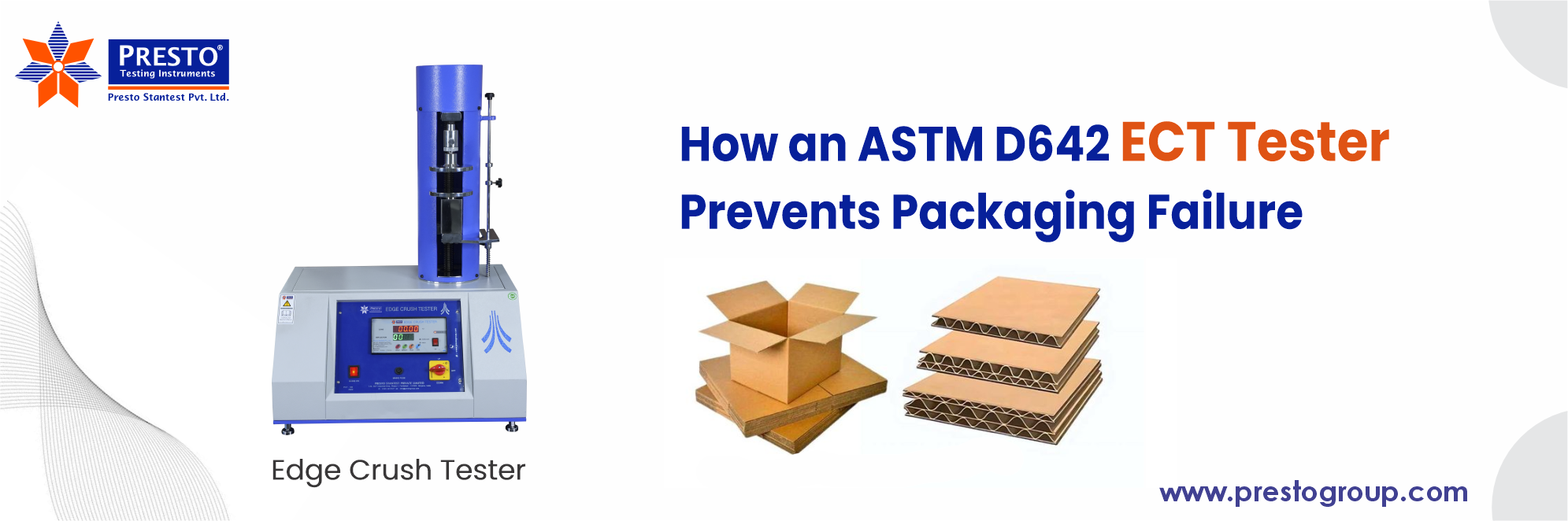
Sometimes a box looks well packed from the outside but fails due to handle stacking, rough handling, or long storage that shows packaging failure. Box edges may buckle, corners may crush, or boxes may collapse under compression during transport, and this is costly. Reliable testing helps companies avoid this before shipping begins. An ASTM D642 ECT tester checks whether packaging can withstand compressive forces and edge-related weakness.
Box failure is rarely caused by a single issue. This mainly results from material weakness, poor storage conditions, and handling stress. Testing confirms what the packaging can handle.Often, these fail because edges are the first to be hit when stacking and moving. Small weaknesses become obvious when boxes are kept in humid areas or stacked too high. An edge crush testing machine is useful here for checking edge resistance and identifying weak corrugated boards.
Standard methods reduce guesswork and keep results comparable across suppliers. Using ECT testing equipment and following standard procedures improves decision-making on board grade, flute type, and box dimensions. It also supports clear pass or fail criteria during incoming inspection. This reduces the chance that weak packaging reaches production lines.
An ASTM D642 ECT tester is used to evaluate packaging performance under compressive loads in a controlled way. In simple terms, it helps predict whether boxes can survive stacking, transport pressure, and warehouse storage. It is especially valuable for teams that ship high volumes because small improvements in box strength can reduce large losses.
It connects test results to real packaging decisions. When a company changes board suppliers, reduces material to save cost, or changes box size, testing validates whether the new packaging still performs safely.
Compression strength and edge strength are closely related in corrugated packaging. A packaging compression tester helps evaluate how a full box behaves when weight is applied from the top. In many cases, poor edge resistance causes early collapse even if the box panels look strong. A corrugated box strength tester supports quality control by showing whether the corrugated structure meets minimum performance levels.
ASTM D642 is widely used for compression resistance of shipping containers. When labs and factories follow the same standard, results are consistent and easier to defend during audits. An ASTM D642 ECT tester helps teams document packaging performance with clear records and repeatable methods.
Testing is not only meant for labs. It also helps manufacturing companies in daily decisions in purchasing, production, and logistics. When results are tracked, companies can see patterns across suppliers and seasons. This is useful because humidity and storage conditions can change the way corrugated board performs.
A well-planned testing program usually combines different tools. A box testing machine supports repeat checks so quality teams can control variation across batches and reduce disputes with suppliers.
Test results should lead to action, not just reports. If edge strength is low, teams may upgrade flute type, adjust board grade, or improve storage controls. If compression results are inconsistent, teams may review glue quality or box-forming settings.
The goal is simple:
Using ECT testing equipment consistently helps teams detect gradual performance drops.This is how prevention becomes routine rather than reactive.
Selecting the right testing system totally depends on how many tests need to be performed, what standards must be met, and how results need to be recorded. Companies should confirm whether the equipment supports the required force range, platen size, and reporting functions. A reliable supplier always helps with installation, calibration, and training.
When companies compare options, the ECT tester price is a common question. Prices of equipment vary based on capacity, automation level, software features, and brand support. A lower upfront cost usually becomes expensive if calibration, accuracy, or service is weak.
A good ECT tester manufacturer always provides clear specifications, certification support, and service availability. They should also explain maintenance needs and how often calibration is required. Specifications matter because testing results influence packaging approvals and supplier acceptance.
Packaging failure often comes from weak edges, poor compression resistance, or uncontrolled variation in corrugated material. Routine testing reduces these risks by showing real performance before boxes reach shipping. An ASTM D642 ECT tester supports consistent decisions on board grade, supplier quality, and box design.
If your business ships products regularly and wants to reduce damage complaints, start using an ASTM D642 ECT tester as part of routine quality checks. Get in touch with our experts today.
Call us: +91 9210903903
Email: info@prestogroup.com
Visit: www.prestogroup.com