
- /
- Blog / What Is a Compression Tester? A Complete Guide for Packaging & Materials Testing
What Is a Compression Tester? A Complete Guide for Packaging & Materials Testing
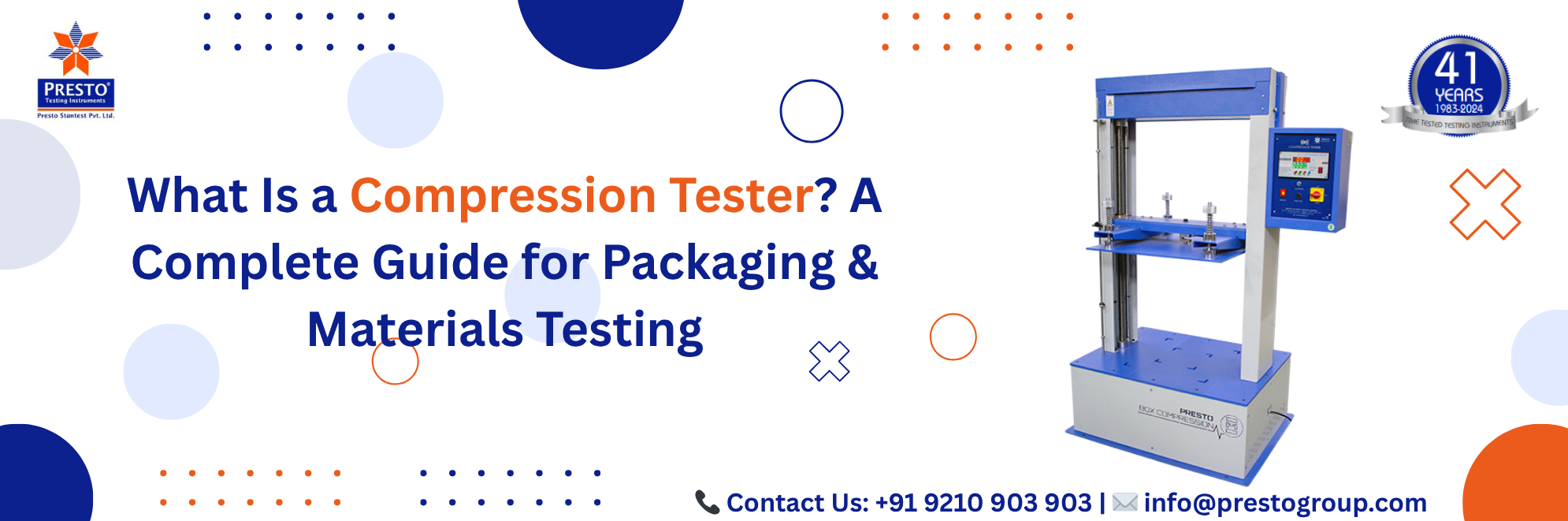
In the packaging industry, checking the strength and durability of materials is very important. A Compression Tester is a key machine used for this purpose. It helps measure how much pressure or weight a corrugated box, carton, or other packaging material can handle without getting crushed or damaged.
During stacking, shipping, or storage, boxes often face a lot of pressure. This machine tests whether the box can withstand that pressure safely.
If you’re a packaging engineer, manufacturer, or quality control professional, using a Compression Tester can help you improve packaging quality, prevent product damage, and increase customer satisfaction.
What is a Compression Tester?
A Compression Tester, also known as a Box Compression Tester (BCT Machine), is a lab testing instrument used to measure the compressive strength of boxes and packaging materials. It determines how much load a packaging box can bear without collapsing. This test is especially important for corrugated box testing, as it simulates real-world conditions like stacking pressure during storage and shipping.
Why is Box Compression Testing Important?
Every box used for packaging goes through pressure, especially when kept in storage or stacked during transport. Weak boxes can get crushed, break items inside, and cause more returns. A Box Strength Testing Machine helps makers check and be sure that their boxes can hold up under stacking weight.
This is essential for industries like:
- E-commerce
- FMCG (Fast-Moving Consumer Goods)
- Pharmaceuticals
- Food & Beverage
- Electronics
Testing packaging with a Carton Compression Test guarantees product safety and structural integrity.
Key Features of a Compression Testing Machine
Here are some of the major features commonly found in high-quality Compression Testers:-
- Digital Display or Touchscreen Control Panel
- Microprocessor-based controls for accurate testing
- Adjustable compression plates
- Peak load hold facility
- Sturdy and rigid structure to handle heavy-duty testing
- Data storage & report generation capabilities
Working Principle of a Compression Tester
A Compression Tester machine operates by placing the test sample (usually a corrugated box or carton) between two rigid plates. The upper plate applies a downward force at a constant rate until the box fails (crushes or deforms). The maximum force applied before failure is recorded as the compression strength.
This test evaluates:
- Load-bearing capacity
- Structural strength
- Deformation behavior under pressure
Technical Specifications (Example)
| Parameter | Details |
| Test Load Capacity | Up to 5000 kgf (customizable) |
| Least Count | 1 kgf |
| Platen Size | 1000 x 1000 mm (custom options) |
| Accuracy | ±1% of reading |
| Drive Type | Motorized (AC drive control) |
| Display Type | Digital / Touchscreen |
| Safety Features | Overload & over-travel protection |
Benefits of Using a Compression Tester
- Accurate Strength Evaluation
Know the exact compression load your box can handle. - Reduces Material Wastage
Avoid over-engineering boxes by optimizing material use. - Ensures Customer Satisfaction
Prevents product damage during delivery. - Compliance with Standards
Meets packaging test standards like ASTM, ISO, TAPPI. - Enhanced Product Safety
Reliable packaging boosts overall product quality and customer trust.
Common Applications
- Testing corrugated boxes
- Testing paper board cartons
- Evaluating transport packaging
- Assessing bulk containers and fiberboard packaging
These instruments are standard in quality control labs of packaging material manufacturers, box makers, and logistics companies.
Packaging Test Equipment That Works Together with Compression Tester
To ensure full packaging safety, Compression Testers are often used alongside:
- Bursting Strength Tester – for edge and bursting strength
- Cobb Sizing Tester – for water absorption testing
- Drop Tester – to simulate accidental drops
- Moisture Tester – for humidity influence in boxes
This integrated testing approach ensures your packaging is resilient, durable, and compliant with shipping requirements.
Compression Test Standards to Follow
Several international testing standards guide Box Compression Tests, including:
- ASTM D642 – Standard Test Method for Determining Compressive Resistance of Shipping Containers
- ISO 12048 – Compression and Stacking Testing
- TAPPI T804 – Box Compression Strength Test
These standards ensure that your testing process is valid and globally accepted.
Choosing the Right Compression Testing Machine
Here are a few things to consider:
- Box Size Compatibility
Ensure the platen size suits your sample sizes. - Load Range
Choose based on the expected strength range of your boxes. - Accuracy & Calibration
Opt for machines with certified calibration and precise load sensors. - Software Connectivity
Modern compression testers offer data logging and report generation. - Manufacturer Support
Go for trusted manufacturers like Presto Group that offer after-sales support, AMC, and calibration services.
Cost of Compression Testers
Wondering about the Compression Test Chamber Price or Box Compression Tester Price?
The cost varies depending on:
- Load capacity
- Type (digital/manual/computerized)
- Customizations
- Software integration
On average, a high-quality BCT machine may range from Rs 1.5 lakhs to Rs 6 lakhs depending on the features and brand. For exact pricing, it's best to contact manufacturers directly.
Trusted Manufacturer: Presto Group
Presto Group is a leading manufacturer of Packaging Test Equipment and Box Compression Testers in India. With decades of experience, they offer:
- High-precision instruments
- NABL-certified calibration
- Fast support & installation
- Tailor-made solutions for different industries
.gif) Phone:- +91 9210 903 903
Phone:- +91 9210 903 903
Mail:- info@prestogroup.com
FAQs About Compression Testers
1. What is the purpose of a box compression test?
Ans: It is used to determine how much compressive load a packaging box can withstand before deforming or failing.
2. Which materials can be tested using a compression tester?
Ans: Primarily corrugated boxes, fiberboard cartons, and paper-based packaging materials.
3. How is compression strength calculated?
Ans: It’s measured in kilograms-force (kgf) or Newtons (N), representing the peak load a box can withstand before failure.
4. How often should a compression tester be calibrated?
Ans: At least once a year or as recommended by the manufacturer to maintain accuracy.
Final Thoughts
A Compression Tester is a must-have tool for every packaging maker or supplier. It helps you make sure your boxes are strong enough to handle today’s shipping and storage needs.
Using the right Compression Testing Machine can:
- Reduce product damage
- Improve safety during transport
- Build a strong brand image
Whether it's small boxes or big shipping containers, this machine gives you accurate results about how well your packaging holds up under pressure — helping you deliver products safely and confidently.
Interested in getting a high-performance BCT Machine or Corrugated Box Tester?
Contact Presto Group today for expert assistance and the best Compression Test Chamber price.
Recent Blogs
- Precision in the Air: How Humidity Chambers Enable Reliable Lab Testing
- Why ASTM D642 Standard Matters in Box Compression Testing
- Flexible Packaging & Pouch Testing Instruments Seal Strength, Barrier & Durability Testing
- Testing Instruments & Lab Equipment Complete Guide to Industrial and Packaging Testing Machines
- Paper GSM Testing Machine Measuring Paper Weight for Packaging Quality Control