
- /
- Publications / Cable and pipe pull-out force batch testing system
Cable and pipe pull-out force batch testing system
.png)
Cable and pipe pull-out force batch testing system
.png)
Cable and pipe pull-out force batch testing system
Solution
- Software-controlled high-capacity tensile testing system.
- Custom-engineered fixtures for faster sample loading and alignment.
Benefits
- Streamlined batch testing with reduced cycle time.
- Enhanced accuracy through application-specific gripping systems.
- Direct data acquisition with integrated reporting capabilities.
Presto Stantest's cable and pipe pull-out force batch testing system is developed to aid the manufacturers in assessing the retention strength and sealing performance of the cable and pipe sealing systems more accurately and efficiently. They are common in industrial systems where cables and pipes need to be firmly held in place but can be subjected to axial forces that may cause them to move, leak, or fail during operation.
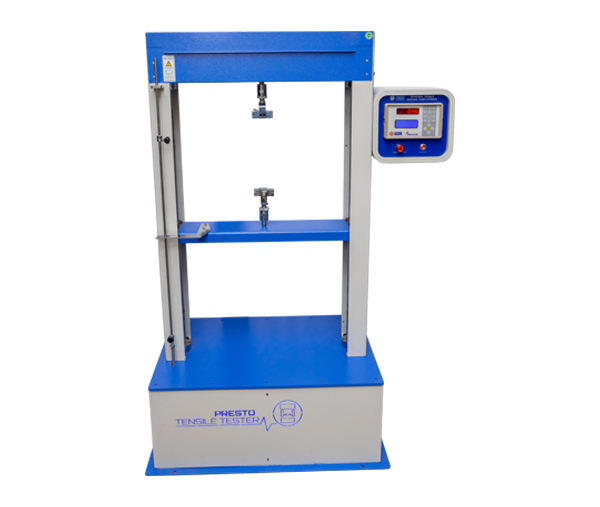
The testing solution is based on a tensile testing machine with a high capacity and software control. They are designed to accept a variety of cable diameters, pipe sizes, and sealing configurations with ease and provide easy alignment and quick installation of the sample.
The system is capable of reliable performance in the evaluation of cable and pipe sealing systems by combining a high-capacity tensile testing device with fixture design appropriate for the application. The data collected can be used by manufacturers to verify product performance, meet customer needs, and optimize future sealing system designs.
Requirement
Cable sealing and pipe sealing systems are essential in businesses that have a need for a secure sealing and mechanical retention. These systems have to be able to withstand the axial forces that may lead to cables or pipes slipping in the operating conditions.
To validate performance, manufacturers require precise measurement of pull-out or retention force over displacement and time. In addition to accuracy, reducing test cycle duration is important for both quality control and product development.
One of the conditions is the capability of determining the amount of force required to cause movement in the sealing system, and also allow repeatability over varying lengths of cable diameter and material thicknesses. This should also have a high level of efficiency in data capture, visualization, and reporting in order to facilitate engineering decisions and long-term product validation.
Solution
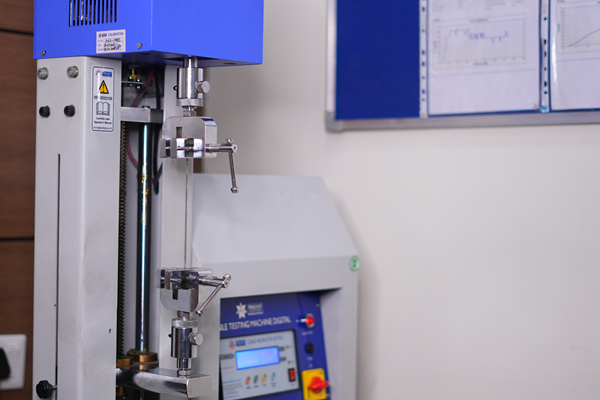
A tensile testing system is a powerful machine, enhanced by a high-capacity software platform, to perform a pull-out force analysis. To address varying sample geometries, a dedicated fixture system is developed to accommodate different cable sizes and sealing configurations.
The fixture incorporates a self-aligning load cell carriage mounted to the crosshead, ensuring accurate axial loading during testing. A corresponding base-mounted frame secures the sample and automatically adapts to different material thicknesses, allowing quick and repeatable setup.
The system enables controlled application of tensile force while capturing force versus displacement data in real time. Graphical output and automated calculations support detailed analysis of retention characteristics.
Advanced software control allows full data logging, traceability, and customized reporting. This supports both ongoing R&D activities and documentation requirements for quality assurance, enabling informed improvements in sealing system design.
Test equipment
- High-capacity software-controlled tensile testing machine
- Load cell suitable for high-force applications
- Custom fixture for cable and pipe pull-out testing
Test standards
.png)
1.png)
.png)
.png)