
- /
- Publications / PCB pull and shear testing
PCB pull and shear testing
.png)
PCB pull and shear testing
.png)
Shear strength test of solder joints
Solution
- Software-controlled universal tester with advanced analysis software.
- Adjustable X-Y positioning table for precise alignment of test specimens.
- Custom-designed fastening jig and probes tailored to individual PCB components.
Benefits
- Semi-automated system capable of performing both solder joint pull and shear tests.
- Single machine meeting all IEC-compliant requirements for PCB quality control.
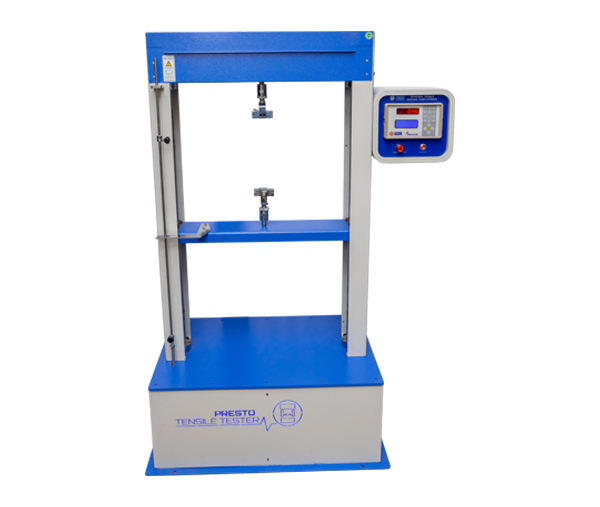
With assistance from products of the Presto Stantest PC board pull and shear testing system, the electronics industry has been able to carry out mechanical integrity testing on surface-mounted soldered joints to the IEC 62137 standard. The software-controlled universal testing machine Zeus Ultimo 3.0 in conjunction with an adjustable X-Y positioning table and custom-designed probes ensures the operator aligns and tests miniature PCB components without influencing other surrounding parts. Both pull and shear testing are possible on the same system, featuring a load cell for low forces and a load cell for high forces. Repeatable and consistent results are guaranteed with custom fastening jigs to maintain the PCBs in place at desired angles. Real-time data analysis and automatic test procedures have enhanced quality control, reduced testing steps, and allowed manufacturers to confirm the quality of solder joints and long-term reliability of PCBs during production and use.
Requirement
One of the major manufacturers of PCBs wanted to test the mechanical integrity of surface-mount solder joints as per the IEC 62137-1-1 standard and IEC 62137-1-2 standard. Your soldering is done manually under a microscope with fine-tip soldering irons and tweezers, and therefore, quality control plays an important role in one's selling solder joints so that they do not fail during handling or operation.
The tests demanded the accuracy of PCB positioning at 45° in the case of pull tests and vertical positioning in the case of shear tests, and small parts could be placed without disturbing other parts.
Solution
Presto Stantest designed a bespoke testing system to address these requirements. The setup includes a universal test machine, dual load cells (50 N and 500 N), a fastening to secure the PCB at required angles, and an adjustable X-Y table for fine alignment. Special probes and hooks were fabricated to interact with miniature components reliably.
For pull tests, the PCB is mounted on the jig at a 45° angle. The X-Y table allows exact positioning of the component under a micro-test hook. A 50 N load cell provides precise measurement of low-force values, with a target maximum pull of 20 N for passing connections.
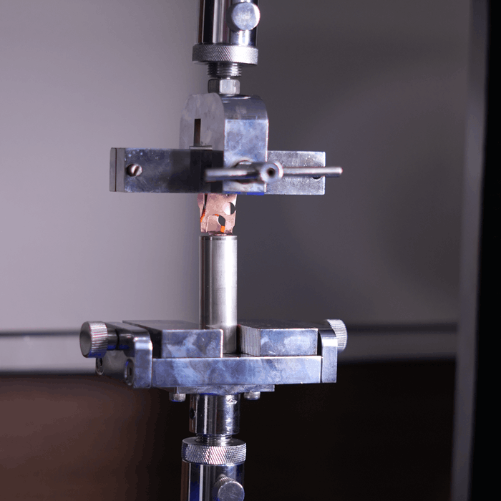
For shear tests, the board is positioned vertically, and the custom probe applies compressive force to shear the component. The load cell is a 500 N load cell that records the forces up to 300 N, which is the limit of the standard. The fastening machine guarantees the reproducible orientation of the two tests, and the X-Y table provides a possibility of access to any element on the PCB.
Test equipment
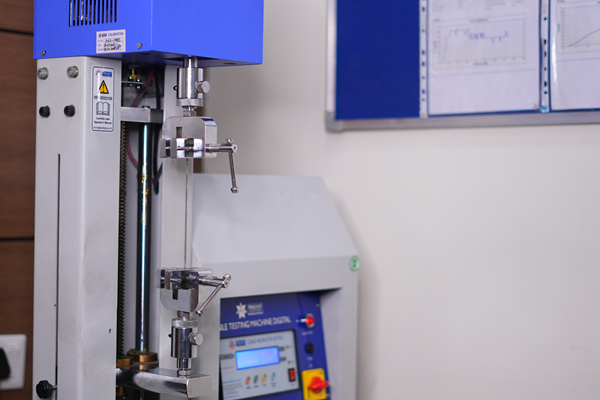
- Zeus Ultimo 3.0 UTM with software.
- 50 N & 500 N cells
- Custom fastening jig supporting PCBs from 20 × 20 mm to 100 × 160 mm.
- Adjustable X-Y table for precision alignment.
- Special probes and hooks for pull and shear testing.
Test standards
- IEC 62137-1-1 – Surface mounting technology, Part 1-1: Pull strength test of solder joints.
- IEC 62137-1-2 – Surface mounting technology, Part 1-2: Shear strength test of solder joints.
Test standards
.png)

1.png)
.png)
.png)