- /
- Standard / ISO-13821
ISO 13821
ISO 13821
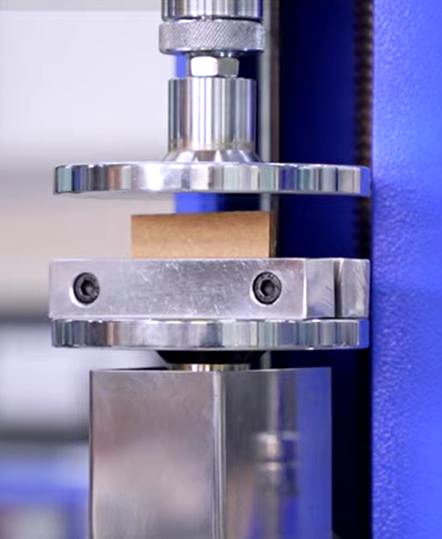
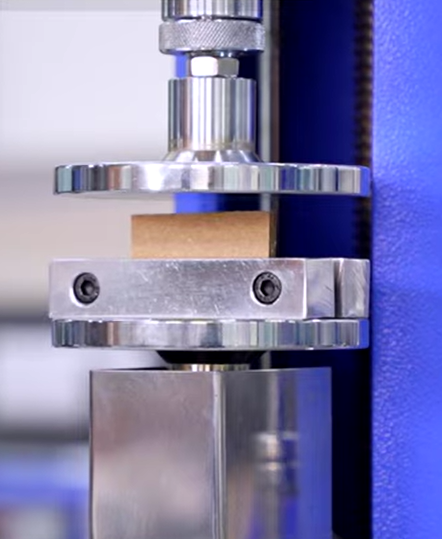
The international standard, ISO 13821, provides a test for the edgewise crush resistance of corrugated fiberboard by the ‘waxed edge method.' The test is made for the corrugated board sample, while the load is applied crosswise to the flutes of the specimens to indicate the maximum compressive force value against loading applied across flutes. The edges of the specimen are smeared with wax prior to testing in order to minimize edge damage and to achieve more accurate results. Edge crush resistance is one of the most important measurements that can be used to measure stacking strength and load-bearing capacity of corrugated packaging materials. Presto Laboratories provides cutting-edge testing equipment and solutions to enable a manufacturer to test the performance of corrugated board based on ISO 13821 requirements.

Significance
The crush resistance of corrugated fiberboard is important to the strength and durability of shipping boxes and transport packaging because of its edgewise strength. Low crush resistance packaging may change shape or fail if the packaging gets a stacking load during storage or during transportation. There are several ways to measure the strength of corrugated board, and the ISO 13821 standard is one that can be used to evaluate the structural strength of corrugated boards and compare the various grades of the material used in its production. Test results can be used for quality control programs, packaging design activities, and to assist in making material selection decisions. Stable edge crush testing can also aid industries in minimizing packaging failures, safeguarding their product while in transit, and optimizing packaging usage. Scope The determination of edgewise crush resistance of corrugated fiberboard (ISO 13821) specifies the use of edges reinforced with wax when measuring the resistance to edgewise crush. The standard covers all corrugated board construction, single wall, double wall, or any other construction for packaging applications. It outlines specimen preparation, conditioning, and compression testing. The method gives a standard way of achieving repeatable and comparable results to utilize in assessing the strength of packaging materials under controlled laboratory conditions.