

- /
- Blog / How to measure the cupping strength of metals?
How to measure the cupping strength of metals?
Gaurav Malhotra
18-10-2022
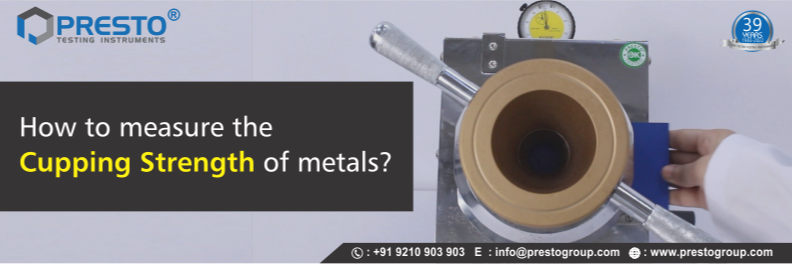
A cupping test is a process of measuring the deformation of a metal specimen when it is subjected to external stress. This quality test is highly useful in testing the ductile properties of metals. If you are looking for a high-quality lab testing instrument to conduct cupping strength tests on the materials, then you can go with Presto cupping strength tester. This is one of the high-quality lab testing equipment that is used to test the ductile properties of the materials and ensure that the materials are strong enough to withstand external forces. This high-quality laboratory testing equipment has been made in accordance with industrial standards that includes IS 10175 (Part I); 1993 & ISO 8490: 1986, and ISO 1520:2006. Here in this blog, we are going to provide you with information about how you can easily measure the cupping strength of metals with the help of the Presto cupping testing machine. But before that, let us focus on the importance of cupping tests in the metal industry.
Importance of cupping strength test in the metal industry
All about Presto cupping strength tester
Features of Presto cupping strength tester
- High-Quality rugged structure with the corrosion-resistant main body
- Dial gauge to measure the cupping
- Sturdy Construction and resilient
- Revolving Handle for frictionless movement of the punch
- Fast Guiding Mechanism with hand-operated wheel
- Single-handed hassle-free operation with Spherical punch
- Brass Housing for strong sample clamping
- Highly accurate test results
Technical Specifications of Presto cupping strength tester
- Range: 0 – 25mm
- Least count/resolution: 0.01mm
- Outside Body: Mild Steel (Duly Powder Coated.)
- Dial Gauge – 1
- Accuracy – ± 2%
- Sample Thickness – Up to 1.8mm
- Diameter of Punch – 20 ± 0.2 mm
Easy-to-follow steps to conduct cupping strength test on materials
- To conduct a cupping strength test on the materials, insert the zero plate in the sample holder slot and adjust the zero plate with the ball surface.
- Adjust the dial gauge to zero (0) at this position.
- Remove the Zero plate and fit it in your job sample in the slot provided.
- Tighten the sample through the Front wheel handle.
- Now test the sample by rotating its side gear handle.
- View the condition of the sheet manually from the front side. Tighten the punching ball to the end position of the spindle bush.
- Always keep a view of the dial gauge to check the correct stiffness of the sheet.
- On failure of the sample, note the reading on the dial indicator/gauge. Release the pressure by moving the bigger gear wheel in the anticlockwise direction and then release the smaller gear wheel.
- Remove the sample from the sample holder slot. Analyze the test specimen for any kind of cracks.
Recent Blogs
- Industrial Leak Testing: Methods, Technologies, Benefits, and Industry Applications
- Autoclave in Laboratories and Industry: Principle, Procedure, Components, and Applications
- Uses of BST in Packaging, Paper, and Corrugated Box Testing
- Leak Testing Procedures for Packaging Materials in Accordance with ASTM D6653
- Bursting Strength Testing: ASTM, ISO, and TAPPI Standards for Packaging Evaluation