

- /
- Blog / How to Use a Portable Spectrocolorimeter for Color Testing
How to Use a Portable Spectrocolorimeter for Color Testing
Introduction To Portable Spectrocolorimeters
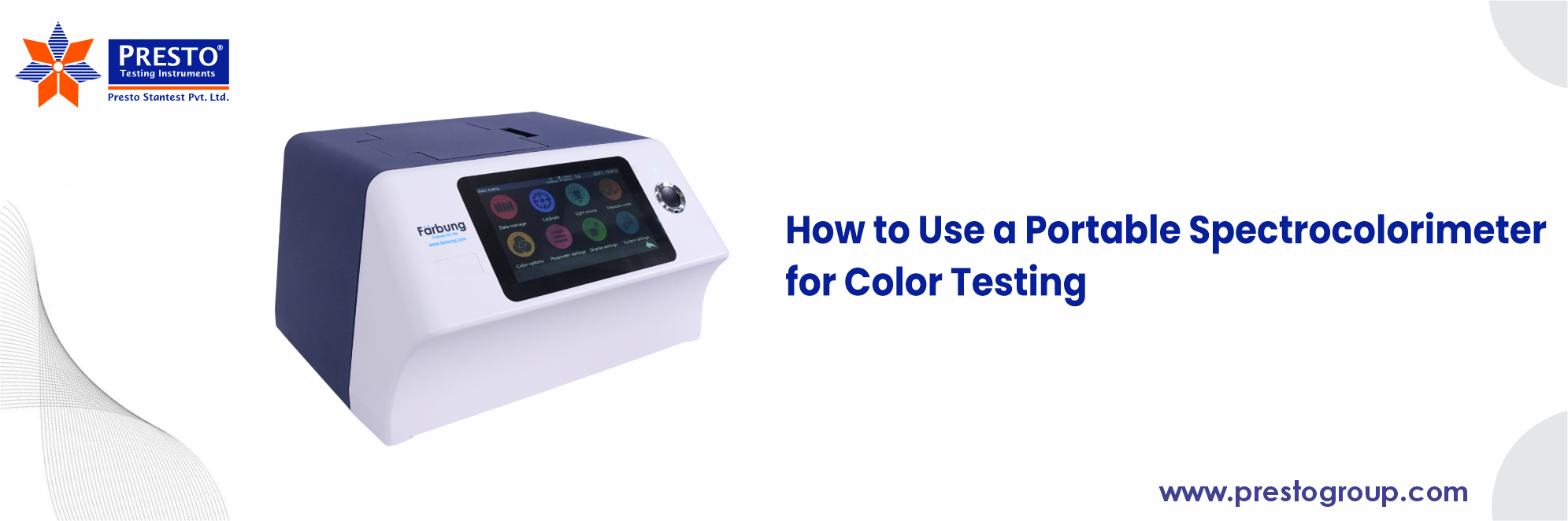
A portable spectrocolorimeter is a small device that examines the whole spectrum of reflected light and then converts it into color. In addition to making a visual judgment, this device provides us with numerical data on the color, and this can be tracked and reported for the batches and the plants.
While a colorimeter makes use of only three filters in making a color measurement, the portable spectrocolorimeter provides accurate color information as it examines the spectrum of the color.
What it means for investors: Accuracy means fewer rejects, brand consistency, and quality control efficiency in color-critical industries.
Why Color Accuracy Interests Investors
Investors usually look at color control as a risk and cost lever, not just a technical topic.
Key business impacts:
- Shade tolerances reduce rejection and rework costs.
- The consistency in color across various areas and vendors helps in enhancing the brand.
- It becomes easier to meet the client/retailer's specifications.
In industries such as packaging, plastics, coatings, textiles, and the auto industry, even the slightest variation in color could lead to product returns.
The use of a dependable handheld color measurement device helps in avoiding such risks.
How A Portable Spectrocolorimeter Works
At a basic level, a portable spectrocolorimeter uses a controlled light source to illuminate the sample, measures the reflected light at many wavelengths, and then interprets the color values as well as the ΔE color difference.
Most devices include:
- Light source and optics for stable illumination.
- Aperture or measurement port to contact the sample.
- Spectral sensor array to capture reflected light.
- Processor and firmware to calculate color spaces and ΔE.
- Display and buttons or a touchscreen for user control.
This combination makes the instrument a practical handheld color measurement device for the shop floor, warehouse, or field checks.
Key Specifications Investors Should Track
A lab or plant will often compare several models before they buy Spectrophotometer equipment.
Important instrument factors
| Parameter | Importance |
| Measurement geometry (d/8, 45/0) | Controls how gloss and texture influence readings, important for appearance matching. |
| Wavelength range & interval | Defines color accuracy and ability to handle bright, dark, or fluorescent samples. |
| Aperture size | Impacts the ability to test small prints, masterbatches, or textured surfaces. |
| Repeatability & inter-instrument agreement | Drives confidence when multiple units run across different sites. |
| Memory and connectivity | Enables data logging, PDF or Excel reports, and integration with color QC software. |
| Battery life and portability | Affects field usage and line-side productivity. |
A strong portable spectrocolorimeter manufacturer will publish these numbers clearly and support them with calibration services and technical training.
Step By Step: Using A Portable Spectrocolorimeter
Step 1: Inspect and Charge the Device
First, you need to physically inspect your device. You need to ensure that it was not damaged in transit. There is usually a device, a tile, a cable, and a manual in the kit. You need to charge your battery before you start using it. These devices need a rechargeable lithium-ion battery.
Step 2: Calibrate the Instrument
Calibration is not negotiable. Calibration corrects sensor drift and ensures readings match standard color values.
- Turn on your device
- Select Calibration from your menu
- Place your sensor flat on your white reference tile
- Wait for your screen to confirm
Calibration is essential for your data accuracy. Calibrate your device before testing.
Step 3: Select the Measurement Mode
Most portable spectrocolorimeter models offer multiple modes. Choose based on the testing goal:
| Measurement Mode | Best Used For |
| Single Point | Spot-checking one surface |
| Average of Multiple Reads | Textiles, painted panels, uneven surfaces |
| Standard vs. Sample Comparison | Batch quality control and color matching |
| Reflectance Mode | Opaque solid materials |
| Transmittance Mode | Films, liquids, translucent materials |
Step 4: Prepare the Test Sample
Sample preparation directly influences the accuracy. Follow these checks:
- Clean, dry surface without dust or oil.
- The sample must be flat and preferably opaque.
- The surface must be large enough to completely cover the sensor head.
- Avoid translucent materials unless your device supports transmittance mode.
A common cause of measurement errors is poor sample preparation.
Step 5: Take the Measurement
Place the sensor head firmly against the sample surface. Avoid tilting and moving the device during scanning. Tap the measurement button and hold steady. It scans in seconds and shows the result on screen.
Take three or five readings from the same sample for greater precision and use the average value. This is handy on uneven surfaces.
Step 6: Read and Analyze Results
Color data will be displayed as L *, a *, b *, or Delta E (DE). Those are what they are:
- L* measures lightness (0 = black, 100 = white)
- a* measures red-green axis
- b* measures the yellow-blue axis
- ΔE is the total color difference between two samples
A DE value below 1.0 is normally imperceptible to the human eye. Values above 2.0 may be obvious and require correction.
Step 7: Export & Document the Data
After measurement, export the data via USB or Bluetooth to the connected software. Most spectrocolorimeter suppliers offer companion software for trend analysis, reporting, and color library management. Documenting results produces a quality record for audits and client approvals.
When this workflow is followed daily, the color testing equipment for labs builds a strong historical data set for audits and customer reviews.
Best Practices For Reliable Lab Color Testing
To extract full value from a portable spectrocolorimeter, the team should focus on process discipline, not just hardware.
Good practices include:
- Using the same measurement geometry and aperture for all product families.
- Clear DE limits with customers/internal quality teams defining.
- Operation training, including sample preparation, instrument positioning & cleaning.
- Start calibrating at the start of each shift and whenever ambient conditions change.
- Protecting tiles and standards from scratches, dust & fingerprints.
For investors reviewing a facility, documented procedures around color testing equipment for labs are a positive signal of a quality culture.
Selecting Suppliers And Instruments Strategically
Choosing the right device and partner is often more important than squeezing the last point of discount.
Points investors and technical teams usually consider with spectrocolorimeter suppliers:
- Proven installations in similar industries and substrates.
- Local service support, calibration labs, and spare parts availability.
- Software ecosystem, including QC, reporting, and ERP or MES links.
- Training programs for operators and lab managers.
- References from existing customers on uptime and stability.
A reliable portable spectrocolorimeter manufacturer will also help define standards, build libraries, and set realistic tolerances for each product family.
That support makes it easier for a plant to justify fresh investment and scale usage beyond the central lab.
When a company decides to buy Spectrophotometer systems, it often builds a multi-year roadmap for color control across plants, vendors, and contract packers
| Factor | What to Look For |
| Spectral Range | 400-700 nm minimum |
| Aperture Size | 6 mm to 8 mm for standard surfaces |
| Color Spaces Supported | CIE L*a*b*, XYZ, RGB, LCh |
| Connectivity | USB and Bluetooth preferred |
| Geometry | 45°/0° for most surfaces; d/8° for textured materials |
| Battery Life | Minimum 8 hours for field use |
Well-chosen spectrocolorimeter suppliers become long-term partners in that roadmap, not just hardware vendors.
Strategic Role Of Handheld Devices In The Lab
A lab may already run a bench-top unit for formulation, yet a handheld color measurement device still plays a key role at the line or warehouse.
Typical combined setup:
- Bench units for recipe development and complex matching work
- Portable spectrocolorimeter units for quick checks on raw materials, in-
- process products, and finished products
- This ensures flexibility while maintaining instrument-based decisions rather than relying on subjective eye tests
- Ready to Upgrade Your Color Quality Control?
An investor looking at a plant or packaging company should not overlook the importance of color control.
Practical steps to follow
- Ask how many portable spectrocolorimeter units they have in place and where they are deployed.
- Ask for sample color test reports and ΔE trends over the past few quarters using the color testing equipment.
- Ask if the operators are properly trained and follow the instructions in the equipment manual.
- Companies that invest in the purchase of Spectrophotometer systems and training tend to have better process discipline and lower quality risk over time.
Contact Presto Group Today!
Businesses looking to integrate the latest portable spectrocolorimeter can get in touch with our experts to explore a wide range of options. Our products ensure reliable and accurate results on the move.
Call us: +91 9210903903
Email: info@prestogroup.com
Visit: www.prestogroup.com
Recent Blogs
- How to Use a Portable Spectrocolorimeter for Color Testing
- International Standards for Vacuum Integrity Testing of Packaging and Containers
- How to Choose the Best Top Load Tester for Plastic Containers in 2026
- Why Angular Drop Capability Matters in Drop Testing Machines
- How Box Compression Testing Helps E-Commerce Packaging Prevent Transit Damage

Related Blogs
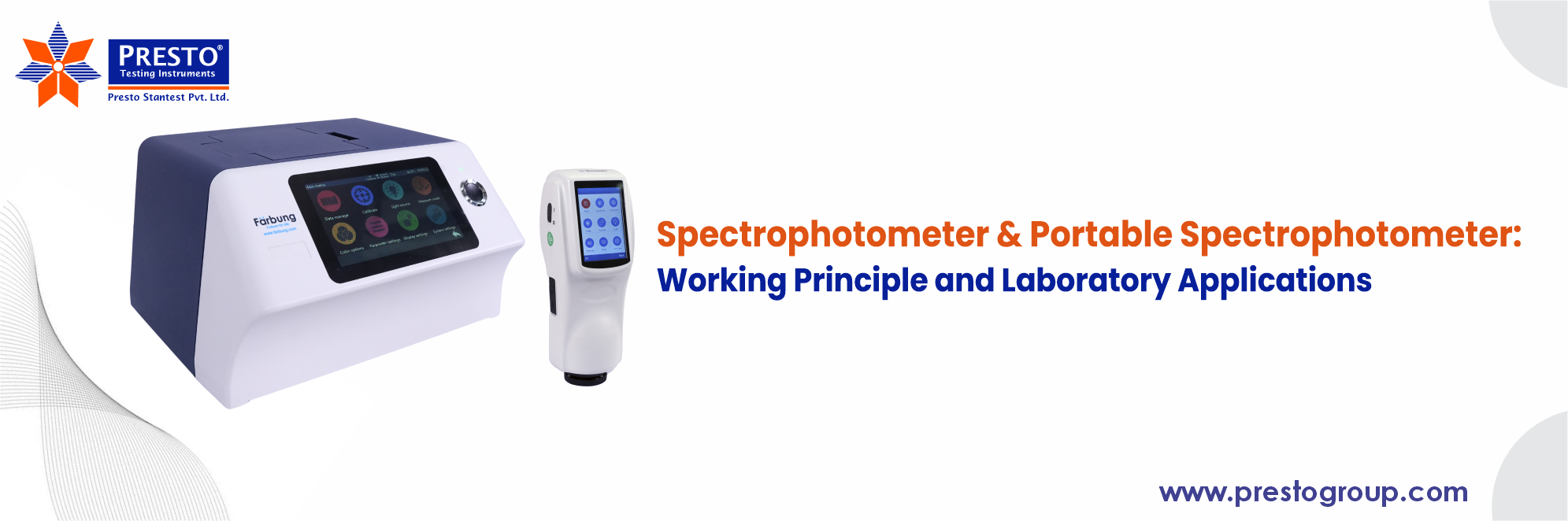
Spectrophotometer & Portable Spectrophotometer: Working Principle and Laboratory Applications
A spectrophotometer assists in finding the amount of light an object absorbs at a given wavelength.
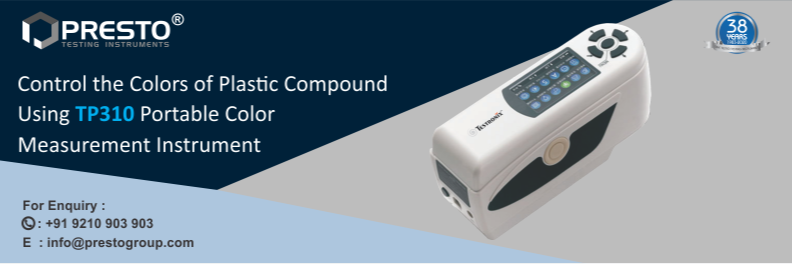
Control The Colors Of Plastic Compound Using TP310 Portable Color Measurement Instrument
The extruded plastic materials are cut into smaller sections and then further used in the plastic forming procedures like injection molding or extrusions. Pellets are the key components that are virtually used in all plastic manufacturing processes. The first step to ensure the consistency of the final color of any plastic is to control the color of the compound first. In plastic products manufacturing industries, the color of the plastic pellets is usually measured before the pellets are...
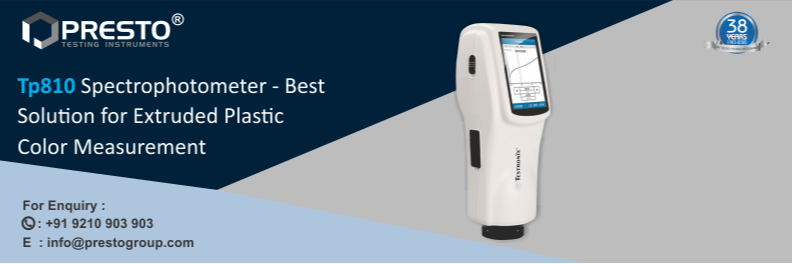
TP810 Spectrophotometer - Best Solution For Extruded Plastic Color Measurement
Types of Extruded Plastic Windows frames, weather stripping, deck railing, vinyl siding, plastic films and sheets, pipe & tubing, wire insulation, etc. are the examples of extruded plastic products. These are the high-volume manufacturing processes in which raw material is first melted and then processed to provide an exact shape. Many manufacturers of color measurement instruments supply high-quality of color measurement systems to help the plastic producers to manage the consistency...
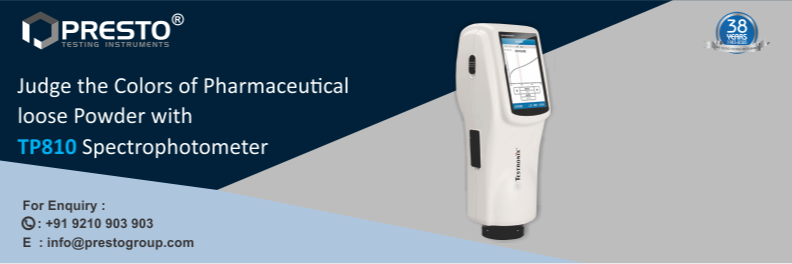
Judge The Colors Of Pharmaceutical Loose Powder With Tp 810 Spectrophotometer
Powdered chemicals are used in all production houses such as food, paint & coating, pharmaceuticals, building materials, cleaning material, cosmetics are few of them. Whether you need to measure the white color of calcium carbonate, the green color of nickel chloride, blue color of copper benzoate, magenta color of cobalt chloride hexahydrate, color measurements instruments offers best color measurement solutions for all chemical powder manufacturing industries. Many of the manufacturers of...

Measure The Colors Of Textile Products With TP 800 Spectrophotometer
Colors play a significant role in textile industries. The manufacturers in textile industries faces many problems while selecting the colors of the textile products like which will be the perfect color for the particular type of dress material, which color will be liked by the customers more? They need to produce creative and new dress materials daily with an innovative idea of designs to face the competition and to fulfill the demands of a vast number of customers. The colors have the ultimate

Evaluate The Color Quality Of Papers With Best Spectrophotometer Machine
Paper and packaging products are used in all production verticals to fulfill the requirement of packaging. As packaging provides the means of safety, appearance and identity to the products, manufacturers pay significant attention to pack the products elegantly using high-quality of colors and attractive designs to divert the attention of the buyers towards the products.