

- /
- Blog / International Standards for Vacuum Integrity Testing of Packaging and Containers
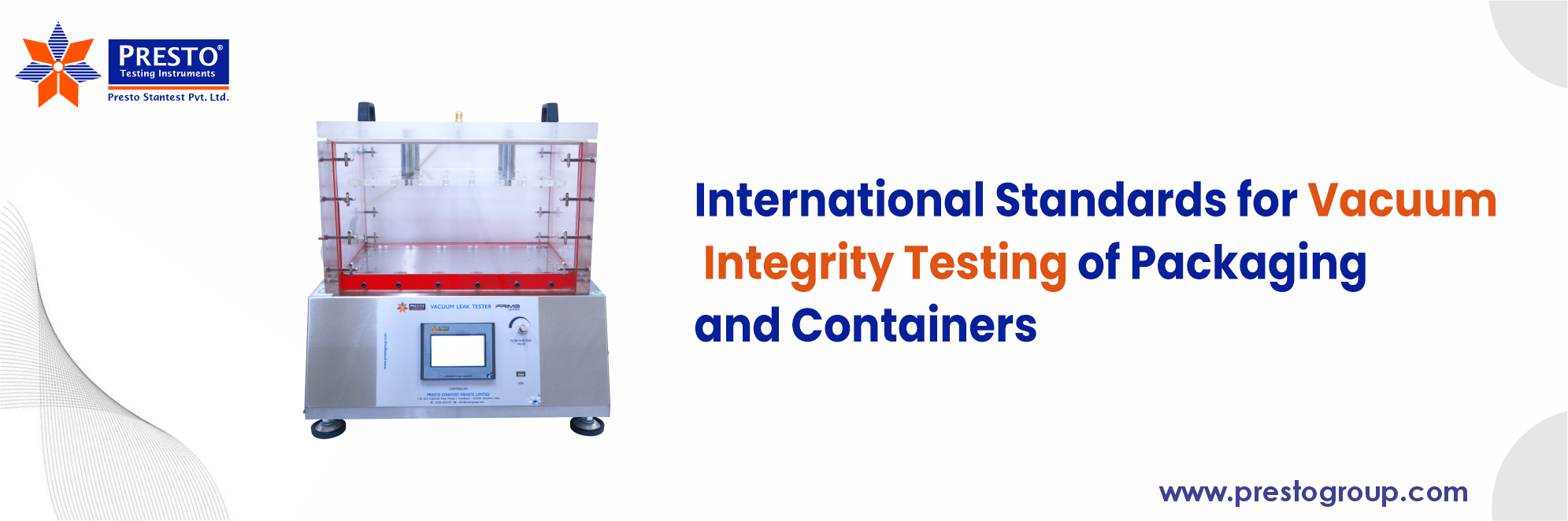
International Standards for Vacuum Integrity Testing of Packaging and Containers
Introduction
In a few years, vacuum integrity testing has become a standard for high-value packaging in pharma, medical devices/food, and cosmetics. Now investors want to know how well a plant detects leaks before products leave the factory.
A modern vacuum leak testing machine gives objective proof that seals, closures, and sterile barriers are intact under defined vacuum conditions. These systems are guided by international standards, so understanding those standards is the first step toward a sound investment decision.
Functional Principles of Vacuum Integrity Testing
Vacuum integrity testing pulls a controlled vacuum around the pack and watches how pressure changes over time. If the package has a leak, gas or vapor moves out of the product headspace into the test chamber, and the system sees a pressure rise.
This method is widely used for:
- Vials and syringes
- Blister packs and pouches
- Rigid plastic bottles and jars
- Trays and lidded containers
In short, Container leak testing with vacuum tester technology confirms that the closure system keeps contaminants out and product in across the full shelf life.
Core International Standards Investors Should Know
Several ASTM and ISO standards define how a Vacuum integrity tester should be used and validated. These standards are often referenced by regulators and large buyers.
ASTM F2338 – Vacuum Decay Method
ASTM F2338 is the global reference for nondestructive detection of leaks in packages by the vacuum decay method. It covers rigid, semi-rigid, and nonporous flexible packs and is recognized by the FDA as a consensus standard.
Vacuum decay under F2338 is:
- Deterministic, since it measures a physical change directly
- Highly sensitive, often down to leak sizes around 5 micrometers, depending on system and package
- Fully non-destructive, so tested samples can often return to the batch
This makes it a central method for leak-test machines used in regulated industries.
ASTM D3078 – Bubble Emission Under Vacuum
ASTM D3078 describes a water-bath bubble test in which flexible packages are placed under vacuum while submerged in water to detect bubble streams. It is good for finding gross leaks and locating the defect, so it is still popular for routine checks on flexible packs.
However, it is considered more probabilistic and less sensitive than vacuum decay, so many plants combine it with ASTM F2338-based testing for formal validation.
ASTM D4991 and D5094 – Rigid Containers
ASTM D4991 is for vacuum leak testing of empty rigid containers in a liquid bath, and ASTM D5094 is for testing liquid-filled rigid containers. These standards help producers with structured guidance for rigid bottles, jars, and similar formats.
ISO 11607 – Medical Device Packaging
ISO 11607 parts 1 and 2 define requirements and validation rules for packaging of terminally sterilized medical devices. Vacuum integrity checks, including vacuum decay and related methods, are listed as options for demonstrating sterile barrier integrity and seal quality.
For investors in sterile manufacturing, alignment of the Industrial vacuum leak tester with ISO 11607 expectations is critical.
USP <1207> – Container Closure Integrity
USP <1207> does not describe a single instrument; rather, it classifies technologies such as vacuum decay as deterministic container closure integrity test (CCIT) methods. Regulators increasingly prefer deterministic approaches over older dye ingress or simple visual checks.
So a compliant Vacuum integrity tester that supports an F2338 style method positions a facility well for future inspections.
Overview Of Major Vacuum Integrity Standards
| Standard | Type of method | Typical packaging | Key points for investors |
| ASTM F2338 | Vacuum decay, deterministic | Vials, syringes, bottles, blisters, nonporous flexible packs | High sensitivity, non-destructive, FDA recognized, strong choice for core CCIT |
| ASTM D3078 | Bubble emission in water under vacuum | Flexible pouches, sachets | Finds gross leaks, shows location, good for line QA, but less sensitive |
| ASTM D4991 / D5094 | Vacuum testing of empty and liquid-filled rigid containers | Bottles, jars, rigid containers | Structured guidance for rigid packs, often used with other CCIT tools |
| ISO 11607 | System-level standard for sterile medical packaging | Sterile barrier systems, medical device packs | Requires validated integrity tests, often relying on F2338 vacuum decay as a core tool |
| USP <1207> | Framework for CCIT technologies | Pharma containers, sterile products | Prefers deterministic methods such as vacuum decay over dye and bubble tests |
Operating Principles of Vacuum Decay Systems
Most modern systems use a test chamber connected to a Leak test machine for containers that controls vacuum and measures pressure with high precision. The typical sequence is:
- Place the container in a tight chamber or flexible test enclosure
- Evacuate the chamber to a defined vacuum level
- Isolate the chamber and monitor pressure for a set time
- Compare the pressure rise curve with an approved limit profile
Good containers show only a small, modeled pressure increase from material outgassing and system behavior. Leaking containers show a larger or faster pressure rise, which the software flags as a fail.
Alignment of Equipment Specifications with Standards
Investors need to confirm that a vacuum leak testing machine can run methods that map cleanly to the standards that apply to their products. This goes beyond a marketing line in a brochure.
Key checks include:
- Ability to control vacuum level and stabilization time as required by ASTM F2338 and related methods
- Sufficient pressure transducer resolution and stability for the target leak rate
- Chamber designs suitable for real production formats, not only ideal lab samples
- Validation documentation that links the Vacuum integrity tester configuration to ISO 11607 or USP <1207> expectations
If a plant also needs bubble tests, some suppliers combine vacuum decay and water bath options in one platform to support both deterministic and visual leak checks.
Final Thoughts
Choosing the right vacuum leak tester manufacturer is not only about the spec sheet. Long-term performance depends on calibration support, method development help, and software maintenance.
Leading vacuum leak tester suppliers usually offer:
- Predefined method templates for ASTM and ISO standards
- On-site training on vacuum decay, bubble emission, and hybrid workflows
- IQ/OQ documentation and support for regulated sites
- Global or regional service teams for quick response
A trusted Industrial vacuum leak tester partner can also guide plants through typical challenges like false rejects caused by poor fixturing, environmental variation, or unstable vacuum sources.
Contact Presto Group Today!
Explore our range of advanced vacuum integrity testing devices compliant with ASTM F2338 and ISO 11607. Contact us and upgrade your production line today!
Call us: +91 9210903903
Email: info@prestogroup.com
Visit: www.prestogroup.com
Recent Blogs
- International Standards for Vacuum Integrity Testing of Packaging and Containers
- How to Choose the Best Top Load Tester for Plastic Containers in 2026
- Why Angular Drop Capability Matters in Drop Testing Machines
- How Box Compression Testing Helps E-Commerce Packaging Prevent Transit Damage
- How Durable Is Your Plastic? Insights from the ISO 180 Izod Test

Related Blogs
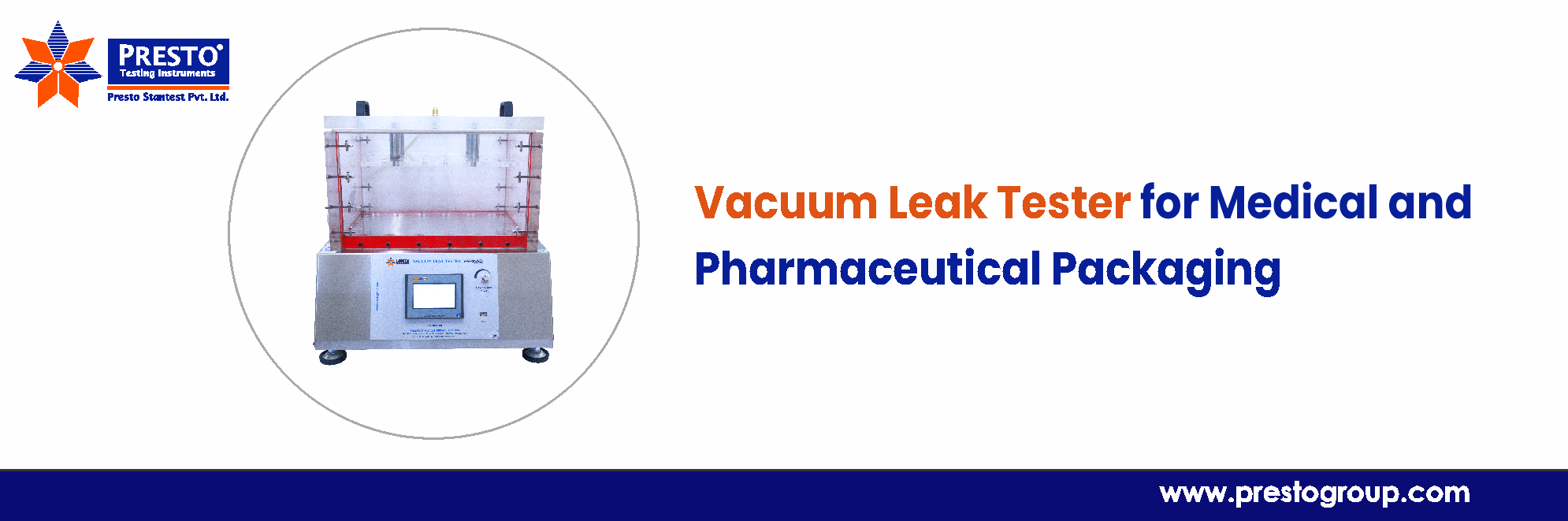
Vacuum Leak Tester for Medical and Pharmaceutical Packaging
Protect medicine & pharma products with precise vacuum leak testing. Boost quality & trust – Get your tester today!
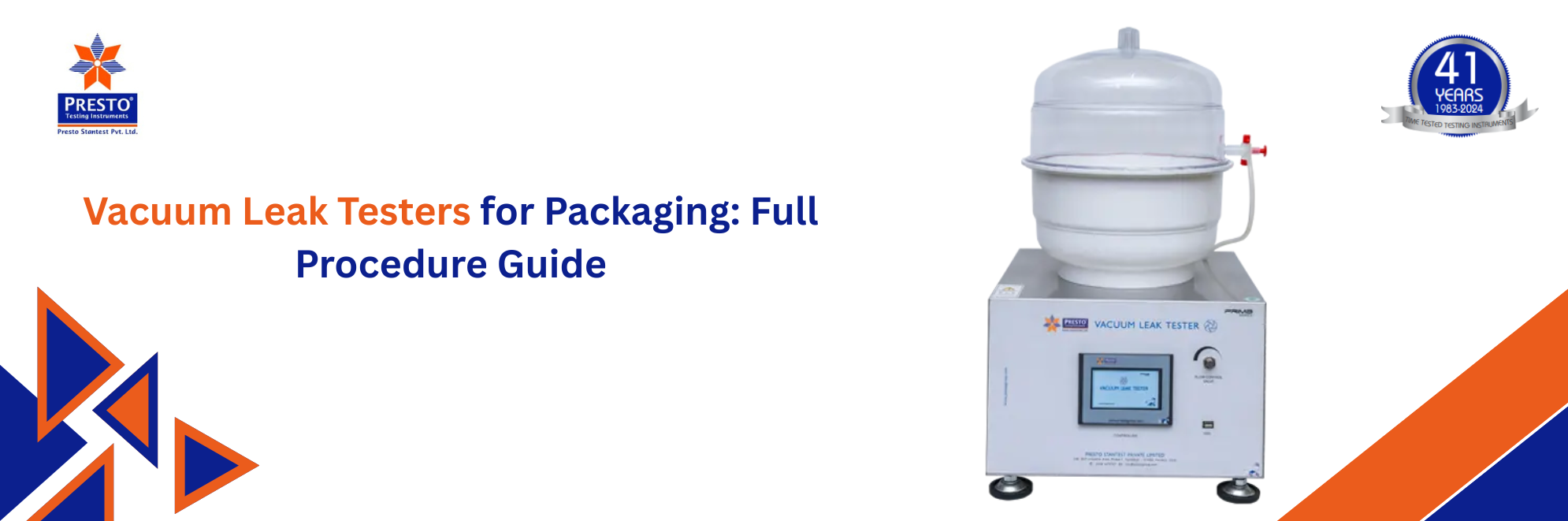
Vacuum Leak Testers for Packaging: Full Procedure Guide
The Vacuum Leak Tester serves as a quality control instrument which uses vacuum pressure to detect package leaks on test specimens.
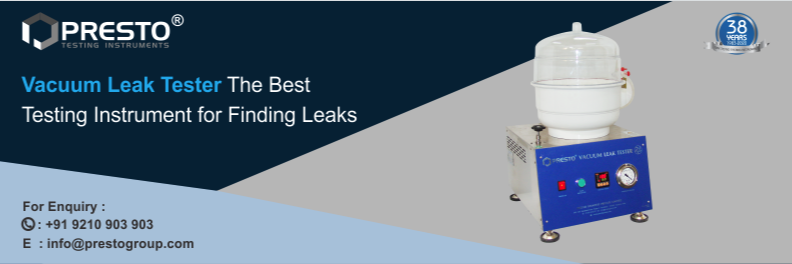
Vacuum Leak Tester- The Best Testing Instrument for Finding Leaks
Leaks are undesirable openings that may be found in various materials and can affect the quality of the product. This will let solid, liquid, or gases escape through the affected surface. The vacuum leaks will appear suddenly and will also develop over a period of time.
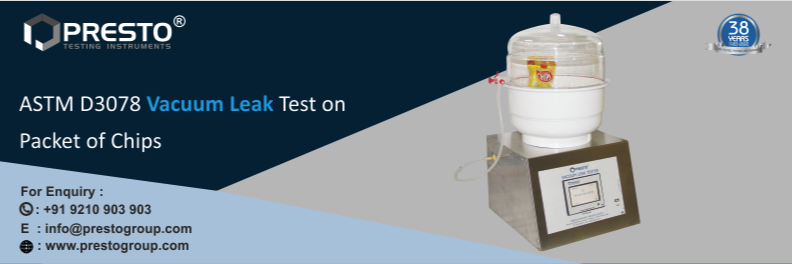
ASTM D3078 Vacuum Leak Test on Packet of Chips
You take each side of the sack among thumb and pointer and draw tenderly, anticipating that the highest point of the pack should easily strip separated. In any case, it doesn't. So you pull more diligently. What's more, harder. At that point it all of a sudden parts open and you are showered by the substance.
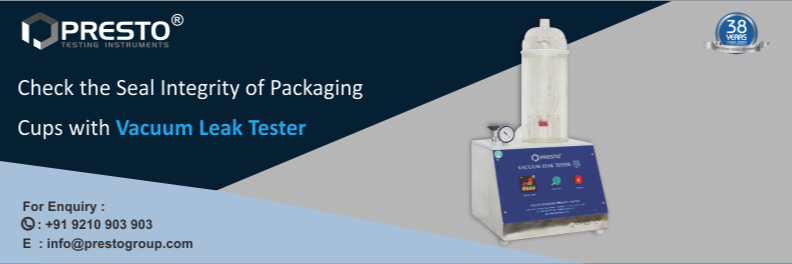
Check The Seal Integrity Of Packaging Cups With Vacuum Leak Tester
The vacuum leak testing is performed to determine the leakage in different materials or parts caused by an external source. The Vacuum Leak Tester is used to inspect the consistency of the foiled cups under vacuum. The instrument complies with national and international quality standards. The tool is amazing designed to test the seal integrity of the packaging cups.