

- /
- Blog / Precision in the Air: How Humidity Chambers Enable Reliable Lab Testing
Precision in the Air: How Humidity Chambers Enable Reliable Lab Testing
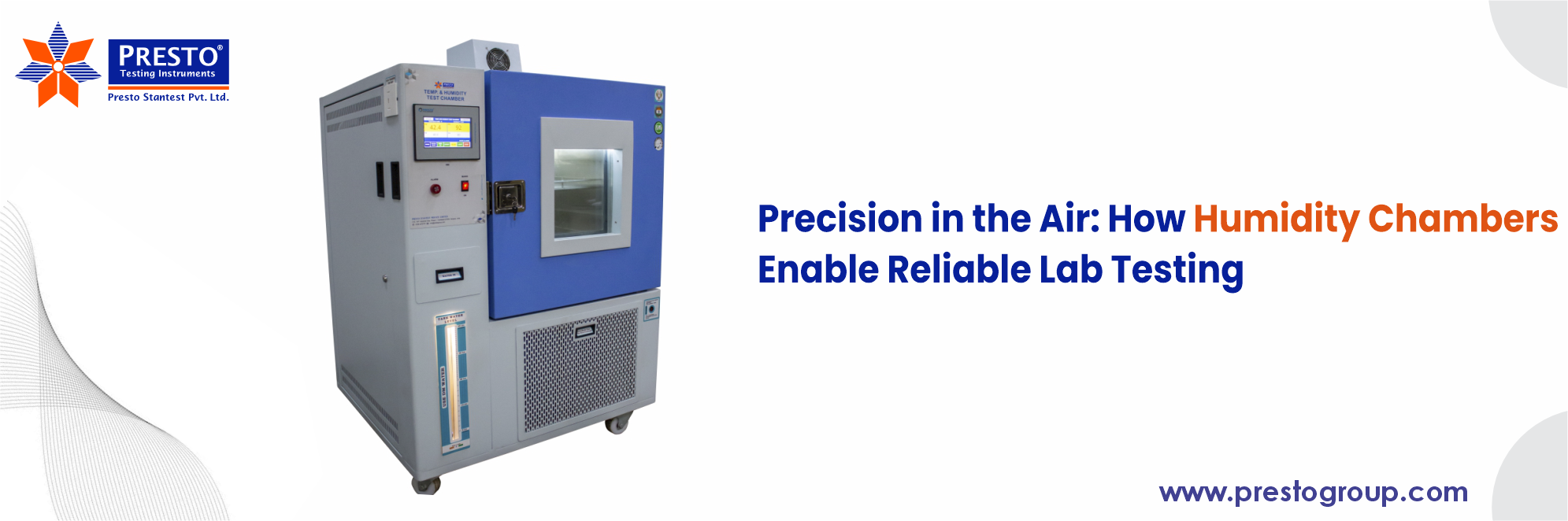
In modern product development, environmental reliability tests are conducted. Materials, electronics, drugs, and package systems react differently to temperature and humidity. Small changes in humidity can affect the stability of materials, the rate of corrosion, mechanical properties, and chemical properties.
Laboratories thus use controlled environmental simulation. A humidity chamber provides this controlled environment. It recreates the same temperature and humidity in a sealed enclosure. These simulate tropical climates, high moisture storage facilities, or rapid aging.
Industries using these chambers include electronics manufacturing, pharmaceutical development, automotive engineering, and packaging testing, following standardised environmental testing protocols.
What Is a Humidity Chamber?
A humidity chamber is a closed chamber environmental test system that controls relative humidity and temperature. The system uses integrated sensors, heating elements, humidification units, and airflow systems to achieve constant atmospheric conditions. Such parameters have predefined tolerances throughout the test cycle. Laboratories simulate environmental stress conditions that products may encounter during storage, transport, or operation.
Typical testing objectives include:
- Accelerated aging analysis
- Corrosion resistance
- Stability testing of pharmaceutical products
- Packaging durability assessment
- Electronic component reliability verification
Through repeatable environmental simulation, humidity chambers enable controlled experimental conditions and reliable data collection.
Humidity Chamber Working Principle
The humidity chamber working principle is based on controlled moisture generation and temperature regulation inside a thermally insulated chamber. The chamber uses an automated feedback control system to maintain precise environmental parameters.
Key operational steps include:
- Temperature stabilization using electric heaters or refrigeration units
- Controlled moisture generation through humidification modules
- Continuous monitoring through calibrated humidity sensors
- Automatic adjustment via PID controllers
- Uniform airflow distribution using circulation fans
This system ensures stable environmental conditions throughout the test duration.
Core Systems Supporting the Humidity Chamber Working
Humidity chambers integrate several mechanical and electronic subsystems that maintain environmental stability.
| System Component | Technical Function |
| Humidity Generator | Produces moisture through steam or ultrasonic methods |
| Heating System | Controls chamber temperature |
| Cooling System | Maintains low temperature conditions |
| Air Circulation System | Ensures uniform humidity distribution |
| Humidity Sensors | Measure relative humidity levels |
| PID Controller | Maintains programmed environmental parameters |
| Insulated Chamber Body | Minimizes thermal losses |
These integrated components maintain precise testing conditions even during extended test cycles.
Humidity Chamber Temperature Range
Environmental simulation requires precise control of both humidity and temperature.
The humidity chamber temperature range determines the testing capabilities of the equipment.
Most laboratory humidity chambers operate within a wide temperature range to support different testing scenarios.
Typical operating parameters include:
- Temperature range: −20°C to +150°C
- Relative humidity range: 20% to 98% RH
Advanced chambers support programmable environmental profiles. These profiles simulate real environmental cycles such as day-night humidity fluctuations or seasonal climate changes.
Such programmable cycles are widely used for accelerated life testing.
Humidity Chamber Uses in Laboratory Testing
The humidity chamber uses extend across multiple research and industrial applications. The moisture affects almost every material and product. Controlled humidity testing lets researchers predict performance in real life.
Electronic Reliability Testing
Electronic circuits & semiconductors are sensitive to moisture. High-humidity environments accelerate corrosion & insulation failure. Environmental testing identifies reliability risks prior to mass production.
Pharmaceutical Stability Studies
Drug formulations need stability tests under a controlled environment. Shelf life and chemical stability are determined in humidity chambers that simulate long-term storage.
Packaging Integrity Testing
Packing systems are designed to protect the product from moisture in the environment. The humidity exposure test checks the permeability of the material.
Automotive Component Testing
Automotive electronics, coatings, and polymers are exposed to extreme environmental conditions. The humidity chambers are used for testing the corrosion resistance of the materials.
Materials Research
Researchers study moisture absorption, dimensional stability, and chemical reactions of polymers, composites, and textiles using controlled humidity environments.
Humidity Chamber Specification
Laboratories must evaluate several technical parameters before selecting a humidity chamber.
The humidity chamber specification determines testing accuracy, reliability, and operational efficiency.
Key specifications include:
- Chamber capacity and internal dimensions
- Humidity generation method
- Temperature and humidity control accuracy
- Air circulation uniformity
- Sensor calibration capability
- Programmable controller functions
- Data logging and monitoring systems
- Safety protection mechanisms
Industrial-grade chambers also include advanced control software and automated testing profiles.
| Parameter | Standard Laboratory Range |
| Temperature Range | −20°C to +150°C |
| Humidity Range | 20% to 98% RH |
| Temperature Accuracy | ±1°C |
| Humidity Accuracy | ±2% RH |
| Chamber Material | Stainless steel interior |
| Control System | Digital PID controller |
| Data Logging | Integrated monitoring system |
These parameters vary depending on chamber size and manufacturer design.
Humidity Chamber Price in India
The humidity chamber price in India depends on chamber capacity, environmental range, automation level, and control systems.
Basic laboratory chambers cost less. Advanced environmental simulation chambers with extended ranges cost significantly more.
Working with a reliable humidity chamber supplier helps laboratories select the correct configuration based on testing requirements.
Choosing the Right Humidity Chamber Supplier
The right supplier is important for long-term operation reliability. A professional supplier supplies equipment meeting laboratory standards and regulatory requirements.
Key factors to evaluate include:
- Experience in environmental testing equipment manufacturing
- Compliance with ISO and ASTM testing standards
- Availability of calibration and validation services
- Spare parts and service support
- Technical documentation and training
Laboratories often prefer to buy humidity chamber Supplier systems that provide full lifecycle support.
Reliable suppliers help maintain equipment accuracy and extend system lifespan.
Role of Humidity Chambers in Advanced Laboratory Testing
In modern product development, environmental simulation is very important. Before large-scale deployment, manufacturers have to prove product reliability. Humidity chambers are used for controlled testing in a simulated climate.
They help laboratories find product weaknesses early during development. It lowers product failures, increases durability and compliance with regulations. Accurate environmental testing also supports international quality frameworks like ISO environmental testing standards/ASTM reliability testing protocols. Test equipment that is reliable directly improves research.
Contact Presto Group Today!
Compare humidity chamber specifications, review the temperature range, and evaluate the best humidity chamber price in India before making a purchase.
Work with a trusted humidity chamber Supplier that offers certified equipment, installation support, and long-term service.
Call us: +91 9210903903
Email: info@prestogroup.com
Visit: www.prestogroup.com
Recent Blogs
- Precision in the Air: How Humidity Chambers Enable Reliable Lab Testing
- Why ASTM D642 Standard Matters in Box Compression Testing
- Flexible Packaging & Pouch Testing Instruments Seal Strength, Barrier & Durability Testing
- Testing Instruments & Lab Equipment Complete Guide to Industrial and Packaging Testing Machines
- Paper GSM Testing Machine Measuring Paper Weight for Packaging Quality Control

Related Blogs
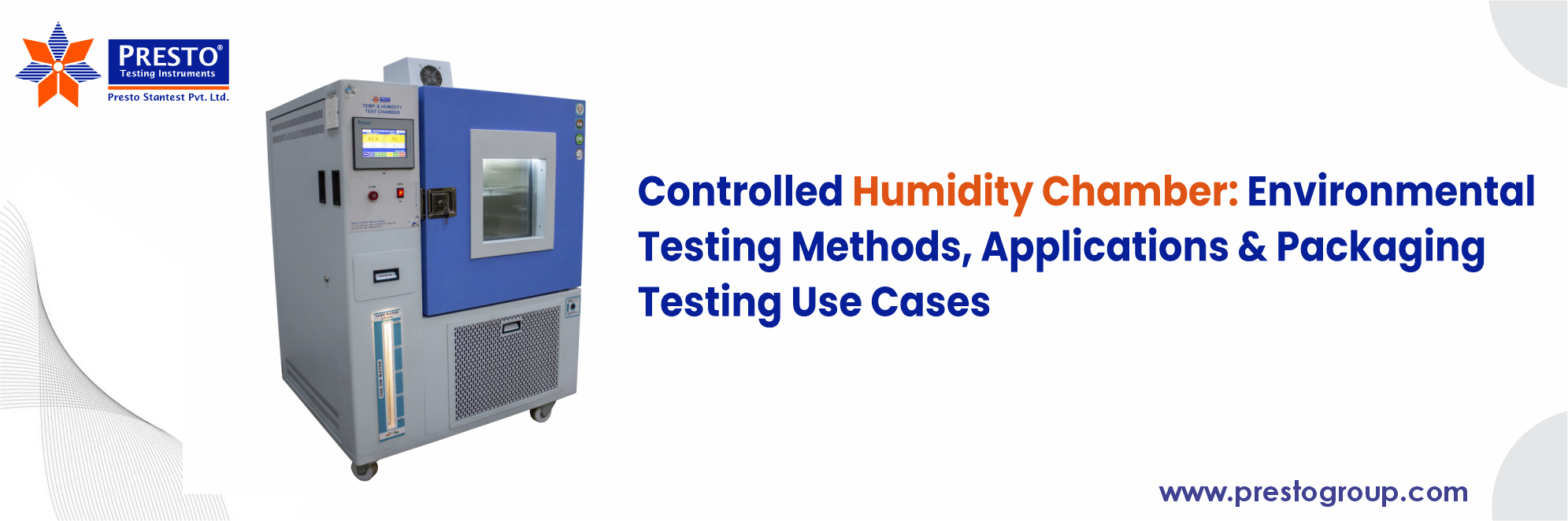
Controlled Humidity Chamber: Environmental Testing Methods, Applications & Packaging Testing Use Cases
A Controlled Humidity Chamber is a closed cabinet designed to provide a defined temperature and humidity environment for testing.
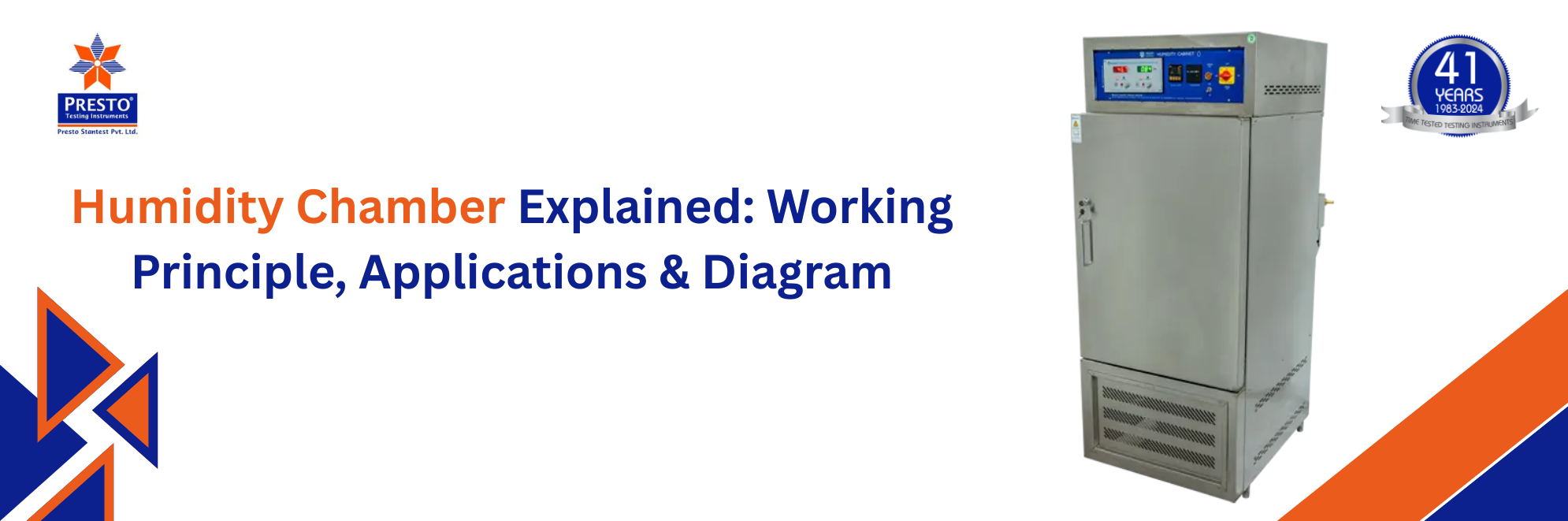
Humidity Chamber Explained: Working Principle, Applications & Diagram
Explore how a humidity chamber operates with insights into its working principle, detailed diagram, and practical applications across industries like packaging, electronics, and pharmaceuticals.
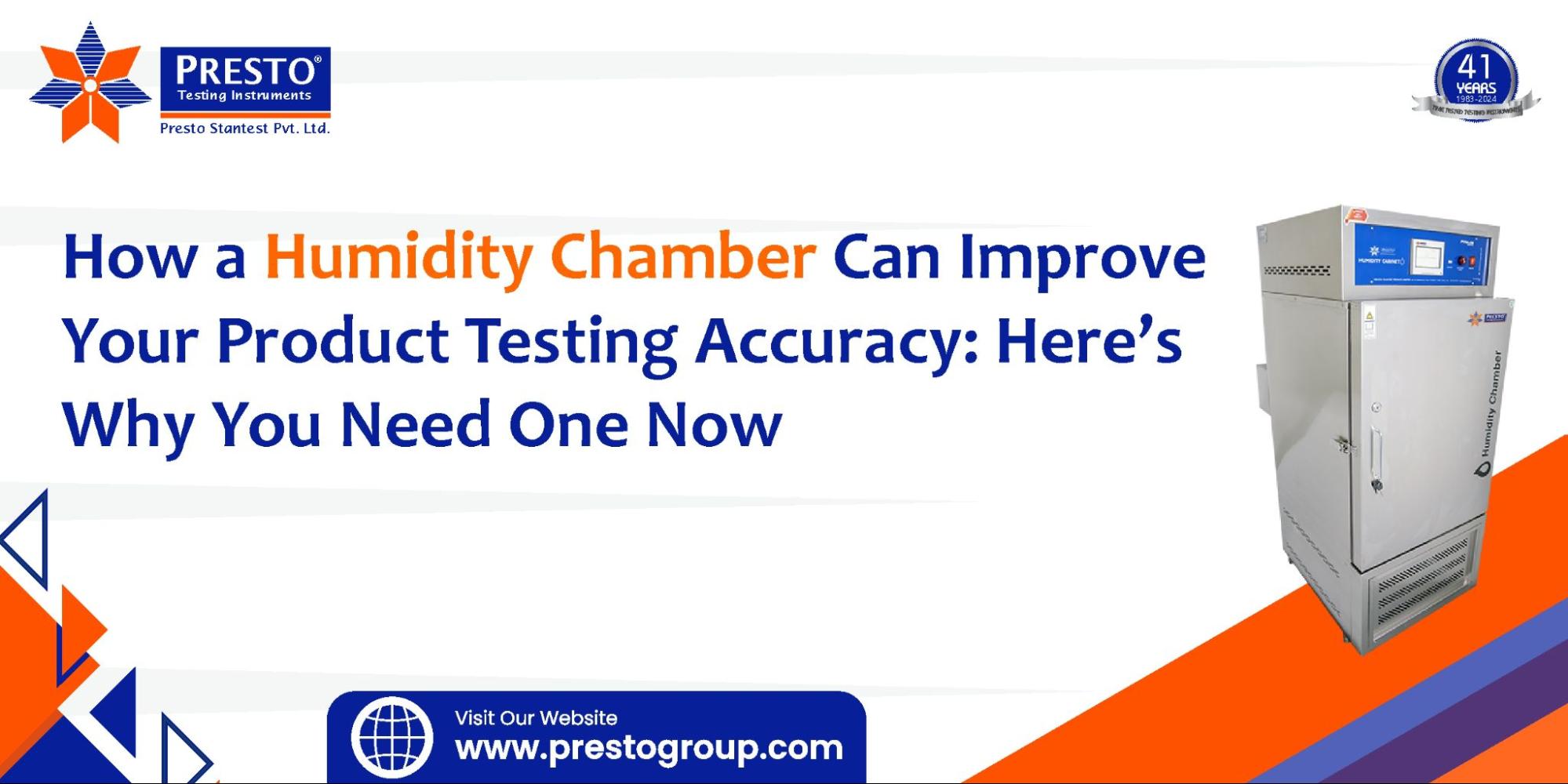
How a Humidity Chamber Can Improve Your Product Testing Accuracy: Here’s Why You Need One Now!
A Humidity Chamber is an environmental test equipment that simulates how the humidity and temperature impact the material or product during a given period.
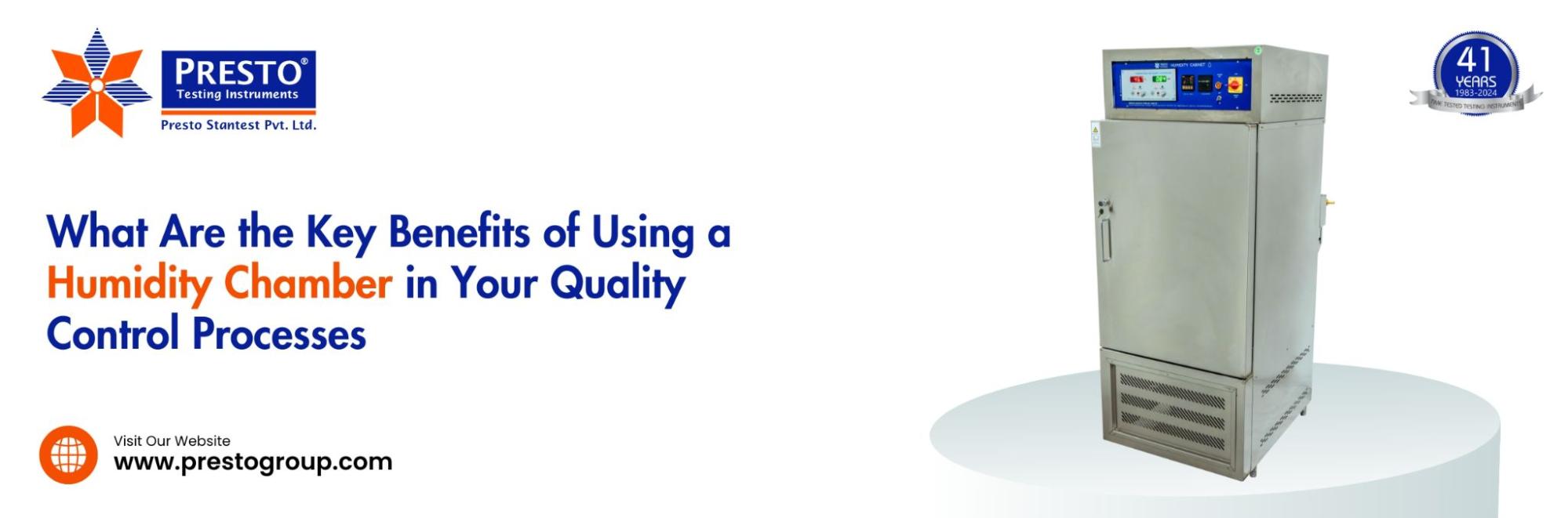
What Are the Key Benefits of Using a Humidity Chamber in Your Quality Control Processes
A humidity environmental chamber is a device used to test the effects of varying humidity conditions on materials, components, and products.
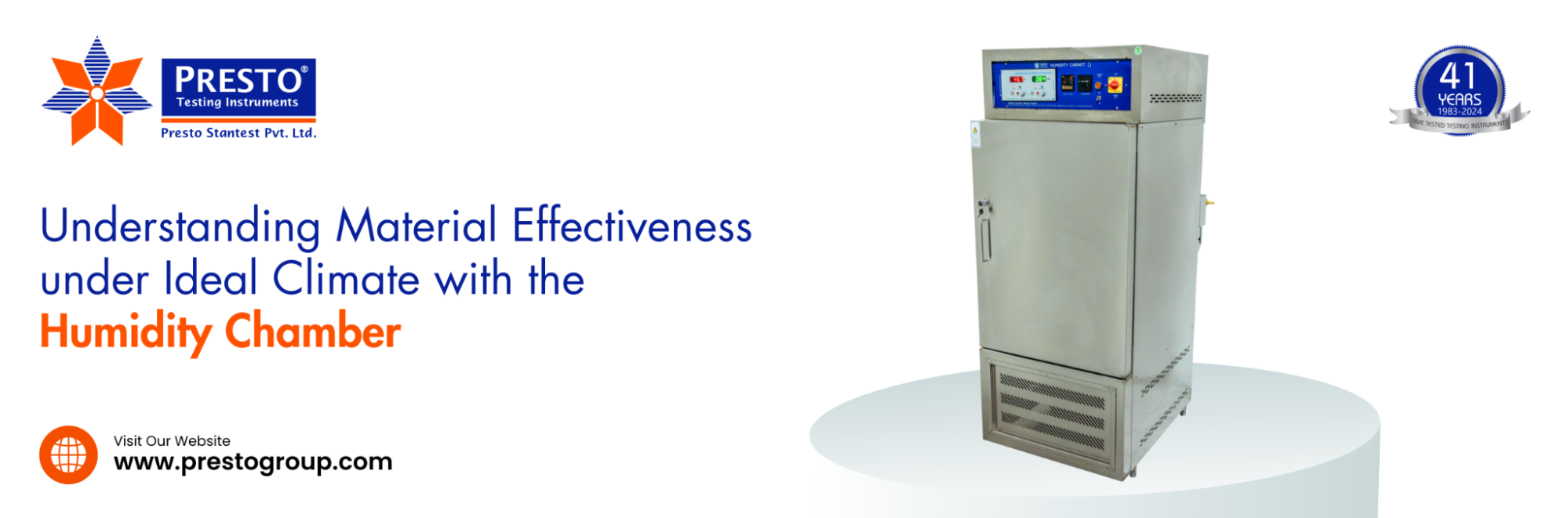
Understanding Material Effectiveness under Ideal Climate with the Humidity Chamber
To determine & understand the rust resistance properties of materials it almost becomes mandatory for manufacturers to assess the change in their properties under ideal humid conditions.