

- /
- Blog / Why Angular Drop Capability Matters in Drop Testing Machines
Why Angular Drop Capability Matters in Drop Testing Machines
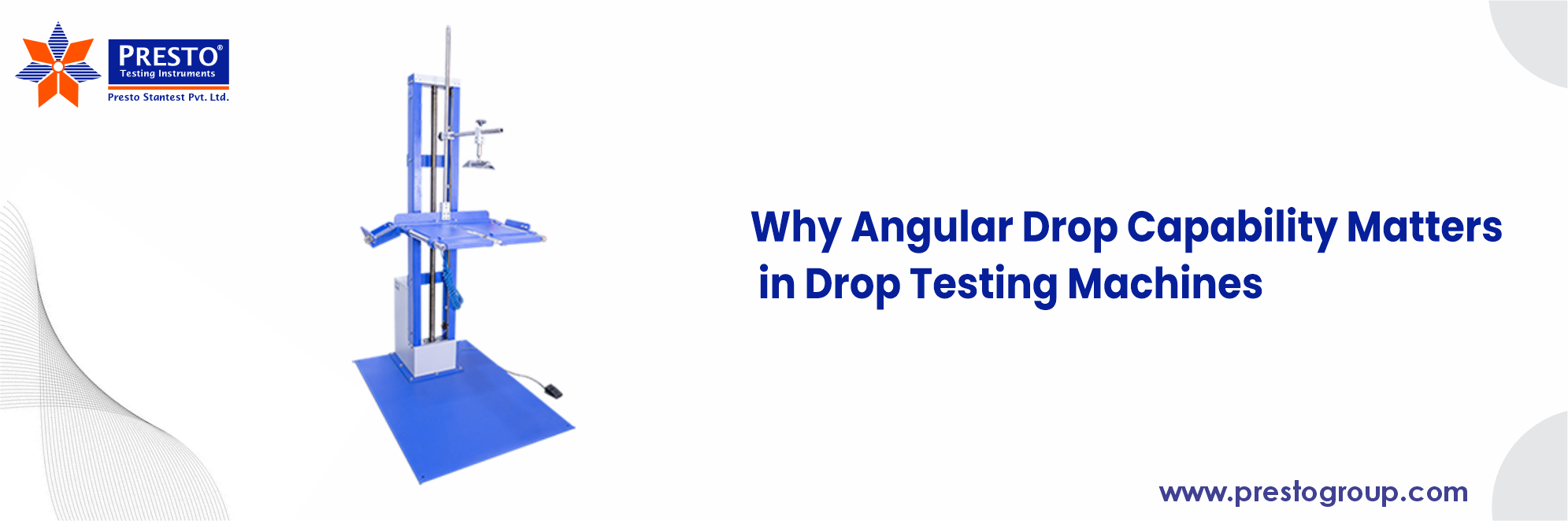
Investors looking at packaging test labs and equipment makers often see “angular drop” mentioned as a premium feature.
This is not marketing fluff; it is a real performance and risk factor.
In real supply chains, cartons rarely fall perfectly flat.
They hit edges, corners, and awkward angles, which create higher local stress and unexpected failure modes.
This is exactly what angular capability in a drop testing machine is built to simulate.
What is a Drop Testing Machine with Angular Capability?
A drop testing machine is a lab instrument that drops filled packages from a set height to check whether the packaging can protect its contents from sudden shock.
Standards such as ASTM D5276 define procedures for free fall tests on loaded boxes, bags, and cylindrical containers to assess their ability to withstand normal handling and transportation hazards.
Traditional systems focus on flat drops on faces, edges, or corners.
An advanced drop tester machine with angular capability allows the operator to set precise orientations so the package hits at a defined angle, not only flat.
This creates a much closer match to real mishandling events in warehouses and last‑mile delivery.
Why Angular Drop Test for Packaging Matters
An angular drop test for packaging simulates situations such as a box slipping off a pallet corner or tilting off a conveyor.
These events often cause more damage than a clean flat drop because impact energy concentrates at a small area like a corner or edge.
For investors, this matters because:
- It exposes “hidden” weak points that flat drops can miss.
- It gives a more realistic picture of field failure rates and claim risk.
- It supports stronger technical arguments when selling high‑performance packaging to brand owners.
When a lab can run a rigorous drop test for packaging at different angles, it can prove that a design is robust in real life, not only on paper.
Role of ASTM Drop Testing Standards
Serious buyers and brand owners expect compliance with globally recognized methods such as ASTM drop testing standards.
ASTM D5276 describes how to perform free-fall drop tests on loaded containers, including selection of orientations, heights, and inspection criteria after impact.
The standard and related guidelines also stress control of orientation and impact conditions.
The equipment must allow the container to be positioned so that it hits the intended face, edge, or corner within a few degrees, and the impact surface must be flat, rigid, and heavy enough not to deform.
A modern drop testing machine with angular control makes it easier to meet these orientation tolerances across multiple test positions.
For investors, alignment with ASTM drop testing standards signals:
- Easier audits by global customers.
- Faster onboarding of new packaging projects.
- Lower risk of disputes about test validity.
Technical Aspects Investors Should Note
Angular capability is not just about tilting a box by hand. Good systems combine precise mechanics with compliant control.
Key Technical Parameters Table
| Parameter | Conventional flat-drop tester | Angular-capable drop tester machine |
| Drop orientations | Mostly flat faces; limited edge/corner | Flat faces plus controlled corners and angled edges |
| Orientation accuracy | Basic manual positioning | Mechanisms designed to keep impact angle within a few degrees |
| Standards alignment | Can meet basic free-fall requirements | Better suited to complex orientation sequences in standards |
| Failure insight | Face crushing, obvious deformation | Localized corner crush, seam failures, closure weakness |
| Data value for design decisions | Adequate for simple packaging | Higher insight for optimized, lightweight, cost‑engineered packs |
ASTM and related methods often require multiple drops in different orientations, sometimes all on one sample, with defined heights and sequences.
An angular‑capable drop testing machine helps labs execute these sequences repeatably, which improves confidence in the data and in the resulting packaging designs.
Why Angular Capability Matters Commercially
For packaging producers, retailers, and 3PLs, the business case is straightforward.
Drop testing in general reduces transit damage, returns, and warranty claims by revealing weaknesses before mass rollout.
Angular testing takes this a step further:
- It helps validate lightweight or cost‑reduced boxes that sit closer to failure limits.
- It supports premium claims, such as “transport‑worthy” or “tested for corner impacts”, which matter to high‑value brands.
- It reduces the chance of unexpected failures when parcels are mishandled, which is common in manual handling environments.
For an investor evaluating drop test equipment manufacturers, angular capability is a signal that the manufacturer is focused on realistic logistics conditions and not only on minimal compliance.
Investor Lens: Where Is the Value?
Investors typically want to know how a feature converts into revenue durability, differentiation, or margin.
Angular drop capability influences all three.
1. Revenue durability
- Labs with advanced Drop testing machine setups can service demanding export and e‑commerce clients that insist on strict testing protocols.
- This creates stickier, higher‑value contracts.
2. Differentiation in the market
- A Drop tester supplier offering angular systems plus guidance on ASTM drop testing standards and related methods stands out from low‑cost, basic testers.
- That differentiation can justify premium pricing.
3. Margin protection
- Better test capability reduces the risk of field failures linked back to poor lab work, which could otherwise trigger penalties or reputational damage for the lab or converter.
When reviewing a drop tester machine product line, investors can look for options with angular fixtures, precise orientation control, and clear documentation of supported standards as markers of a more defensible, higher‑margin offer.
Quick Checklist for Evaluating Angular Drop Test Capability
Investors and decision makers can use a simple checklist when reviewing a lab or manufacturer:
- Does the equipment support both flat and angular drops on faces, edges, and corners?
- Is orientation accuracy documented in degrees, with reference to ASTM drop testing standards or similar guidelines?
- Are test sequences, heights, and orientations programmable or at least clearly controlled?
- Can the supplier provide case studies linking the angular Drop test for packaging to reduced damage rates in real operations?
- Does the manufacturer position itself among serious Drop test equipment manufacturers rather than purely low‑cost general machinery makers?
Labs and converters that meet most of these points are usually better placed to win long‑term packaging contracts with high‑value brands.
Partner with the Right Drop Tester Supplier
In manufacturing, angular drop capability is a clear indicator of technical depth and market focus in the packaging test ecosystem.
Backing a drop tester supplier that offers advanced, standard‑compliant systems can translate into better customer retention, premium pricing, and lower risk across the portfolio.
Those exploring this space can:
- Review current and planned models from the shortlisted drop test equipment manufacturers.
- Compare the angular features and conformance with ASTM drop testing standards and related methods.
- Engage with the sales and application teams to understand how they position Angular drop test for packaging and free‑fall Drop test for packaging in front of brand owners and logistics clients.
Businesses that wish to deepen exposure to this segment can now confidently prioritize platforms that combine robust mechanics, angular control, and strong standards alignment, then buy drop tester solutions that fit the long‑term growth of modern packaging quality and logistics performance.
Contact Presto Group Today!
Keep your products safe during transit. Pick from our extensive range of drop test equipment for accurate and reliable results!
Call us: +91 9210903903
Email: info@prestogroup.com
Visit: www.prestogroup.com
Recent Blogs
- Why Angular Drop Capability Matters in Drop Testing Machines
- How Box Compression Testing Helps E-Commerce Packaging Prevent Transit Damage
- How Durable Is Your Plastic? Insights from the ISO 180 Izod Test
- How Does the TAPPI T 494 Standard Measure Paper Tensile Strength?
- Why Is Torque Control Essential in Bottle Cap Testing?
Related Blogs
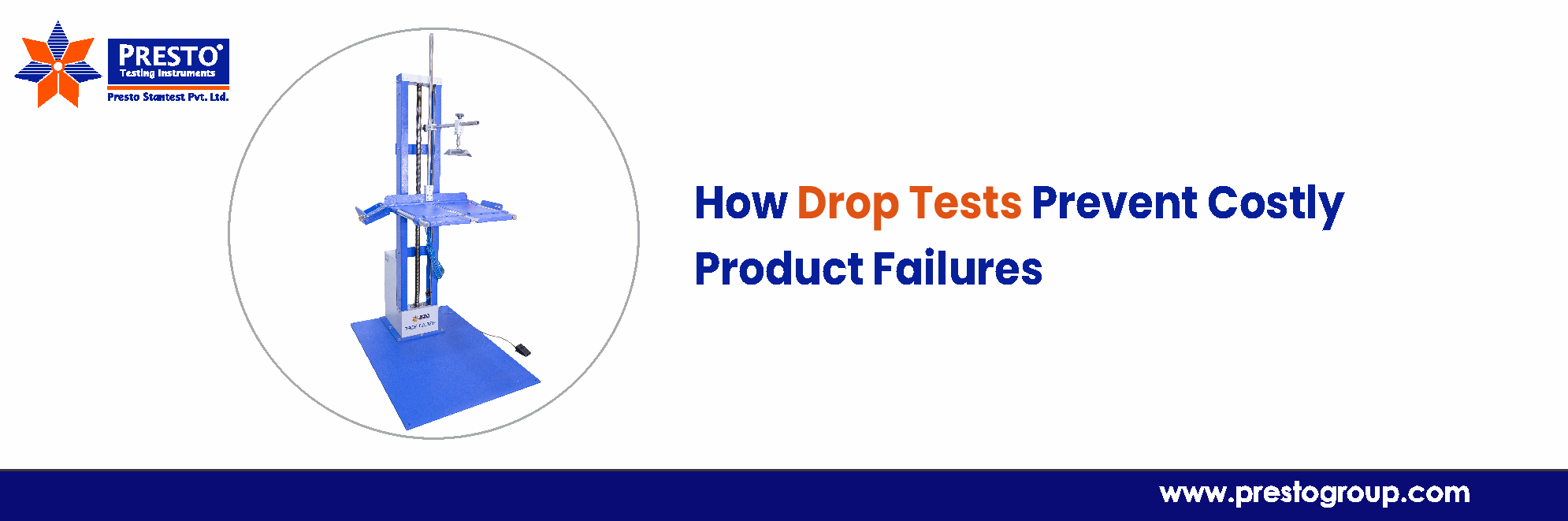
How Drop Tests Prevent Costly Product Failures
Prevent transit damage with advanced drop testing machines. Improve packaging strength, reduce returns & buy drop tester in India today.
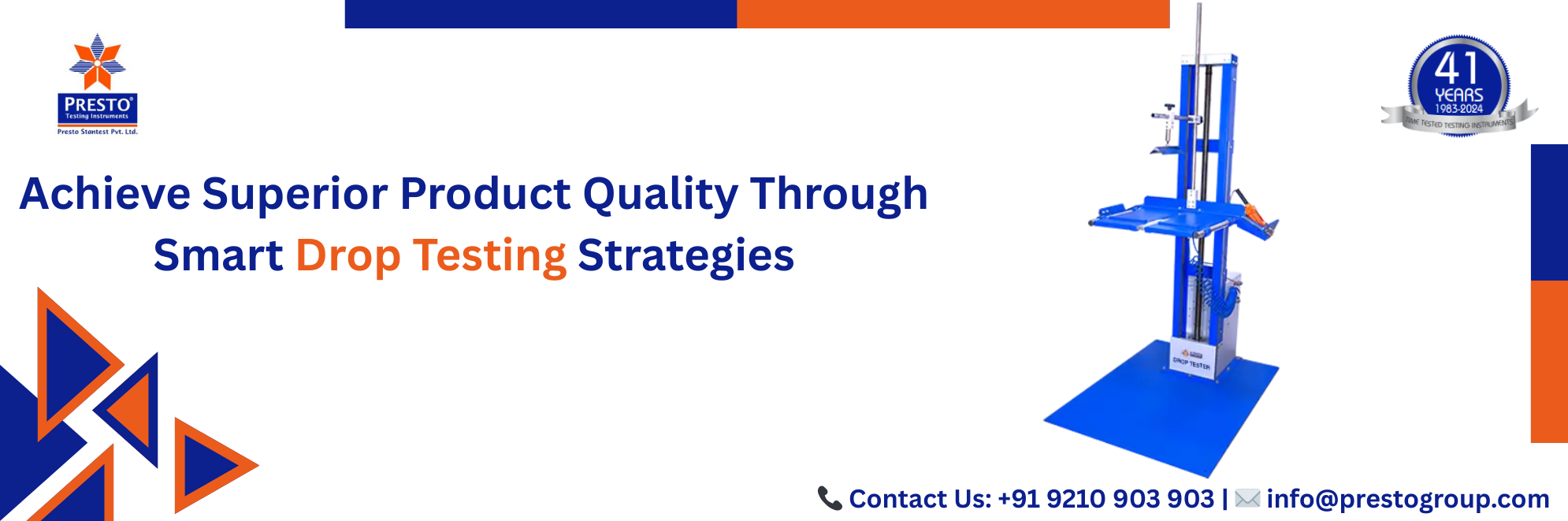
Achieve Superior Product Quality Through Smart Drop Testing Strategies
Drop Test and Drop Tester solutions help manufacturers assess and improve packaging durability by simulating real drop impacts, ensuring product safety.
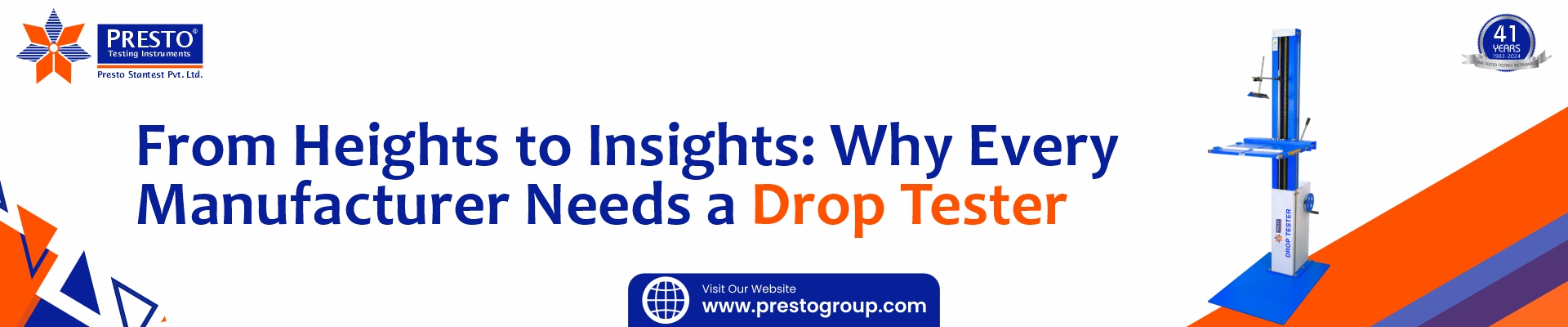
From Heights to Insights: Why Every Manufacturer Needs a Drop Tester
A drop tester refers to an apparatus used for measuring the impact strength of various products under conditions of actual drops encountered in realistic situations.
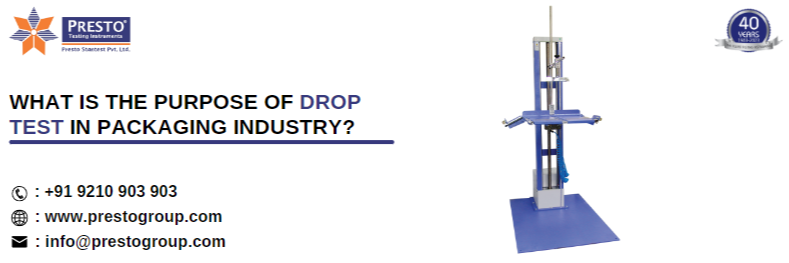
What is the purpose of drop test in packaging industry?
Have you ever thought about the sturdiness of the box against higher drops? If not, then it’s time to think about it now. The corrugated box with poor quality will not only get damaged during transit but also lead to loss of products. Thus, to ensure that your box will easily withstand the rigors of shipping and transportation, then you can easily make use of the right lab testing instrument

Why testing corrugated against higher drops is vital for accurate packaging?
When you are shipping products, you want to make sure that they arrive safely at their destination. One way to do this is to test the corrugated boxes that you are using to see how well they can withstand higher drops. To ensure that the packaging materials will withstand the higher drops, you can make use of an accurate lab testing instrument known as a drop strength tester.