

- /
- Blog / Why ASTM D642 Standard Matters in Box Compression Testing
Why ASTM D642 Standard Matters in Box Compression Testing
A logistics network annually moves goods worth trillions. Packaging protects these assets best. Profit margins shrink when packaging fails. Difficulty with damaged goods results in return shipping costs, replacement costs, and customer dissatisfaction. Smart investors understand that limiting this risk requires tight quality control.
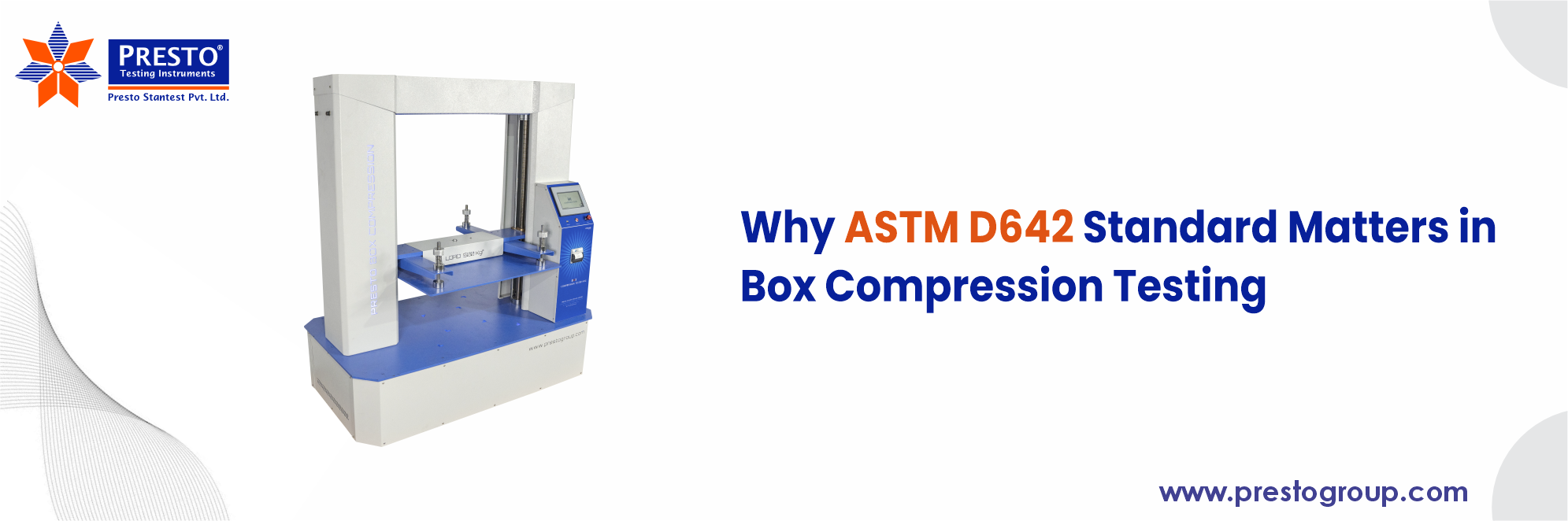
This is where Box compression testing shines. These machines analyse the maximum weight a shipping container can hold before it collapses. Unstandardized testing produces aberrant data. Industries follow protocols to achieve uniform results worldwide. Its most critical protocol is the ASTM D642 box compression test.
Knowing this standard provides insights into operational efficiency. It demonstrates how firms protect their product, optimize material use, and protect investor returns.
What is ASTM D642 Box Compression Testing
The ASTM D642 box compression test is a standard test for shipping containers. The test checks how much vertical load a box can bear when stacked. It basically simulates real warehouse stacking conditions.
It is done on a box compression testing machine. From the top, the machine applies force to the carton while the bottom remains fixed. Pressure builds until the box collapses or reaches the predefined load limit.
Results help manufacturers understand whether the packaging can survive storage and transport conditions.
Key Purpose of ASTM D642
- Evaluate the stacking strength of cartons
- Identify weak packaging structures
- Improve packaging reliability
- Reduce product damage during transport
- Support compliance with packaging standards
When companies follow ASTM guidelines, testing becomes more accurate and comparable.
Why Box Compression Testing is Important
Modern logistics involves long transportation routes and large warehouse stacks. In many cases, cartons remain stacked for weeks before shipment. Without testing, packaging failures can occur. Box compression testing helps businesses measure carton strength before products reach customers.
Key Advantages
- Better Product Protection: Strong cartons protect the product from crushing during the course of stacking.
- Reduced Product Loss: Testing helps to identify weak packaging.
- Better Packaging Design: Manufacturers have the option to vary the board thickness or flute design.
- Compliance with Industry Standards: Many global supply chains require ASTM compliance with the testing.
- Cost Optimization: Companies save on over-packaging without compromising on the carton strength.
These benefits explain why many industries rely on box compression testing.
Box Compression Test Procedure
The box compression test procedure follows specific steps to ensure accurate and repeatable results.
| Step | Procedure | Purpose |
| Sample Preparation | Prepare empty or filled cartons | Maintain test consistency |
| Positioning | Place the carton between the compression plates | Ensure proper alignment |
| Load Application | Apply force gradually from the top | Simulate stacking pressure |
| Monitoring | Observe deformation or compression | Identify failure point |
| Result Recording | Record maximum compression force | Evaluate box strength |
Testing continues until the box collapses or reaches the maximum load limit. The recorded data helps packaging engineers assess carton performance.
Understanding the Box Compression Test Formula
Engineers often estimate compression strength using the box compression test formula.
One widely referenced method is the McKee formula.
Basic Representation
BCT = 5.87 × ECT × √(Perimeter × Thickness)
Where:
- BCT refers to box compression strength
- ECT refers to the edge crush strength of the board
- Perimeter represents the box perimeter
- Thickness refers to board thickness
This formula provides a theoretical estimate. However, real testing through box compression testing is still necessary to validate packaging performance.
Role of a Box Compression Testing Machine
A box compression testing machine is designed to apply controlled compression to packaging containers. The machine records force, deformation, and compression limits. These measurements provide valuable data for packaging quality control. Modern machines include digital displays and automated measurement systems.
Features of a Box Compression Tester
- Precision load cell system
- Adjustable compression speed
- Digital control panel
- Real-time compression monitoring
- Accurate load measurement
A high-quality Box Compression tester helps ensure reliable and repeatable testing results.
Industries such as packaging, pharmaceuticals, electronics, and e-commerce regularly use this equipment.
Industries That Depend on Box Compression Testing
Industries That Depend on Box Compression Testing
There are many industries that depend on the quality of their packaging to withstand the stress of transporting their products. Some of the industries that depend on the box compression test include:
E-commerce Industry: E-commerce is an industry that depends on the box compression test. E-commerce products need to have strong cartons to withstand the stacking stress during transportation.
Food and Beverage Industry: This is another industry that depends on the box compression test. The products in the food and beverage industry need to have strong cartons to withstand the weight of the products.
Pharmaceutical Industry: The products in the pharmaceutical industry need to have strong cartons to withstand the weight of the products.
Electronics Industry: This is another industry that depends on the box compression test. The products in the electronics industry need to have strong cartons to withstand the weight of the products.
Choosing the Right Box Compression Testing Machine
Selecting the right testing equipment is essential for reliable results. Many companies prefer purchasing equipment from a trusted box compression testing machine manufacturer. A reliable manufacturer provides calibrated machines that comply with testing standards.
Important Factors to Consider
- Load capacity range
- Machine accuracy and stability
- Compression speed control
- Software integration
- Calibration support
- Technical service availability
Companies planning to upgrade their packaging laboratories often choose to buy a Box Compression tester from certified suppliers. Investing in the right machine improves packaging quality control.
How ASTM D642 Supports Better Packaging Design
Testing not only identifies weak cartons. It also helps improve packaging design.
Manufacturers use testing data to refine material selection and structural design.
Examples include:
- Selecting stronger corrugated boards
- Improving flute structure
- Reinforcing carton corners
- Adjusting pallet stacking patterns
- Reducing unnecessary packaging material
Following ASTM guidelines helps maintain consistent packaging quality.
Improve Packaging Quality with Reliable Testing
Packaging strength is an important factor to enhance the efficiency of the supply chain. ASTM D642 box compression test helps to test the quality of the cartons by compressing them. Companies that implement the ASTM D642 box compression test standard enjoy the benefits of effective control over the quality of the packages.
Hence, a reliable box compression testing machine supplier helps to attain high-quality testing equipment.
Contact Presto Group Today!
If your organization plans to upgrade its packaging quality control system, now is the right time to buy a Box Compression tester and strengthen your testing process.
Better testing leads to stronger packaging and safer product delivery. Get in touch with our experts today!
Call us: +91-9210903903
Email: info@prestogroup.com
Visit: www.prestogroup.com
Recent Blogs
- Why ASTM D642 Standard Matters in Box Compression Testing
- Flexible Packaging & Pouch Testing Instruments Seal Strength, Barrier & Durability Testing
- Testing Instruments & Lab Equipment Complete Guide to Industrial and Packaging Testing Machines
- Paper GSM Testing Machine Measuring Paper Weight for Packaging Quality Control
- Compression Testing Machine Operating Method & Packaging Strength Testing Applications
Related Blogs
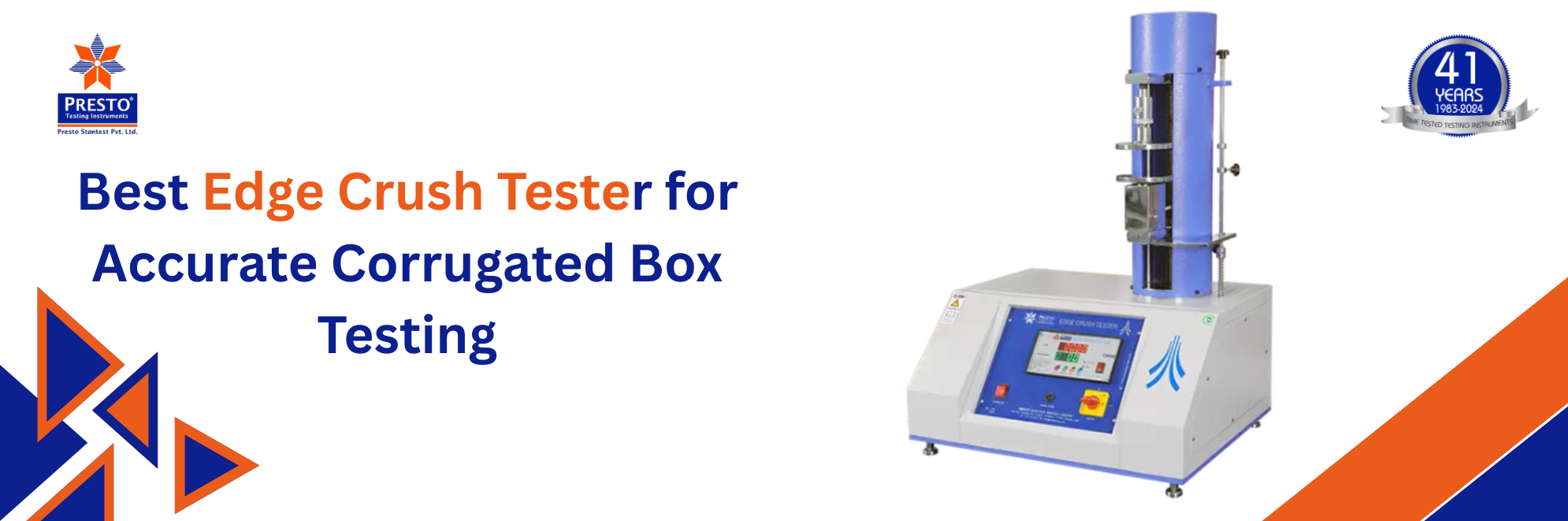
Best Edge Crush Tester for Accurate Corrugated Box Testing
Discover how the Edge Crush Tester helps evaluate box strength. Perform accurate Edge Crush Tests for reliable packaging quality control.
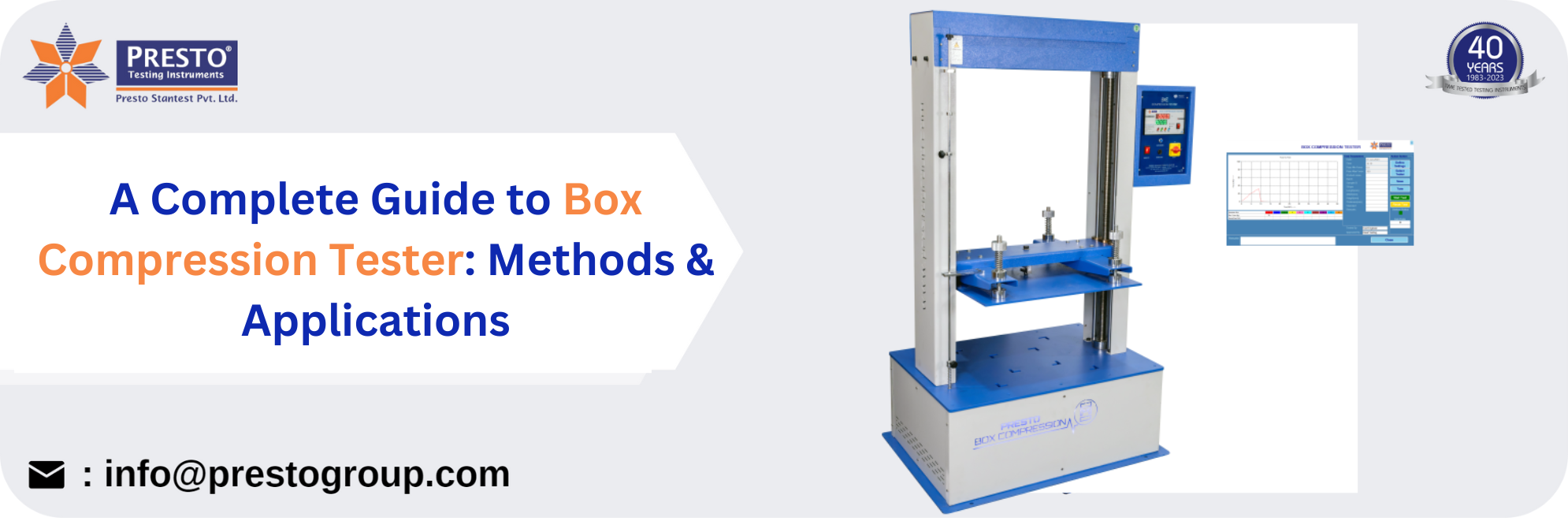
A Complete Guide to Box Compression Tester: Methods & Applications
A Box Compression Tester is a crucial tool for evaluating the compression strength of packaging materials.
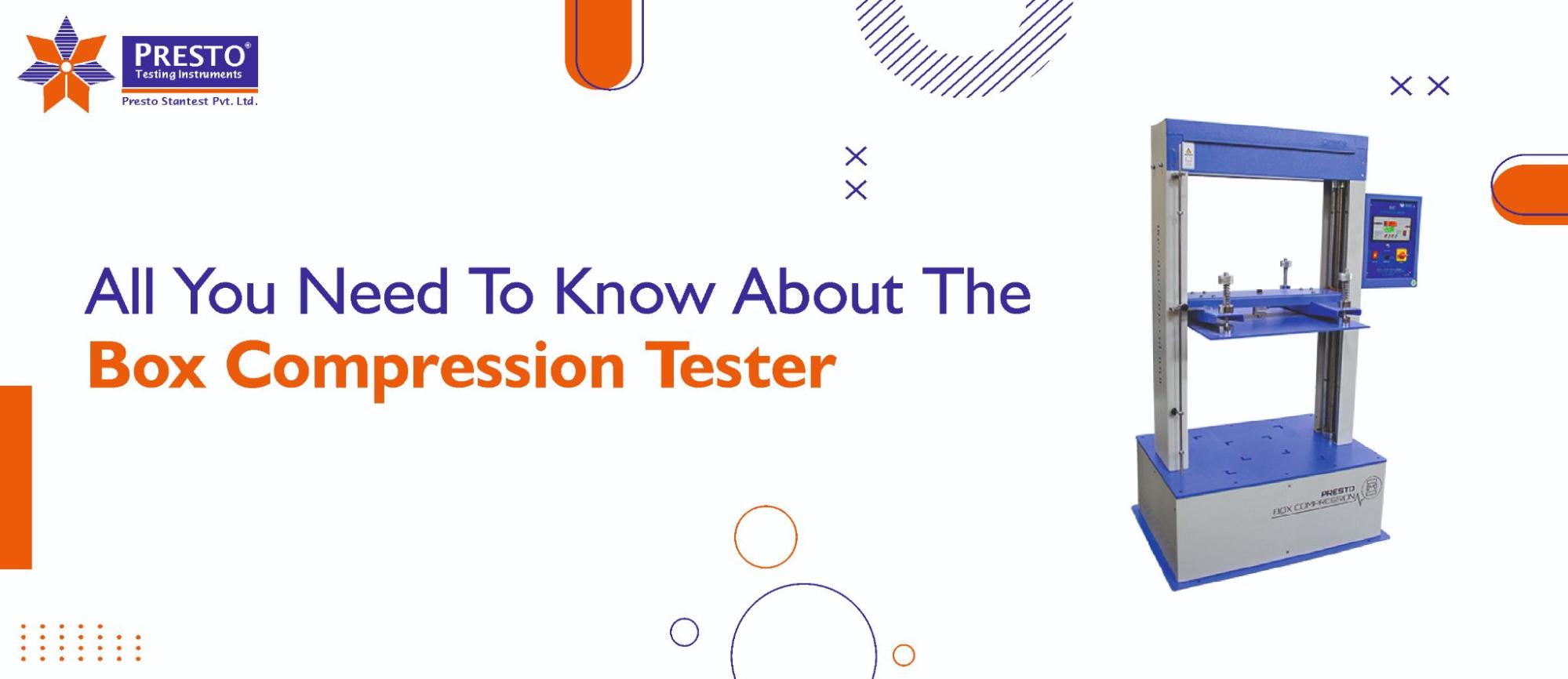
All You Need To Know About The Box Compression Tester
A box compression tester, or BCT, is a device that determines a box' s compressive strength by simulating conditions that a box can experience during transportation and storage.
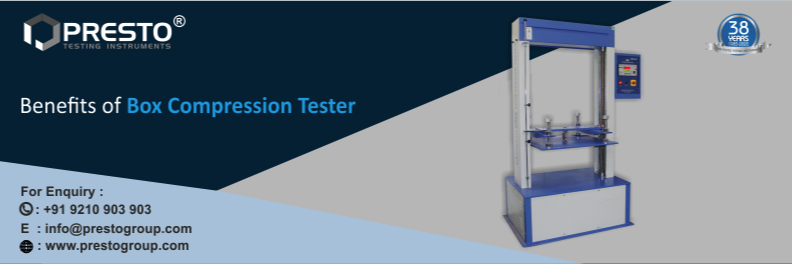
Benefits of Box Compression Tester
Compression force experienced during transportation, warehousing and distribution is one of the toughest challenges faced by goods and packages.
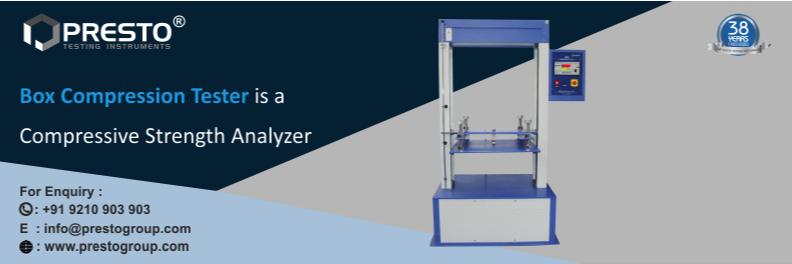
Box Compression Tester Is A Compressive Strength Analyzer
Packaging is helpful as it serves a lot of purposes such as protecting goods at the time of transit, saving cost, providing information about the goods, extending durability and giving safety from external factors such as heat, pressure, etc. A package to be transported should be light weighted and strong enough to make it cost effective.