
- /
- Publications / Crush Strength Testing of Catalyst Pellets
Crush Strength Testing of Catalyst Pellets
Crush Strength Testing of Catalyst Pellets
.png)
Crush Strength Testing of Catalyst Pellets
Solution
- Software-controlled compression testing system.
- Precision self-leveling steel compression plates.
- Sample container and plunger fixtures for bulk testing.
Benefits
- A single machine accommodates all pellet geometries.
- Software control ensures repeatable testing across multiple material standards.
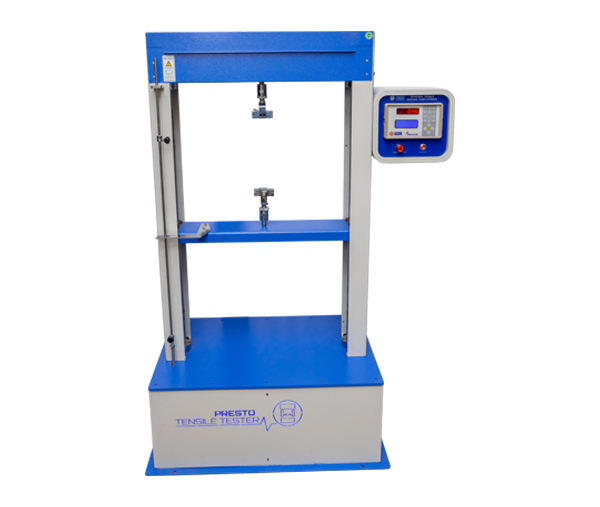
As a result of the introduction of the Presto Stantest compression testing system, manufacturers are now able to accurately crush-strength test their own catalyst pellets and catalyst carriers and, more importantly, to understand catalyst materials' fracture behaviors. The system, equipped with software-controlled routines, self-leveling compression plates, and special fixtures, can be used for testing all types of ground tablets, rings, extrudates, granules, pellets, and spheres on the same system. Repeatable tests can be performed based on ASTM D4179, ASTM D6175, and ASTM D7084 and provided with clear graphical results and pass/fail testing with fast analysis. The machine is capable of recording accurate force data in single pellet and bulk crush testing modes, which is essential for industries to monitor the mechanical strength of the catalyst and stability of the process. This has led to more consistent testing, lowered the risks of material failure, and, of course, contributed to the improvement of the quality control of the process of producing catalysts and industrial chemicals.
Requirement
In industrial processes, catalysts play a vital role, and the rate of reaction and the yield directly influence the level of productivity. Catalysts reduce the activation energy of the reaction and may do so at reduced temperatures. In order to be efficient, catalysts should possess high adsorption and mechanical strength.
Weak or fine pellets may cause fines or fragments, causing a blockage in the reactors, a pressure drop, and also an unequal transfer of heat. The mechanical strength of catalyst pellets should, hence, also be assessed in order to make the processes reliable and to maintain the quality of the products of the process.
Types of catalyst forms are numerous; they may be in the form of pellets, granules, spheres, tablets, rings, and extrudates. Most of them are brittle and do not experience much deformation when subjected to fracture, which presents special testing problems. To address this, specific standards have been developed to suit different particle geometries and material types.
Solution Implementation
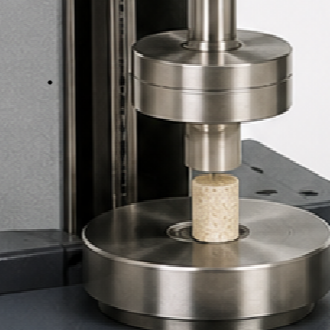
- ASTM D4179 – Measures single pellet crush strength for formed catalysts and carriers such as spheres, short cylinders, or tablets. Radial or axial crush testing is possible, with radial crush considered more representative of real reactor conditions. Force is applied at a controlled rate until initial collapse, recording peak crush strength.
- ASTM D6175—Measures radial crush strength of extruded catalysts (1.6–3.2 mm diameter, L:D ratio ≥ 1:1). Only radial crush is permitted, and force per millimeter of deformation is recorded, covering crush strengths from 0 to 65 N/mm.
- ASTM D7084 – Bulk crush strength testing for irregular particles or large beds of catalyst granules (0.8–4.8 mm). Particles are loaded in a cylindrical holder and compressed with a plunger at a uniform rate. Pressure is applied for 30 seconds and released slowly. recording the point where 1% fines pass through a sieve. Typical pressures range from 0.1 to 0.35 MPa for granules and 1 to 3.5 MPa for larger formed materials.
Presto Stantest’s Zeus Ultimo 3.0 UTM force testing systems are well-suited for both single-pellet and bulk crush strength evaluation. Robust frames with precision cells, combined with user-friendly software, capture data at 1 kHz to accurately record sudden fractures. Test results are plotted clearly, with mean crush strength, pass/fail criteria, and direct export to Microsoft™ Excel.
A range of self-aligning compression plates is available for single pellet testing, alongside succulometer or custom piston-and-container fixtures for bulk testing of particles, pellets, and granules.
Test Equipment
- Zeus Ultimo 3.0 Universal Testing Machine
- Self-leveling compression plates
- Custom or standard succulometer/dual-extrusion fixtures
- Force testing software
Applicable Standards
- ASTM D7084-04 – Bulk Crush Strength of Catalysts and Catalyst Carriers
- ASTM D6175-03 – Radial Crush Strength of Extruded Catalyst Particles
- ASTM D4179 – Single Pellet Crush Strength of Formed Catalysts

1.png)
.png)
.png)