

- /
- Blog / How Box Compression Testing Helps E-Commerce Packaging Prevent Transit Damage
How Box Compression Testing Helps E-Commerce Packaging Prevent Transit Damage
What is Box Compression Testing?
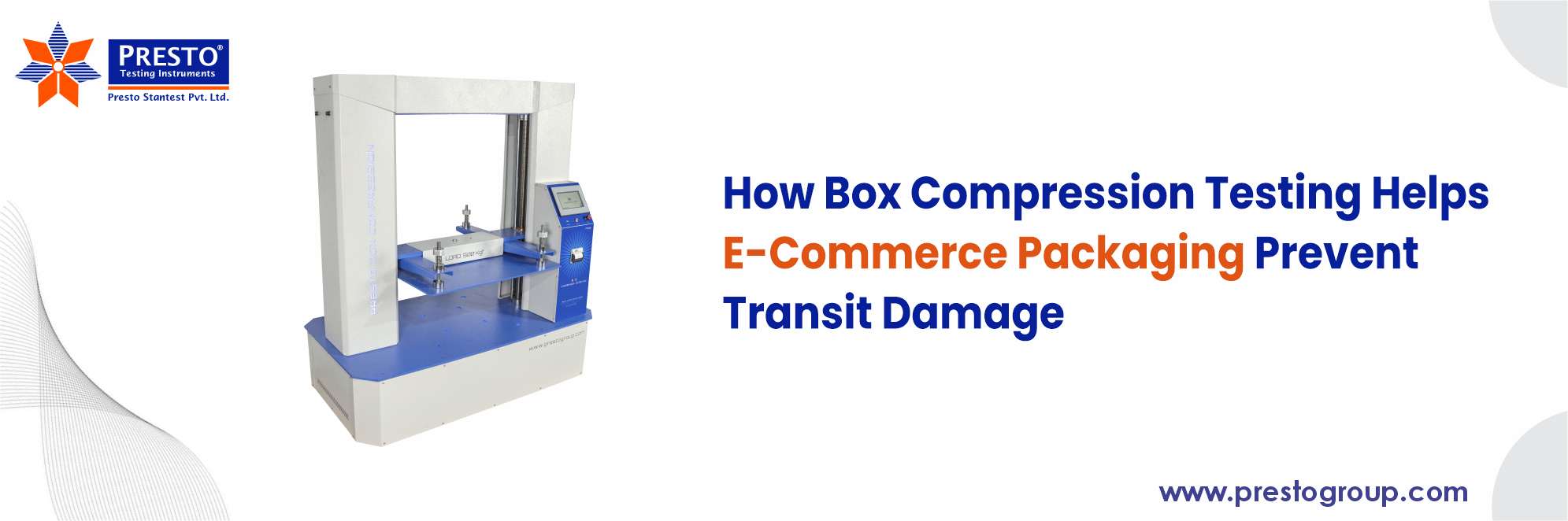
Box compression testing is a test that evaluates the maximum vertical load a corrugated box can support without any signs of bending or collapse. This test evaluates whether a shipping box is able to support itself in storage without any signs of collapse.
In box compression testing, a box is subjected to a test carried out by a box compression testing machine. The test determines the maximum load a box is able to withstand. This maximum load is then referred to as the BCT value. This value is then the primary value for the packaging team.
How Does The BCT Test Work?
A Box compression testing machine, or lab-grade carton compression tester, runs a controlled, repeatable procedure.
Basic steps:
- Place the assembled carton between the upper and lower plates.
- Apply a steadily increasing compressive force from top to bottom.
- Record the exact force at which the box deforms or fails.
- Compare the result with the required BCT for that SKU.
- This process simulates stacking conditions in warehouses, trailers, and containers, so lab performance closely aligns with performance in real supply chains.
This process simulates stacking conditions in warehouses, trailers, and containers, so lab performance closely aligns with performance in real supply chains.
How Does Box Compression Testing Reduce Transit Damage?
Packaging compression testing turns those physical risks into objective numbers. E-commerce brands can then design and verify cartons for realistic worst-case scenarios.
Typical workflow:
- Calculate expected stack load, storage time, and safety factor for each box size.
- Select the board grade and design that should deliver that BCT value.
- Confirm real performance using routine E-commerce packaging testing on production samples.
When every carton style has a defined BCT requirement and a matching test record, the packaging system becomes predictable instead of intuitive. This directly lowers damage rates and return costs over time.
What Is The Investor Level Impact Of Strong Compression Data?
For investors, reliable carton compression testing is not just a technical detail. It is a signal of supply chain discipline. Lower damage and better packaging design flow through to unit economics.
| Investor question | What the data from Packaging compression testing shows | Likely business impact |
| Can cartons survive peak season stacking? | Verified BCT values compared with peak stack load and duration | Fewer bulk loss events, more stable gross margins |
| Is packaging over built or under built? | Spread of board grades vs product weight and fragility | Reduced material cost without raising damage risk |
| How strong is quality governance? | Frequency of E-commerce packaging testing and scope across plants and 3PLs | Better control of failure points in outsourced operations |
| Is sustainability backed by data? | Ability to down gauge while maintaining target BCT | Lower material footprint with steady customer experience |
A company that talks clearly about Box compression testing machine usage, targets, and trends usually has a more mature approach to packaging, logistics, and risk.
What Should Investors Look For In Testing Equipment And Suppliers?
Behind good data, there is usually robust equipment. Many companies rely on a dedicated Compression testing machine for boxes sourced from a specialist Box Compression tester manufacturer.
Key points to check:
- Load range that covers current and future carton sizes
- Control over test speed and dwell time to match standards like ASTM D642 and ISO 12048
- Digital data capture for trend tracking and dashboards
- Calibration and service support from the supplier
When a lab or plant uses a high-quality carton compression tester, results are more repeatable and more credible for board suppliers, customers, and investors.
When Does It Make Sense To Buy Your Own Tester?
As volumes and SKU counts rise, many brands choose to buy Box Compression tester units rather than depend only on third-party labs.
Owning a system like this offers:
- Faster feedback when damage spikes appear in a region or channel
- More frequent spot checks across different board suppliers
- On-site support for packaging changes, new launches, or promotional packs
External labs still matter for certifications and complex investigations, but in-house capability builds speed and learning. A mixed model often works best at scale.
How Do Proprietary And Advanced Protocols Add Value?
Some organizations brand their internal methods as IBox compression testing or similar proprietary protocols. The label is less important than the practice behind it.
What matters to an investor is that:
- Methods follow recognized compression standards with clear safety factors.
- Carton compression testing is linked to specific SKUs, not just generic box sizes.
- Packaging compression testing data drives board changes, supplier selection, and cost optimization decisions.
This shows that the laboratory is not just a compliance cost but a design and risk-management partner.
What Should Investors Do Next?
For investors who want to go deeper, practical next steps are simple and focused:
- Ask portfolio companies which SKUs have defined BCT targets and how often they are tested.
- Request recent trends in damage-related returns by channel and region.
- Check if the company plans to buy Box Compression tester systems or upgrade the current Box compression testing machine setups.
- Encourage leadership to treat e-commerce packaging testing and packaging compression testing as strategic tools, not just as a line in a certification report.
When box strength is engineered and proven through regular Carton compression testing, e-commerce brands protect revenue, defend reputation, and build stronger stories for both customers and capital markets.
Bottom line
One might think that something like compression strength is purely a lab measurement, but it’s actually quite close to something like cash flow. Well-designed, well-tested packaging can help reduce damage, lower freight costs, and preserve brand reputation all at the point of delivery.
Packaging compression testing, backed by a strong testing machine for boxes, can actually provide management with strong levers to manage material costs against risk. Ultimately, this manifests as stability in the business, reduced operational surprises, and happy customers.
Contact Presto Group Today!
Take complete control over cost and packaging strength. Check out our exclusive range of box testing equipment and start optimizing the results today!
Call us: +91 9210903903
Email: info@prestogroup.com
Visit: www.prestogroup.com
Recent Blogs
- How Box Compression Testing Helps E-Commerce Packaging Prevent Transit Damage
- How Durable Is Your Plastic? Insights from the ISO 180 Izod Test
- How Does the TAPPI T 494 Standard Measure Paper Tensile Strength?
- Why Is Torque Control Essential in Bottle Cap Testing?
- Precision in the Air: How Humidity Chambers Enable Reliable Lab Testing

Related Blogs
Why ASTM D642 Standard Matters in Box Compression Testing
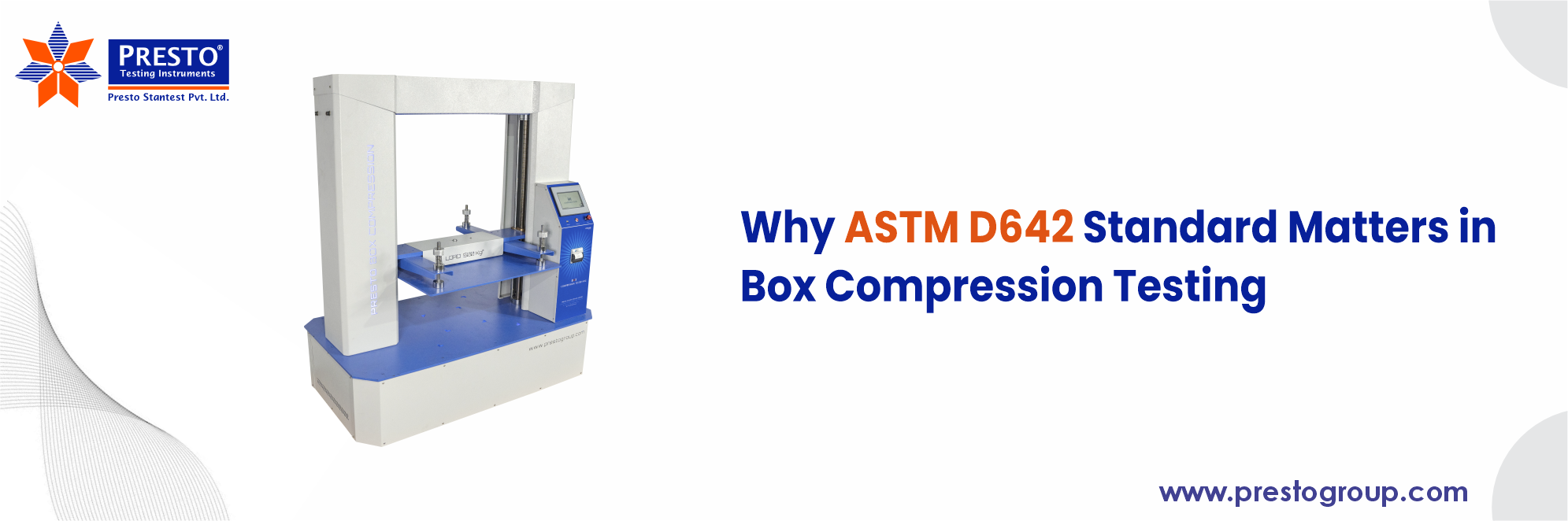
This is where Box compression testing shines. These machines analyse the maximum weight a shipping container can hold before it collapses. Unstandardized testing produces aberrant data.
Optimize the Shipping Reliability of Boxes with the Box Compression Strength Tester
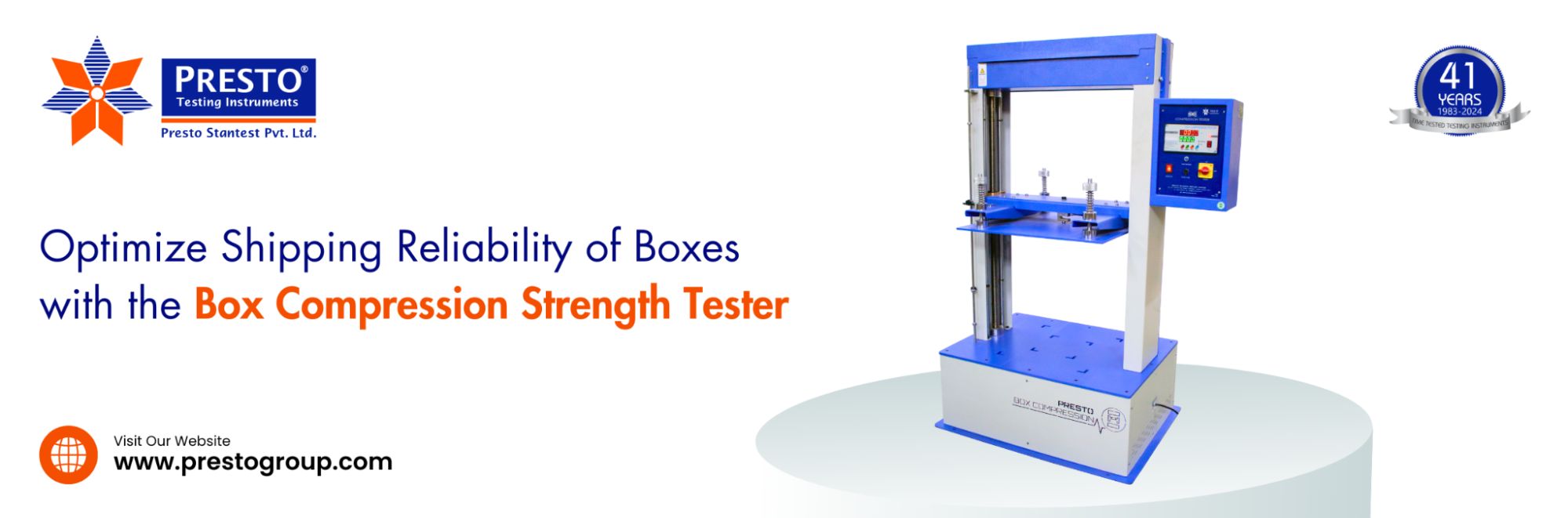
The brands make sure that after the manufacturing process, these products remain up to the mark as there are numerous instances when they have to travel a long journey before reaching the end consumer
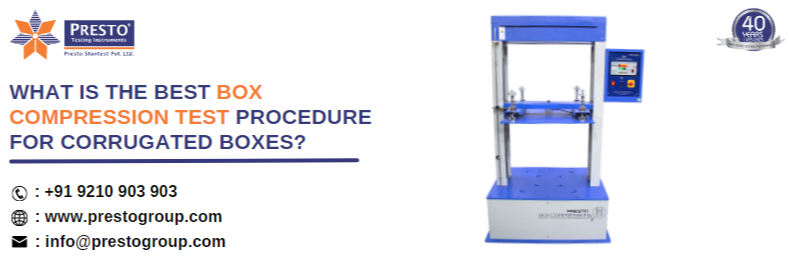
What is the best box compression test procedure for corrugated boxes?
Corrugated boxes are widely used for shipping and transporting a variety of products. If the box is not strong enough, it can collapse under the weight of the products, causing damage and potentially even leading to product loss. Thus, testing each and every quality factor of these boxes is important to ensure that quality material will be delivered to the customers.
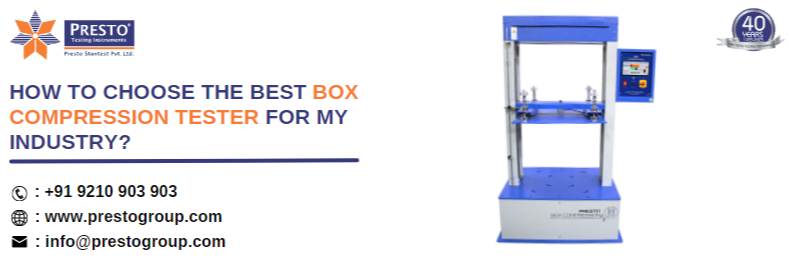
How to choose the best box compression tester for my industry?
Boxes are everywhere around us, from the packages we receive in the mail to the cereal boxes we grab off the shelves at the grocery store. But have you ever wondered how strong those boxes really are? That's where box compression testing comes in. By conducting box compression tests on the materials, one can easily evaluate the compression strength of boxes and ensure that they will not get damaged in between shipping or stacking.
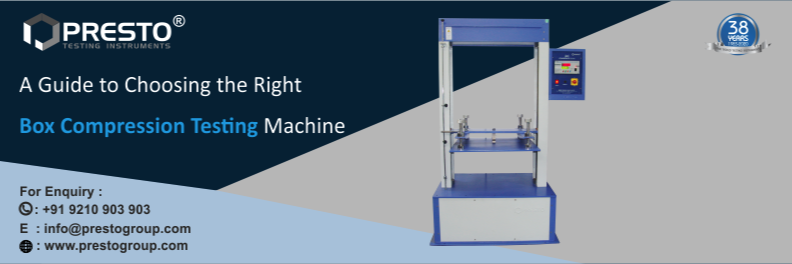
A Guide to Choosing the Right Box Compression Testing Machine
If you are working in a corrugated box industry, then you must have the idea of a compression testing machine. This is one of the majorly used testing instruments used in the packaging industry that will help you to determine the compressive force required to compress the material. This is because the strength of corrugated boxes matters the most while delivering your material accurately.