
- /
- Publications / Solar Panel Peel Testing
Solar Panel Peel Testing
Solar Panel Peel Testing
Solar Panel Peel Testing
Solution
- Semi-automated, repeatable testing in line with international standards.
- Data acquisition for quantitative comparison of samples.
Single system capable of testing multiple layers within composite PV modules
Benefits
- Software-controlled tensile tester.
- Pinch grips designed for handling thin sheets and foil specimens.
- Peel table fixture for 90° peel tests.
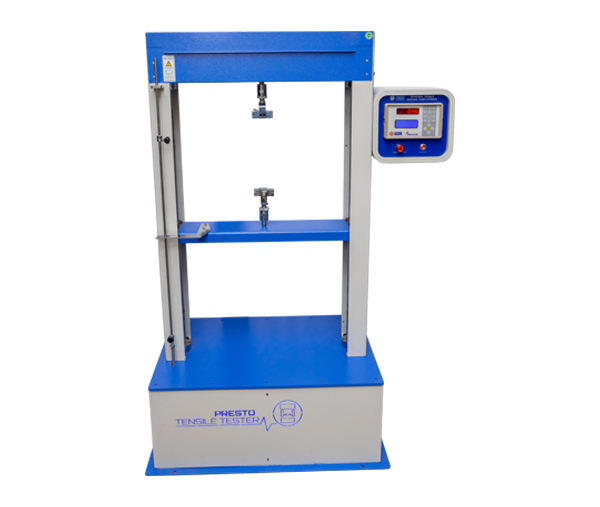
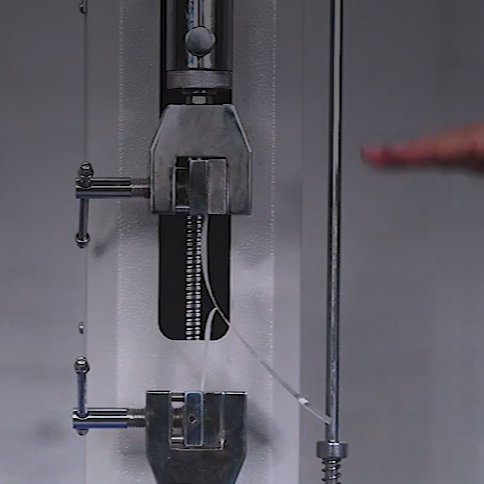
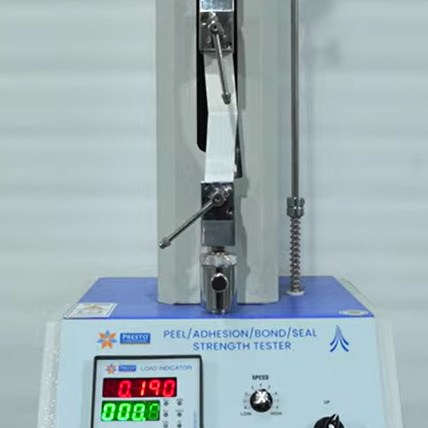
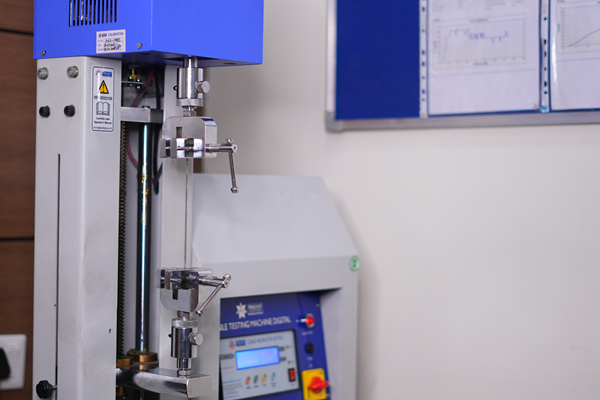
The Presto Stantest peel testing system has been an aid to the successful adhesion testing of layers and interconnection ribbons within photovoltaic (PV) modules by solar panel manufacturers for accurate and repeatable test results. A software-controlled tensile tester equipped with pinch grips and 90° peel table fixtures can be used to test the peel strength, bonding quality, and laminate integrity based on IEC 61730-2, ASTM D6862-11, and BS EN 28510-1 standards. The system facilitates testing of many PV module layers in the same system with controllable peel angles and test speeds to ensure consistent results. Real-time force graphs and automated data acquisition ease the comparison of the different samples, validation of the different production methods, and identification of weaker bonding spots before the failure of the module. The testing process has enhanced the quality control, simplified regular testing, and ensured the long service life and stability of solar panels in harsh environments.
Requirement
A solar panel (a photovoltaic PV module) is capable of working under extended conditions of extremely high and extremely low temperatures, ultraviolet radiation, precipitation, ice, and wind. During the lifecycle, the module has to maintain mechanical and electrical integrity. In the solar industry, peel testing is a key mechanical evaluation, particularly for multi-layer laminated modules.
Peel tests primarily assess the adhesion of interconnection ribbons to the metallized surface of solar cells. The common specimens are small ribbons made of copper and attached to crystalline silicon substrates. Peel or fracture pattern forces are measured to obtain important quality indicators to reject or accept cell types, to confirm metallization paste or conductive adhesives, or to optimize production processes, including soldering, tabbing, or stringing.
Peel tests are also performed on PV laminate interfaces, including encapsulant polymers (EVA) and protective back sheets. Any delamination can compromise corrosion resistance, allowing moisture ingress or oxidation, which reduces module efficiency. The 90° peel resistance tests used on these interfaces are described in standards ASTM D6862-11 and BS EN 28510-1 to provide similar and consistent results.
Solution Implementation
A motorized tensile tester (such as the Zeus Ultimo 3.0 of Presto Stantest) equipped with the correct load cell, thin-sheet grips, and software to produce peel force graphs is used to test it. The angles of peel are 45°, 90°, and 135°, which are applied depending on the application, and test speed has a substantial impact on the results, and therefore, the parameters should remain constant to make meaningful comparisons.
EN 50461 and IEC 61730-2 international standards specify a test peel speed and angle of 50 mm/min and 90 deg., respectively, of soldered or glued ribbons with a minimum peel strength of 1 N/mm in width. With the software, the manufacturer can construct a library of test routines that would allow them to repeat adhesion testing of various layers of the PV module. The grips or the fixtures can be changed easily, and they can be quickly and reliably tested on a variety of samples.
Test Equipment
- Zeus Ultimo 3.0 software-controlled tensile tester.
- Force software for data acquisition.
- Pinch grips for thin and foil specimens.
- Peel table fixtures for 90° testing.
Applicable Standards
- IEC 61730-2 – PV module safety qualification, Part 2: Testing requirements.
- ASTM D6862-11—90° peel resistance of adhesives.
- BS EN 28510-1 – Peel test for flexible-bonded-to-rigid specimens at 90°.
Test standards

1.png)
.png)
.png)