

- /
- Article / Laminar Air Flow in Microbiology: Applications and Benefits
Laminar Air Flow in Microbiology: Applications and Benefits
Gaurav Malhotra
22-3-2025
In industries where contamination control is critical, maintaining a sterile environment is essential. Laminar air flow systems provide a clean, particulate-free workspace, widely used in microbiology labs, pharmaceuticals, electronics manufacturing, and cleanroom environments. Whether you are working with sensitive experiments or manufacturing precision products, a high-quality air filtration system ensures a contamination-free setting.
In this guide, we will explore the laminar air flow principle, its uses in microbiology, different types of cabinets, pricing factors, and essential buying tips.
What is Laminar Air Flow?
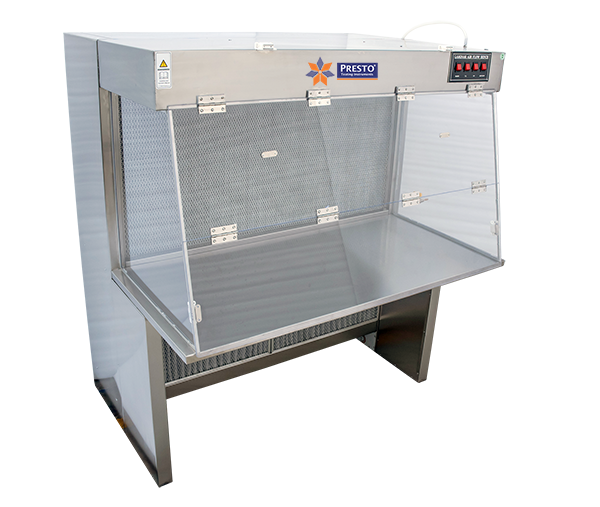
Laminar air flow refers to an air purification system that provides a unidirectional, steady flow of clean air at a constant speed. This system effectively prevents airborne contaminants from entering the workspace by using HEPA (High-Efficiency Particulate Air) or ULPA (Ultra-Low Penetration Air) filters. These filters trap dust, bacteria, and other microscopic particles, ensuring a sterile workstation for laboratory research and industrial applications.
Laminar Air Flow Principle
Its working principle follows the single and uniform air flow, hence avoiding agglomeration and turbulence of particles. Air moves within the cabinet, subsequently through HEPA/ULPA filter, and on to the work surface evenly before it is released. The system allows the removal of any existing contaminants at all times, and hence, it is a critical tool for use in cleanroom equipment and biosafety applications.
How Does a Laminar Flow System Work?
The air handling sequence in a laminar flow cabinet:
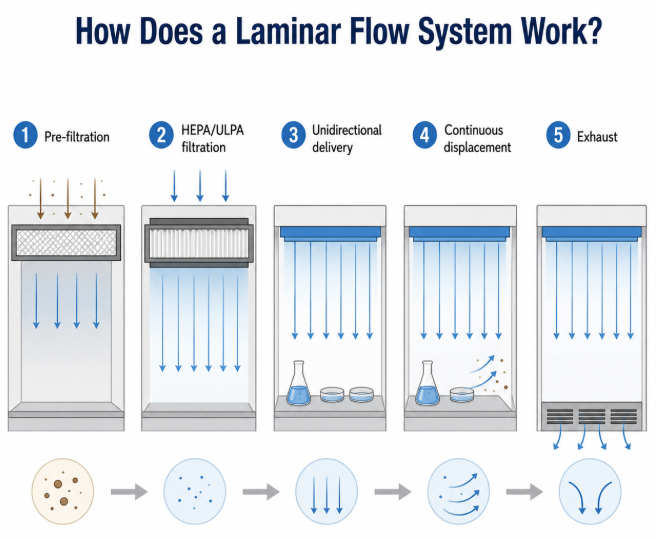
Pre-filtration — Room air is drawn in and passes through a coarse pre-filter that removes larger particles like dust and lint. This protects the HEPA filter from premature clogging and extends its service life.
HEPA/ULPA filtration — Air passes through the main filter, which removes bacteria, spores, fine dust, and most other airborne particles. The filtered air is essentially particle-free at this point.
Unidirectional delivery — Clean air is delivered across the work surface in a uniform, steady stream — either horizontally (from back to front) or vertically (from top down), depending on cabinet type.
Continuous displacement — Because air is flowing constantly, any particles introduced into the work zone — from handling samples, opening containers, or talking — are swept away rather than recirculating.
Exhaust — Air exits through exhaust grilles, either back into the room (most horizontal cabinets and some vertical ones) or through ducted exhaust (for applications with chemical or biological hazards).
Laminar Air Flow Diagram
Below is a simplified diagram of a laminar air flow system , illustrating the movement of air through the filters and across the workspace:-
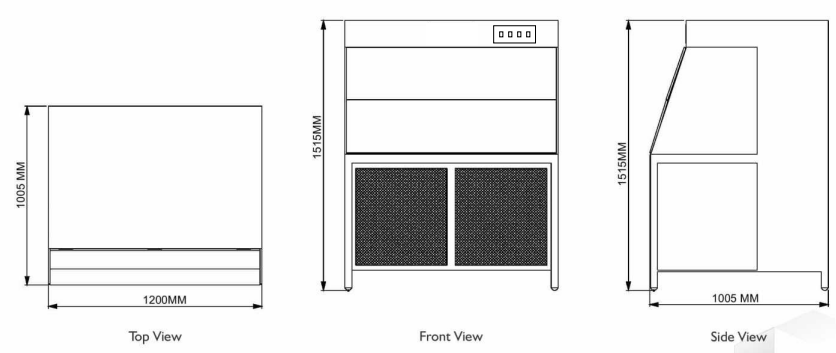
This diagram helps visualize how air is drawn in., filtered, and directed to maintain a contamination-free environment.
Laminar Air Flow Uses in Microbiology and Other Industries
A laminar air flow cabinet is an essential tool in laboratories , cleanrooms , and sterile manufacturing units. Its ability to maintain air purity makes it indispensable in various industries:-
Microbiology and Life Sciences
- Used in microbiology labs for culturing bacteria and handling sensitive biological samples.
- Ensures a sterile working environment for cell culture research.
- Prevents cross-contamination in genetic and forensic studies.
Pharmaceutical and Healthcare Applications
- Essential for aseptic drug formulation and vaccine production.
- Provides a controlled environment for compounding pharmacies.
- Used in surgical instrument sterilization.
Industrial and Research Applications
- Prevents dust accumulation in electronics and semiconductor manufacturing.
- Used in cleanroom setups for aerospace, optical industries, and nanotechnology.
- Maintains an aseptic environment in food testing laboratories.
Types of Laminar Air Flow Cabinets
Horizontal Laminar Flow Cabinets and vertical laminar flow cabinets are the two types of laminar flow cabinets. The selection between them depends on application requirements, workspace limitations, and operator safety requirements.
1. Horizontal Laminar Flow Cabinets
- Air moves parallel to the work surface from the back of the unit towards the user.
- Ideal for electronics assembly and semiconductor manufacturing.
- Provides excellent product protection, but does not shield the operator from harmful substances.
2. Vertical Laminar Flow Cabinets
- Air moves downward from the top of the cabinet to the work surface, then exits through exhaust vents.
- Offers better protection for the operator, making it ideal for microbiology and pharmaceutical applications.
- Commonly used in biosafety cabinet designs.
3. Key Features to Look for in a Laminar Flow Cabinet
- =HEPA/ULPA Filters– Ensures the highest level of air purification.
- =Stainless steel work surface – Prevents bacterial growth and is easy to clean.
- =Uv germicidal lamp – Provides additional sterilization when the cabinet is not in use.
- =Ergonomic Design– Enhances user comfort and reduces fatigue.
- =Low Noise and Vibration– Essential for research laboratories.
Laminar Air Flow Price, Factors That Influence Cost.
The price of a laminar air flow cabinet varies based on several factors, including size ,modle, type, filtration system, and additional features.
Factors Affecting the Price
- Size and Configuration– Larger models and custom laminar flow cabinets cost more.
- Filter Type– HEPA filters are standard. while ULPA filters offer superior efficiency at a higher cost.
- Material Construction– Stainless steel cabinets are more expensive but ensure better durability and sterility.
- Advanced Features– Digital controls, adjustable airflow settings, and built-in UV sterilization increase the price.
- Brand , Warranty– Premium brands offer reliable performance and extended warranties.
Why Choose Presto Group Laminar Air Flow Cabinets?
Presto Group is a trusted name in the industry, and providing high-quality laminar air flow cabinets that meet international safety and performance standards. Our products ensure:-
- =Superior air filtration with HEPA/ULPA filters
- =Ergonomic and user-friendly design
- =Compliance with ISO and GMP guidelines
- =Reliable performance backed by excellent customer support
How to Choose the Right Laminar Flow Cabinet?
Start with the hazard assessment Is the material you're working with hazardous to you? If yes — pathogens, cytotoxics, radioactive material — you need a biosafety cabinet, not a laminar flow hood. If the concern is protecting samples from contamination rather than protecting yourself, a laminar flow hood is appropriate.
Horizontal vs. vertical Horizontal flow for electronics and non-hazardous product protection. Vertical flow for microbiology, pharmaceutical prep, and any work where some operator protection is desirable.
Size relative to workflow The cabinet should be large enough to work in without crowding, but not so oversized that it's difficult to reach the back of the work surface. Standard widths are typically 600 mm, 900 mm, 1200 mm, and 1800 mm.
Regulatory requirements If you're in a GMP environment, your SOP likely specifies what cabinet class and airflow standard is required. Buy to that specification, not below it.
Total cost of ownership The purchase price is only part of the cost. Factor in filter replacement costs, energy consumption, and annual certification costs over the expected 10–15 year service life.
Maintenance and Safety Guidelines
Proper maintenance ensures the longevity and efficiency of a laminar air flow system.
Maintenance Tips
- Replace Filters Regularly– Change HEPA/ULPA filters as per manufacturer recommendations.
- Clean the Work Surface Daily– Use disinfectants and avoid harsh chemicals.
- Inspect the Airflow System– Periodically check air velocity and filter integrity.
Safety Measures
- Wear Personal Protective Equipment (PPE)--Always use gloves, lab coats, and face masks.
- Avoid Blocking Air Vents–Ensure uniform air distribution.
- Use UV Lamps During Non-Operational Hours– Helps in sterilizing the workspace.
Advantages of Presto Stantest Laminar Air Flow Systems
- = Ensures a contamination free environment for sensitive research and industrial applications
- = Enhances product safety by reducing exposure to airborne particles
- = Improves research accuracy by minimizing environmental contamination
- = Protects operators and lab personnel from potential exposure to harmful substances
- = Meets cleanroom standards, ensuring compliance with industry regulations
Frequently Asked Questions (FAQs)
Q1 What is laminar flow and its function?
Ans. Laminar flow is a unidirectional movement of air in parallel layers , preventing turbulence and contamination. It ensures a sterile environment for laboratories and industries requiring contamination free workspaces.
Q2 Why do we use UV light in laminar air flow?
Ans. UV light is used in laminar air flow cabinets to eliminate bacteria , viruse, and other microorganisms before and after use. It ensures a sterile work area for sensitive applications like microbiology and pharmaceuticals.
Q3 What is the purpose of a laminar flow hood?
Ans. A laminar flow hood is designed to protect samples , products, and research materials from airborne contamination by directing filtered air over the workspace. It is essential in pharmaceuticals, electronics, and medical laboratorie.
Summary & Final Thoughts
A laminar air flow cabinet is an essential investment for microbiology labs, pharmaceuticals, electronics manufacturing, and cleanroom applications. Presto Stantest offers state-of-the-art laminar air flow benches designed for maximum efficiency, reliability, and operator safety. Explore our range of cleanroom solutions and find the perfect laminar air flow system for your needs.
For premium laminar air flow cabinets at competitive price , contact Presto Stantest today. Call us at +91 9210 903 903 or email us at [email protected] to get a quote on laminar air flow price.
Further Reading for You
What is Laminar Air Flow? Working Principle, Diagram & Applications Explained
Maintain Clean And Bacteria Free Environment In You Laboratory With Laminar Flow Clean Bench
Recent Articles
- Climatic Chamber: Working Principle, Uses, Diagram, Price & Top Manufacturers in India
- Izod vs Charpy Impact Test: Difference, Method & Standards
- Colorimeter vs Spectrophotometer: Accuracy, Working Principle, and Industrial Uses
- Quality Assurance and Quality Control: Two Pillars of Product Excellence
- Hardness Test: Types, Testing Methods, Procedures, and ASTM Standards
Need more information
Connect with us for your business enquiries. Generally, we respond within one or two working days.