
- /
- Blog / ASTM B117 - 11 Standard Test Methods Used In Salt Spray Chamber
ASTM B117 - 11 Standard Test Methods Used In Salt Spray Chamber
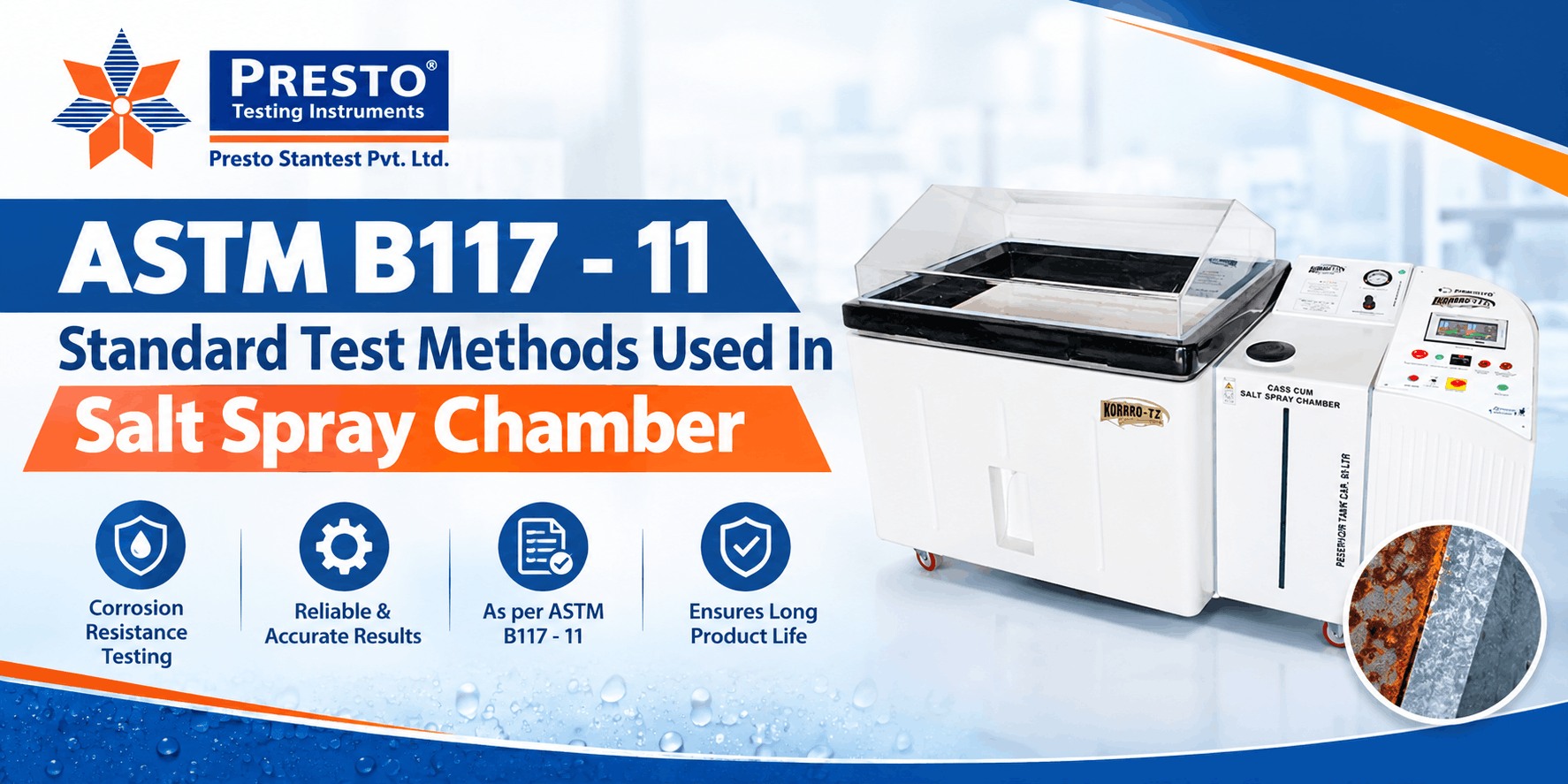
The ASTM B117 provides a controlled corrosive atmosphere for specimens of coated metals exposed in a test chamber. The salt spray chamber adheres to ASTM B117 standard. The corrosion performance correlation and extrapolation cannot be predicted and should be considered only where appropriate corroborating long-term atmospheric exposures have been performed. The result reproduced is depending on the type of sample tested and evaluation standard selected, plus regulating the operating variables. It is important to include enough reproduces to set various results. The result variations are observed when the same specimen is tested under different fog chambers under similar testing conditions. Do not use the standard test method if using decorative chromium plate on steel or zinc die casting or cadmium plate on steel. For such materials, ASTM B368 is applicable.
Salt Spray Chamber complied with ASTM B117 standard
The ASTM B117 test method is considered for the salt spray chamber so that corrosive resistance of various metals can be compared. The test method determines the corrosive tendency of metal when scratched as well as measures the coating adhesion with corrosion creep. The test procedure evaluates the corrosion resistance in the marine environment.
The test method determines the suitability of paints, coatings, and metals to resist corrosion or exposure to marine environments (wetness, temperature, salt fog). However, the real environmental conditions cannot be predicted and not a part of the standard test method.
ASTM B117 standard test method recommends testing multiple samples at a time so that variety of results can be established.
Presto manufactured and designed the salt spray chamber as per the relevant standards to assess the rust proof ability of components in different environmental conditions.
Conclusion
Testing corrosion resistance using the ASTM B117 standard lets manufacturers understand how coated metals, paints, and other materials will perform in environments where corrosion is a concern. Presto’s Salt Spray Chamber follows the ASTM B117 rules. It creates a controlled environment that speeds up the process of testing for rust and coating failure. By using this chamber, companies can see how well a material holds up under stress. The testing that is described here produces results that help us choose the materials and the right coatings. The testing is used in industries such as automotive and construction, where long‑term durability is very important. The information that we gain from the testing leads to product quality and greater reliability.
Get in Touch
Looking for a reliable Salt Spray Chamber compliant with ASTM B117? Presto Stantest's chamber offers accurate, standards-based corrosion resistance testing for coated metals and materials.
+91 9210 903 903
Reach out today to learn more about the Salt Spray Chamber and its applications.
FAQs
Q1. What does the ASTM B117 standard test method evaluate?
It checks how well coated metals and materials stand up to corrosion. It does this by putting them in a room where the air is full of salt. This room is called a salt spray chamber. The test helps see how strong the coating is against damage from the salt.
Q2. Can ASTM B117 predict real-world corrosion performance?
No, we cannot predict how well a material will resist corrosion over time through correlation or extrapolation. These methods should not be used alone. Instead, they must be looked at together with long-term atmospheric exposure data. That kind of data gives a picture of actual performance in the environment.
Q3. Why does ASTM B117 recommend testing multiple samples?
Testing multiple samples helps establish a variety of results, since result variations can occur even when the same specimen is tested under similar conditions in different chambers.
Recent Blogs
- Industrial Leak Testing: Methods, Technologies, Benefits, and Industry Applications
- Autoclave in Laboratories and Industry: Principle, Procedure, Components, and Applications
- Uses of BST in Packaging, Paper, and Corrugated Box Testing
- Leak Testing Procedures for Packaging Materials in Accordance with ASTM D6653
- Bursting Strength Testing: ASTM, ISO, and TAPPI Standards for Packaging Evaluation