
- /
- Blog / Industrial Leak Testing: Methods, Technologies, Benefits, and Industry Applications
Industrial Leak Testing: Methods, Technologies, Benefits, and Industry Applications
Industrial products should be fully sealed to operate safely and reliably. Even a small leak may compromise the quality of the products, pose a safety hazard, and raise the cost of manufacturing. That is why all leak tests become significant aspects of quality control. The pharmaceutical, automotive, food packaging, electronics, and medical device industries are among those that rely on leak testing to ensure their products are of high quality before they reach their customers.
Currently, sophisticated leak testing methods are used to identify leaks that are extremely small and not detectable by the naked eye. An effective leak test apparatus can also ensure waste is minimised, efficiency is increased, and client confidence is ensured. This article describes various types of testing, equipment, and uses of testing in current leak detection.
What is Leak Testing and Why is It Important?
A leak test is an operation used to verify whether air, gas, or liquid can escape from a product or package. It helps manufacturers ensure that products are well sealed and safe.
Adequate leakage detection enhances the quality of the products as well as minimising the risk of failures during storage, transportation or normal usage. It also aids companies in adhering to industry regulations and preventing their expensive recalls.
The key advantages of leak testing:
- Preventing product failure
- Improving product safety
- Reducing manufacturing waste
- Meeting quality regulations
- Increasing customer satisfaction
The modern leak testing methods are able to test even microscopic leaks, and this makes leak testing a vital scheme in the current manufacturing process.
Types of Leak Testing Methods and Their Applications
Different products require different types of leak testing depending on their material, design, and application.
| Leak Testing Method | Common Applications |
| Pressure Decay Leak Test | Plastic containers, automotive parts |
| Vacuum Leak Test | Flexible packaging, blister packs |
| Helium Leak Testing | Medical devices, aerospace, electronics |
| Bubble Leak Test | Packaging inspection |
| Dye Penetration Test | Seal verification |
Pressure Decay Leak Test
One of the most popular industrial tests is called the pressure decay leak test. This is followed by the addition of air in the product until the desired test pressure of leakage is achieved. They then change pressure over a given duration, which is then measured using the equipment. When the pressure falls below the acceptable level, the product is deemed to have leaked.
This technique is quick, non-destructive, precise, and applicable to automated production lines.
Vacuum Leak Test
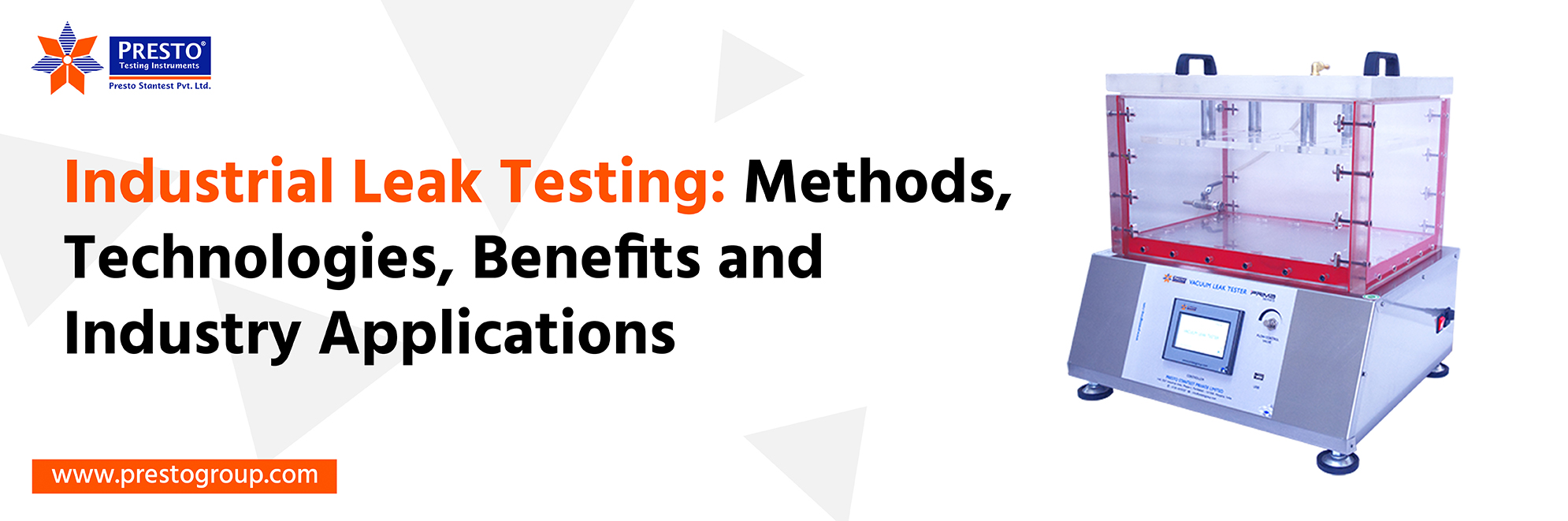
In a vacuum leak test, the product is packed in a container which is sealed off, and the air is pulled out, producing a vacuum. If air leaks from the package or container, the system detects the leak.
Vacuum leak testing is typically applied to food, pharmaceutical blister packs, flexible pouches, and sealed containers since it does not cause damage to the product.
Helium Leak Testing
Leak testing is used in cases requiring extreme accuracy when the manufacturer requires it. Helium gas is introduced or encircles the goods, and delicate meters are used to detect any escaping gases.
The sectors that use helium leak testing include aerospace, electronics, refrigeration, and medical equipment production, since it can effectively detect very small leaks that cannot be detected by other procedures.
Leak Test Procedure: Step-by- Step Testing Process.
An appropriate leak test procedure will guarantee uniform and correct results.
The first step is to check the product and test it. Then make a choice on the method of testing to be used depending on the type of product and the quality standards. Leak test pressure is then adjusted as required based on product requirements.
The product is subjected to a test under controlled conditions using appropriate leak test apparatus or a leak test machine with the system monitoring changes in pressure or escaping gas.
Lastly, the results are compared against the acceptable limits to determine whether the product passes or fails the inspection procedure.
Pressure Decay, Vacuum, and Helium Leak Testing Explained
Each technique applies to various products and testing needs.
Pressure Decay Leak Test
The pressure decay leak test is usually applied to rigid products such as bottles, pipes, valves, and automotive parts. The product is pressurised to a given leak test pressure and sensors are used to monitor any decrease in pressure with time. A greater decrease indicates leakage. This is a quick, precise and best-suited method for automated production lines.
Vacuum Leak Test
The vacuum leak test is primarily applied to flexible packaging, blister packs, pouches, and sealed containers. The product is placed in a vacuum chamber, where air is evacuated to create negative pressure. Any change in pressure or bubble formation indicates a leak. This process is non-destructive and is practical in ensuring the integrity of package seals.
Helium Leak Testing
When such high sensitivity is necessary, helium leak testing is applied. Helium gas will be added to the product, and special detectors detect the smallest of gaps. It finds wide application in aerospace, medical equipment, electronics, and fridge systems where accurate leakage sensors are crucial.
The selection of an appropriate leak testing method is determined by the type of product, accuracy requirements, and industry standards.
Leak Test Pressure and Factors Affecting Test Accuracy
Choosing the right leak test pressure is a crucial element of any test procedure. In case of excessive pressure, the product or package might be ruined. If it is too low, small leaks might go unnoticed. This is the reason why manufacturers use industry standards and product specifications when determining the test pressure.
Accuracy of a leak test can be influenced by several factors:
- Testing pressure and test time.
- Wall thickness and material of products.
- Temperature and humidity
- Seals and joints.
- Calibration of the leak testing machine
- Experience of operators and test conditions.
The testing equipment should also be checked and calibrated after every maintenance to increase leak detection. A conventional leak test procedure assists manufacturers in getting consistent and high-quality results and minimising component non-functionalities.
Leak Test Apparatus and Leak Testing Machine
A modern leak test apparatus is designed to detect leaksleaks quickly and precisely. It can also inspect products using pressure, vacuum or tracer gases depending on the application.
The leak testing machine comprises:
- System of generating pressure or vacuum.
- Accurate digital measuring sensors.
- Programmable setting control panel.
- Software for data recording and reporting.
- Reliable operation safety features.
Automated leak testing machines are now being utilized in many industries as they enhance speed in production and minimise human error. Such systems can screen hundreds of products per hour, and their quality is always consistent. The product size, material, required sensitivity, and production volume determine the selection of appropriate leak test apparatus.
Pinhole Detection and Leak Testing Parenteral Packaging
Pharmaceutical packaging with small holes or with weak seals can impact the sterility and safety of the products. A pinhole detector aids in detecting these small defects before the introduction of the products in the market.
A notable use is a leakage test for parenterals; leakage in injectable medicines, IV bags, ampoules, and vials is assessed. These products come into personal contact with the human body; therefore, even a microscopic leak can cause contamination.
Manufacturers use an appropriate leak testing methodology to conduct leakage test for parenterals, such as a vacuum-based system and sophisticated leak detection devices. A reliable pinhole detector will ensure that packaging remains intact during storage, transportation, and use. These tests also help pharmaceutical companies meet regulatory and quality requirements.
Industrial Applications and Benefits of Leak Detection Systems
Leak testing is performed today across a variety of industries to enhance product safety and quality.
Some typical uses are:
- Automotive fuel systems and radiators
- Medical device and pharmaceutical packaging.
- Containers of food and beverages.
- Electronics and batteries
- Refrigeration and aerospace equipment.
- Valves, pipes, and tanks in the industry.
The advantages of modern leak testing procedures are:
- Increased quality and reliability of products.
- Early leakage detection before product delivery.
- Reduced manufacturing wastes and repair expenses.
- Improved customer satisfaction
- Adherence to business policies.
- Higher production efficiency
In Presto, we offer higher quality of testing machines and accurate testing, which has helped manufacturers uphold high standards of products.
Our quality leak test apparatus provides accurate, repeatable, and user-friendly testing for numerous industrial applications.
Call us: +91 9210903903
Email: info@prestogroup.com
Visit: https://www.prestogroup.com/contact-us/
Recent Blogs
- Industrial Leak Testing: Methods, Technologies, Benefits, and Industry Applications
- Autoclave in Laboratories and Industry: Principle, Procedure, Components, and Applications
- Uses of BST in Packaging, Paper, and Corrugated Box Testing
- Leak Testing Procedures for Packaging Materials in Accordance with ASTM D6653
- Bursting Strength Testing: ASTM, ISO, and TAPPI Standards for Packaging Evaluation
Related Blogs
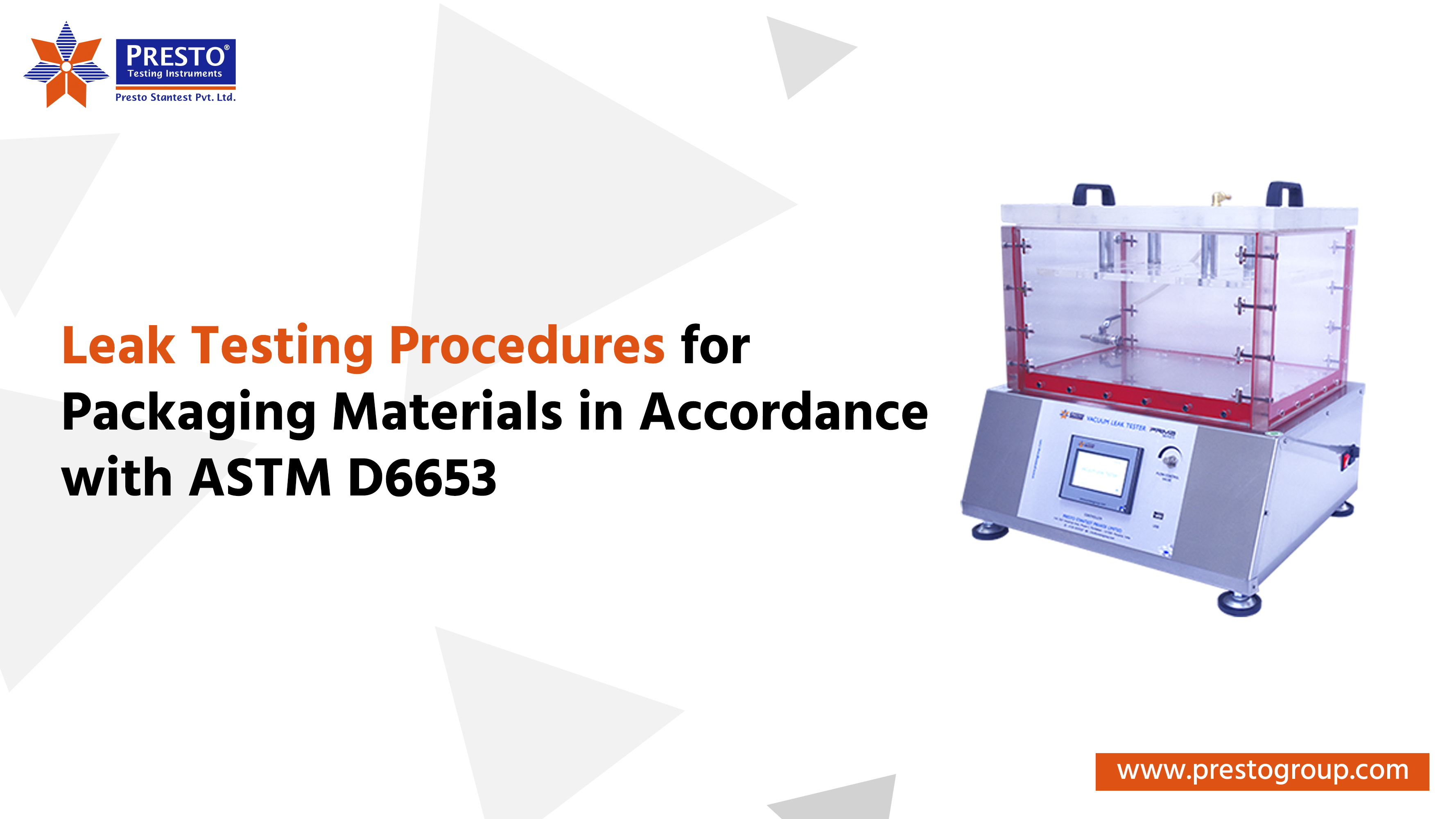
Leak Testing Procedures for Packaging Materials in Accordance with ASTM D6653
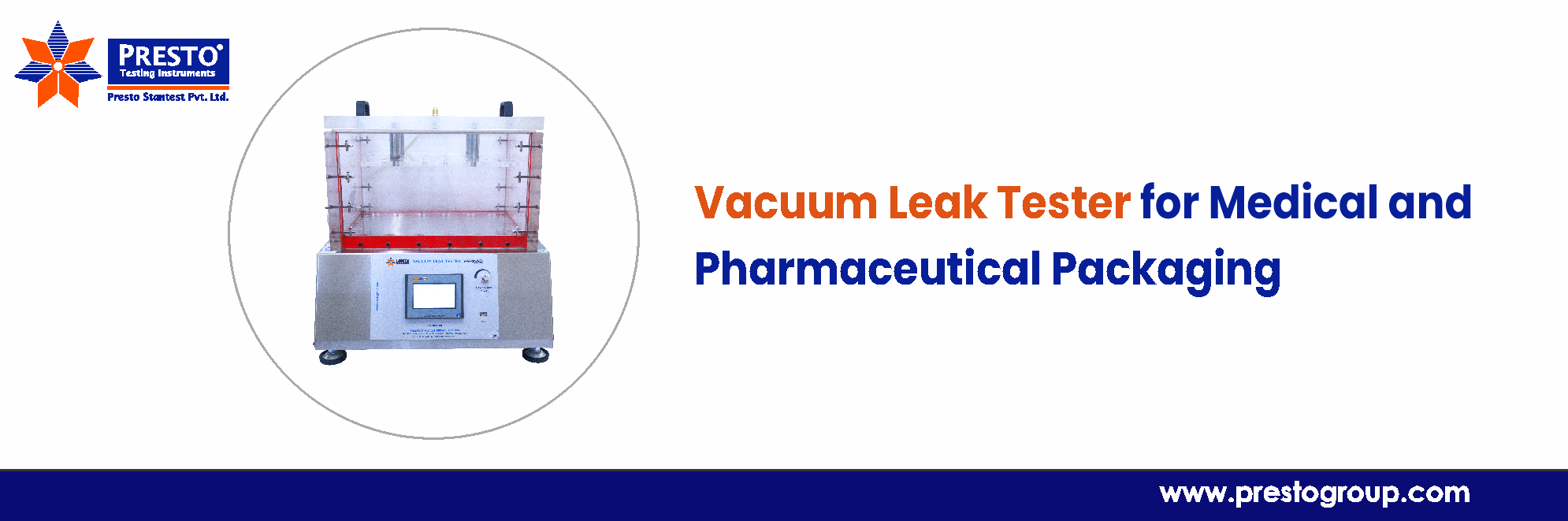
Vacuum Leak Tester for Medical and Pharmaceutical Packaging