
- /
- Blog / Autoclave in Laboratories and Industry: Principle, Procedure, Components, and Applications
Autoclave in Laboratories and Industry: Principle, Procedure, Components, and Applications
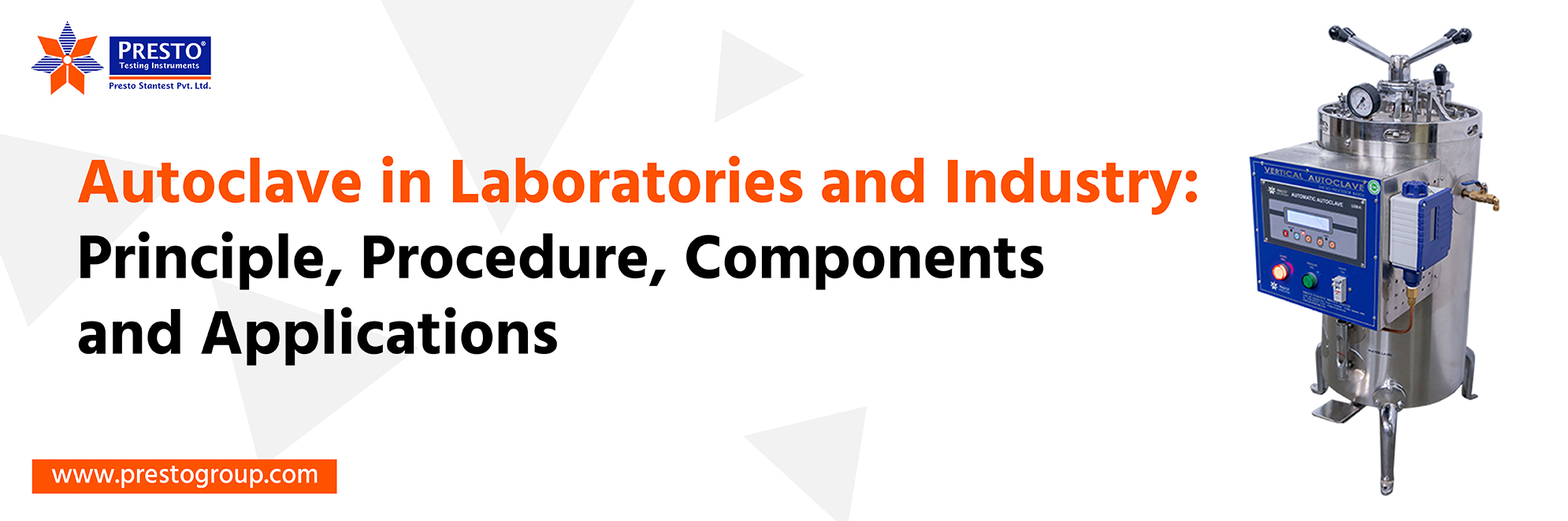
Sterilization is a significant procedure in laboratories, hospitals, pharmaceutical plants, and most manufacturing industries. It helps eliminate bacteria, viruses, fungi, and other harmful microorganisms from equipment and materials. An Autoclave is one of the most reliable when it comes to this. It is an indispensable component of laboratory and industrial processes and is used to offer safe and reliable Autoclave sterilization using high-pressure steam.
In this guide, you will get to know about the Autoclave working principle, the significant parts of the autoclave, the process of sterilization by the autoclave, and how the autoclave and sterilization will be effective in various industries.
What is an Autoclave and Why is It Used for Sterilization?
An Autoclave is a closed pressure vessel that sterilises equipment using saturated steam under pressure. High-pressure steam is able to kill bacteria, fungi, viruses, and even resistant bacterial spores as opposed to regular boiling water, because high-pressure steam is hotter than 100°C.
Autoclave and sterilization are the most common since steam infiltrates deep into the materials and kills microorganisms within a short time, and there is no chemical residue. This renders Autoclave Sterilization suitable for laboratory equipment, glassware, culture products, surgical equipment, and various industrial products.
Modern systems, such as those offered by Presto, are constructed using high-quality stainless steel chambers, digital controls, and safety features to ensure the provision of uniform sterilization of the results in both laboratories and industries.
Autoclave Working Principle and Sterilization Process
The principle of the Autoclave is based on moisture sterilization. As the inside of the sealed chamber heats, steam is generated. As the chamber is sealed, there will be a pressure change, which will make the temperature of the steam higher than its usual boiling point.
The working of the autoclave machine is characterised by three major steps:
1. Air Removal
The room is enclosed, and steam forces the air within. The need to remove air
has to do with air pockets; they do not allow for complete sterilization.
2. Sterilization Cycle
Once the air has been removed, the chamber is sterilised at the desired autoclave pressure and temperature. The standard temperature is mostly 121 C at 15 psi during a period of 15-20 minutes. The hot steam kills the microorganisms by digesting proteins in this process.
3. Cooling and Drying
After the autoclave sterilization process is finished, the steam accumulated is then expelled gradually, pressure is brought back to normal, and the sterilized contents are allowed to cool down and then taken out.
The heating process of the Autoclave working principle guarantees that all the surfaces are exposed to heat, which makes steam sterilization to be among the most efficient forms of sterilization process.
Autoclave Components and Their Functions
Having knowledge about the Autoclave parts will enable users to effectively use the autoclave while maintaining safety.
Pressure Chamber
The pressure chamber is the main part of the Autoclave. It comprises mostly stainless steel and contains the materials as the sterilizing process is performed.
Lid and Locking System
The airtight lid prevents the escape of steam. Modern autoclaves have safe locking mechanisms that withstand high pressure.
Pressure Gauge
Internal autoclave sterilization pressure is shown in the pressure gauge, which enables users to keep track of operating conditions during the process.
Safety Valve
It has a safety valve that opens up in a situation where the pressure is high and may exceed the safe operating pressure, which may harm both the equipment and the user.
Steam Generator/Heating Element.
The heating system uses water, which is transformed into steam that is necessary in the process of sterilizing the autoclave.
Control Panel
Innovative autoclaves have had a digital display, timer and temperature controller, which make using the autoclave machines easier and more precise.
Vacuum System (Optional)
Other, more advanced models have a vacuum pump that eliminates any trapped air before steam gets into the chamber to enhance the effectiveness of the sterilization of wrapped instruments and porous material.
These Autoclave components are used in unison with each other to offer dependable and reproducible sterilization in lab and industrial applications.
Autoclave Diagram: Construction and Schematic Explanation.
A diagram of an autoclave assists its users in learning the orientation of the steam in the chamber under sterilization. An Autoclave schematic diagram might consist of a pressure chamber, a lid, a pressure gauge, a steam generator, a safety valve, a control panel, and an exhaust system.
Where microbiology is concerned, this chamber might be represented as the central compartment in an autoclave diagram, in which laboratory media, glassware, and instruments are loaded so that they are sterilized. The steam fills the room, pushes out the air that is trapped, and covers all the objects in it to make them totally sterilized.
There is also an autoclave schematic diagram which shows how the steam gets into the autoclave, circulates the load, and then through the exhaust valve during the sterilization cycle.
Both an autoclave diagram and an autoclave diagram in microbiology could be of help to students, laboratory technicians, and quality control professionals, as they are clear on the internal construction and working of the autoclave machine before using it.
Autoclave Sterilization Procedure, Temperature, and Pressure
It is also significant to have a good autoclave sterilization procedure in order to obtain complete sterilization. The proper procedure enhances both safety and the longevity of the equipment.
Standard Procedure
- Prepare for loading: Load clean instruments or materials into the chamber without overloading.
- Add water: Add the distilled water as recommended into the reservoir.
- Close the chamber: Lid Seal: Before starting the cycle, ensure the lid is securely closed.
- Select the cycle: Select the temperature required, time, and the autoclave pressure of sterilization needed.
- Start sterilization: Steam is used to substitute the trapped air, and the chamber is subjected to the desired temperature.
- Cooling: When the holding time is over, a steady release of pressure is followed by opening the lid.
The normal pressure for autoclave sterilisation is 15 psi at 121 °C for 15-20 minutes. Depending on the type of material being sterilised, it may be necessary to use higher temperatures, as in some industrial applications (e.g., 134 °C).
Proper Autoclave Sterilization is guaranteed after following the proper procedure of autoclave sterilization, and it also safeguards laboratory equipment and samples.
Types of Autoclaves and Their Industrial Applications
The various types of industries employing autoclaves vary in terms of the designs to be used based on the requirements of sterilization.
- Gravity Displacement Autoclave: It works well with glassware, laboratory equipment, and metal tools.
- Pre-Vacuum Autoclave: This is great for wrapped instruments, plus porous materials, to remove the air prior to the entry of the steam.
- Vertical Autoclave: This is small and is mostly used in research labs, schools, and hospitals.
- Horizontal Autoclave: This is intended to be used in large-scale sterilization within pharmaceutical plants and food processing facilities, biotechnology firms, and manufacturing plants.
In addition to laboratories and hospitals, autoclaves are also employed in pharmaceutical manufacturing, food processing, biotechnology, the manufacturing of medical devices, textile industries, and the curing of composite materials.
Advantages and Disadvantages of Autoclave Sterilization
| Advantages | Disadvantages |
| Highly effective against bacteria, viruses, fungi, and spores | Not suitable for heat-sensitive materials |
| No chemical residue after sterilization | Some plastics and electronic items cannot be sterilized |
| Fast and reliable Autoclave Sterilization | Requires regular maintenance and monitoring |
| Environment-friendly steam sterilization | High temperature and pressure require trained operators |
| Suitable for laboratory and industrial applications | Initial equipment cost can be high |
Knowing these autoclave advantages and disadvantages helps industries choose equipment that matches their application.
How to Choose the Right Autoclave for Laboratory and Industrial Use
The choice of the correct Autoclave will be dependent on your usage and production needs.
Before buying, take into account the following:
- Choose the chamber size based on your daily work.
- Select vertical or horizontal based on the available space.
- Find long-lasting stainless-steel construction.
- Make sure there are proper power, temperature, and autoclave sterilization pressure controls.
- Make sure that safety features like pressure relief valves and automatic shut-off are present.
- Purchase a reliable manufacturer, such as Presto, with good laboratory testing. It is meant to be regularly operated and has a long service life.
A properly designed autoclave enhances efficiency, safety, and accuracy in the sterilization process in both laboratory and industrial setups.
Choose Presto Stantest for Reliable Autoclave Testing Solutions
Ensure accurate sterilization, safety, and compliance with Presto Stantest’s advanced testing solutions for laboratories and industries. Contact our experts today at +91 9210 903 903 or [email protected] to find the right solution for your testing requirements.
FAQs
Q1. What is the standard temperature of a used autoclave?
Ans: It is usually done at 121°C and 15 psi for 15 to 20 minutes, but in some cases, 134°C is used.
Q2. What materials are not to be deposited in an autoclave?
Ans: Autoclave heat-sensitive plastics, electronic devices, oils, powders, and flammable substances must not be exhausted by the autoclave.
Q3. Why is an autoclave preferred over dry heat sterilization?
Ans: Autoclaving and sterilisation are more efficient and quicker on most laboratory equipment, since steam is more effective than dry air at transferring heat.
Q4. Why is an autoclave diagram important?
Ans: To operate the equipment, an autoclave diagram in microbiology assists users in knowing the layout of the chambers and the direction of the steam, as well as the role of key Autoclave parts.
5. How frequently should an autoclave be kept?
Ans: Cleaning, regular inspection, calibration, and preventive maintenance aid in safe, stable Autoclave Sterilisation operation.
Recent Blogs
- Industrial Leak Testing: Methods, Technologies, Benefits, and Industry Applications
- Autoclave in Laboratories and Industry: Principle, Procedure, Components, and Applications
- Uses of BST in Packaging, Paper, and Corrugated Box Testing
- Leak Testing Procedures for Packaging Materials in Accordance with ASTM D6653
- Bursting Strength Testing: ASTM, ISO, and TAPPI Standards for Packaging Evaluation
Related Blogs

Autoclave: Definition, Principle, Parts, Uses, Applications
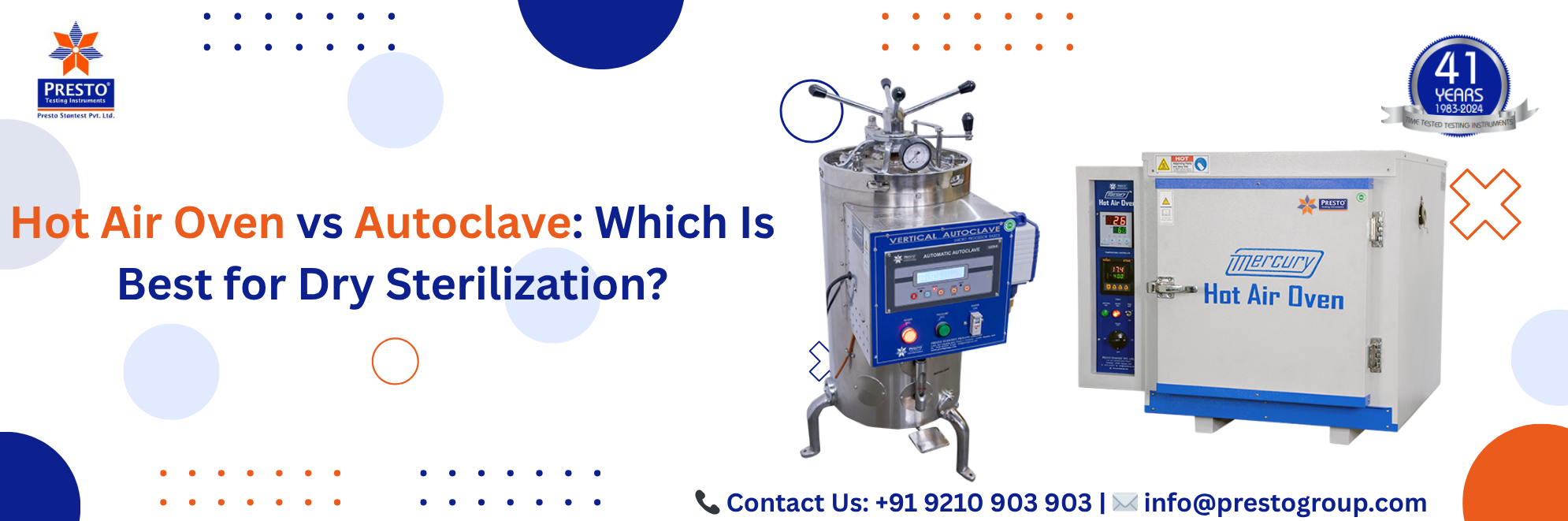
Hot Air Oven vs Autoclave: Which Is Best for Dry Sterilization?
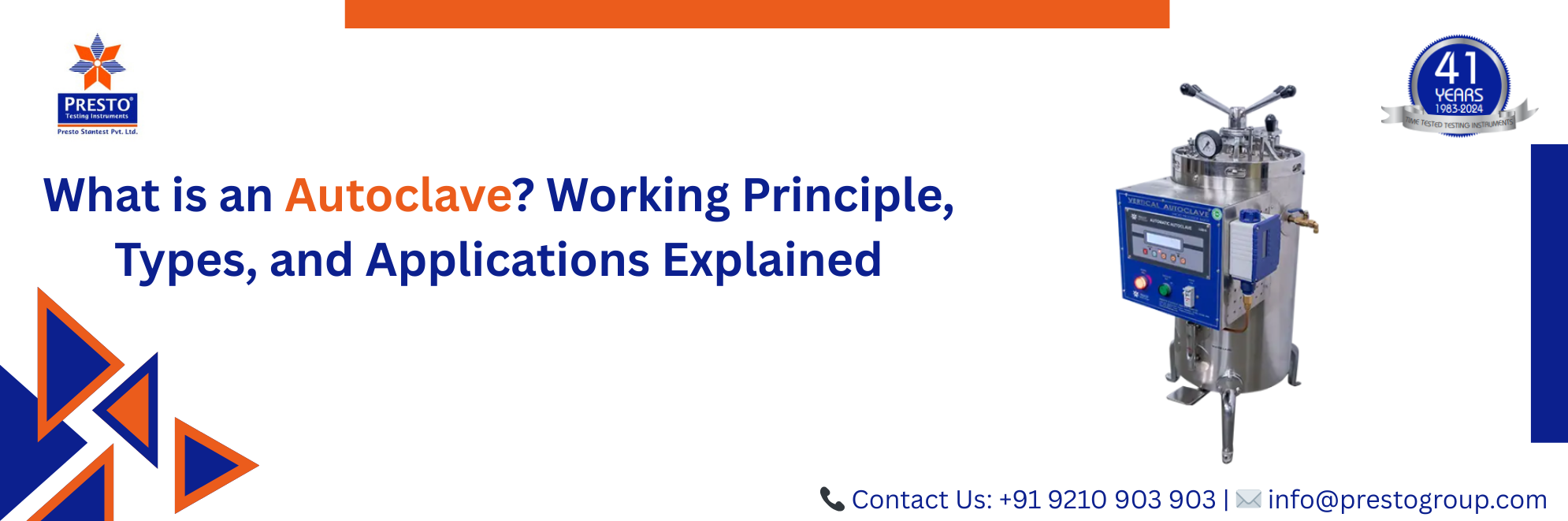
What is an Autoclave? Working Principle, Types, and Applications Explained