
- /
- Blog / Bursting Strength Testing: ASTM, ISO, and TAPPI Standards for Packaging Evaluation
Bursting Strength Testing: ASTM, ISO, and TAPPI Standards for Packaging Evaluation
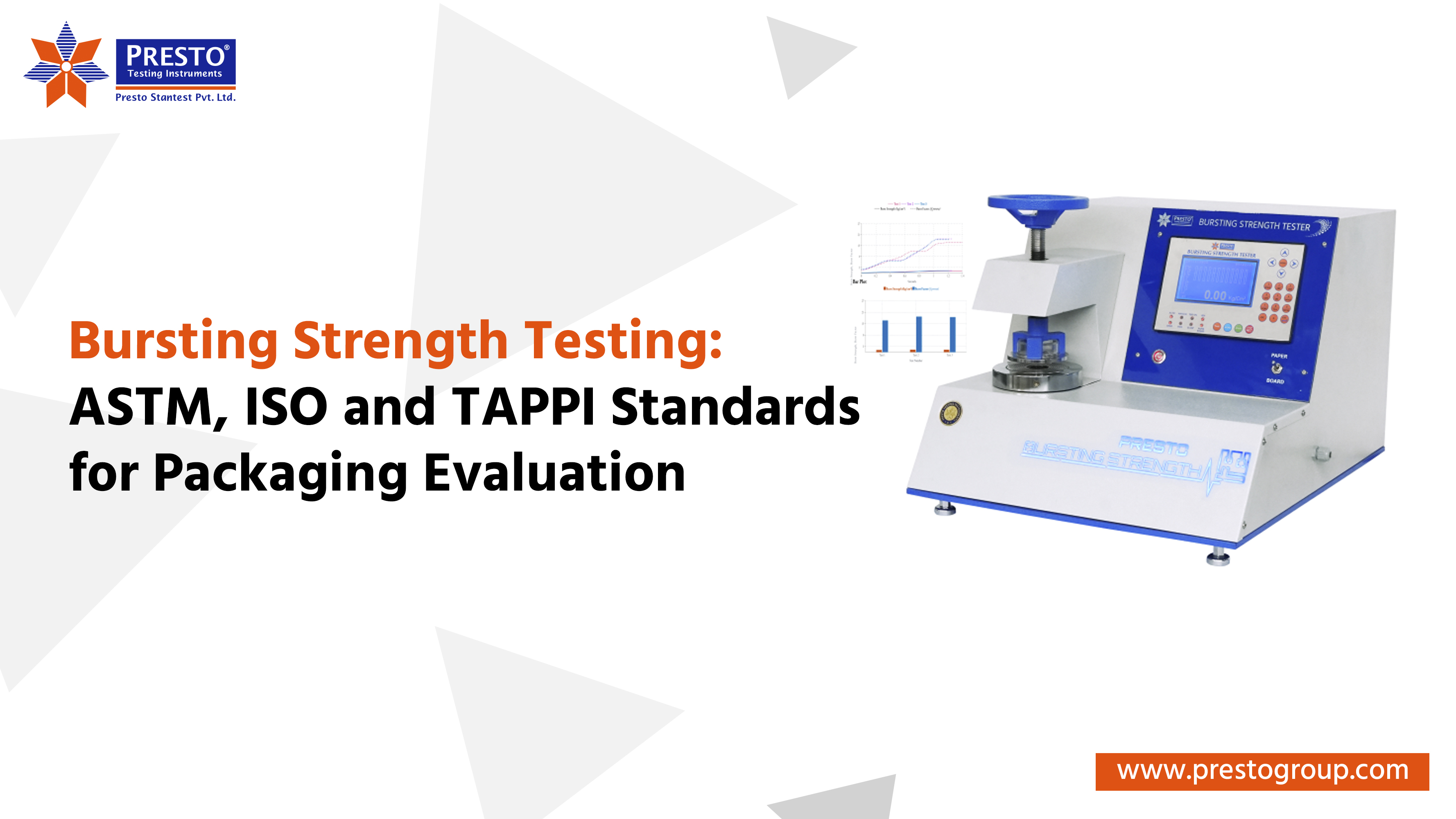
In packaging industries, strength of the material matters as much as the product inside it. Many times, boxes look perfectly fine during production but fail later while shipping or stacking. To avoid these issues, manufacturers use the bursting strength test to check how much pressure a packaging material can actually handle before it breaks. Standards like ASTM, ISO, and TAPPI help make these test results more reliable and industry accepted.
What is a Bursting Strength Test?
A bursting strength test measures the resistance of paper, board, or corrugated packaging materials against multi-directional pressure.
.jpg)
Unlike tensile testing, which evaluates force in a single direction, bursting strength testing checks the material’s ability to withstand pressure distributed uniformly across its surface. This makes it highly relevant for transportation and stacking conditions where packaging experiences pressure from multiple angles.
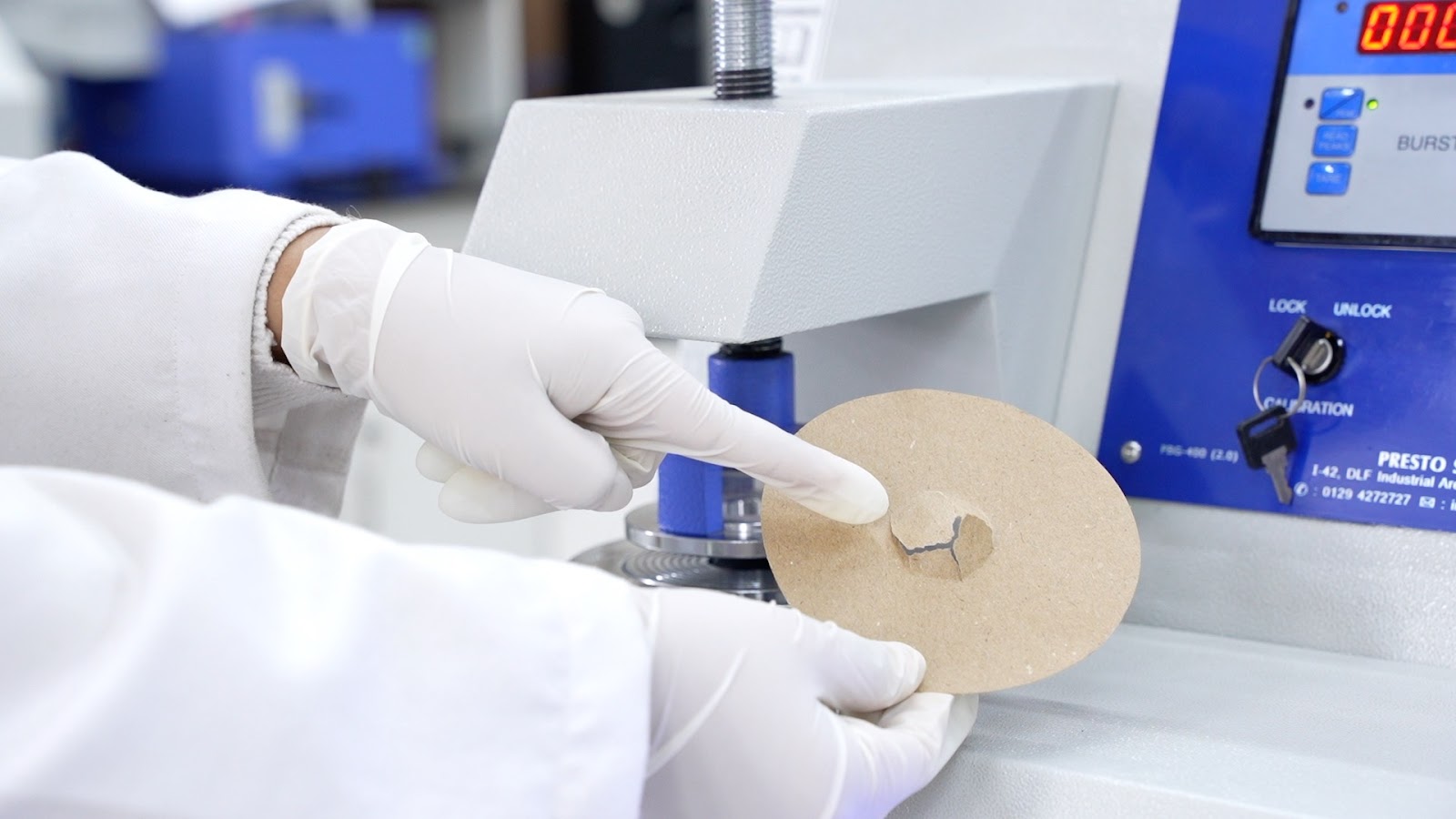
The test is commonly used for:-
- Corrugated boxes
- Duplex board
- Kraft paper
- Fiberboard sheets
- Industrial packaging materials
- Textile and coated papers
The final reading indicates the maximum hydraulic pressure the material can handle before rupture.
In real-world packaging applications, this value helps determine:-
- Box durability during transit
- Stacking performance
- Resistance against external impact
- Material consistency between production batches
For industries with long supply chains, this testing becomes extremely important because packaging failure during transportation can lead to major financial losses.
Why is Bursting Strength Testing Important?
Packaging is no longer only a protective layer. It has become a performance-driven component of the supply chain.
Modern logistics environments involve:-
- High stacking loads
- Long-distance transportation
- Automated handling systems
- Temperature and humidity variations
- High-speed warehouse operations
If packaging material lacks sufficient strength, it may fail under these conditions even before reaching the customer.
This is why manufacturers regularly perform the bursting strength test of corrugated box to validate packaging integrity before dispatch.
Key Benefits of Bursting Strength Testing
| Quality Advantage | Industrial Impact |
| Better Load Resistance | Prevents box rupture during stacking |
| Transit Safety | Reduces product damage in shipping |
| Material Optimization | Helps select proper GSM and flute structure |
| Batch Consistency | Detects variation in production quality |
| Compliance Readiness | Supports ASTM, ISO, and TAPPI standards |
| Reduced Packaging Failure | Lowers replacement and return costs |
Many packaging companies now integrate bursting strength evaluation directly into their quality assurance systems to maintain consistency across production lots.
Bursting Strength Test Method Explained
The bursting strength test method is based on controlled hydraulic pressure application.
During testing, the specimen is clamped firmly between two circular plates. Hydraulic pressure is then applied through a flexible rubber diaphragm positioned beneath the sample.
As pressure increases gradually, stress distributes uniformly over the material surface. The material expands until it finally ruptures.
The maximum pressure reached before rupture is recorded as the bursting strength value.
Results are typically expressed in:-
kg/cm²
psi
kPa
Industrial Testing Procedure
- The sample is cut according to standard dimensions
- The specimen is conditioned under controlled temperature and humidity
- The sample is securely clamped into the machine
- Hydraulic pressure increases at a standard rate
- Rupture point is detected automatically
- Peak pressure value gets recorded digitally
One important thing many people overlook is environmental conditioning. Humidity can significantly affect paper strength. Even slight moisture variation may change the final bursting values.
This is why advanced laboratories maintain controlled atmospheric conditions before testing samples.
Bursting Strength Tester Machine Working Principle
Understanding the bursting strength tester machine working principle becomes important when selecting the right testing equipment for industrial applications.
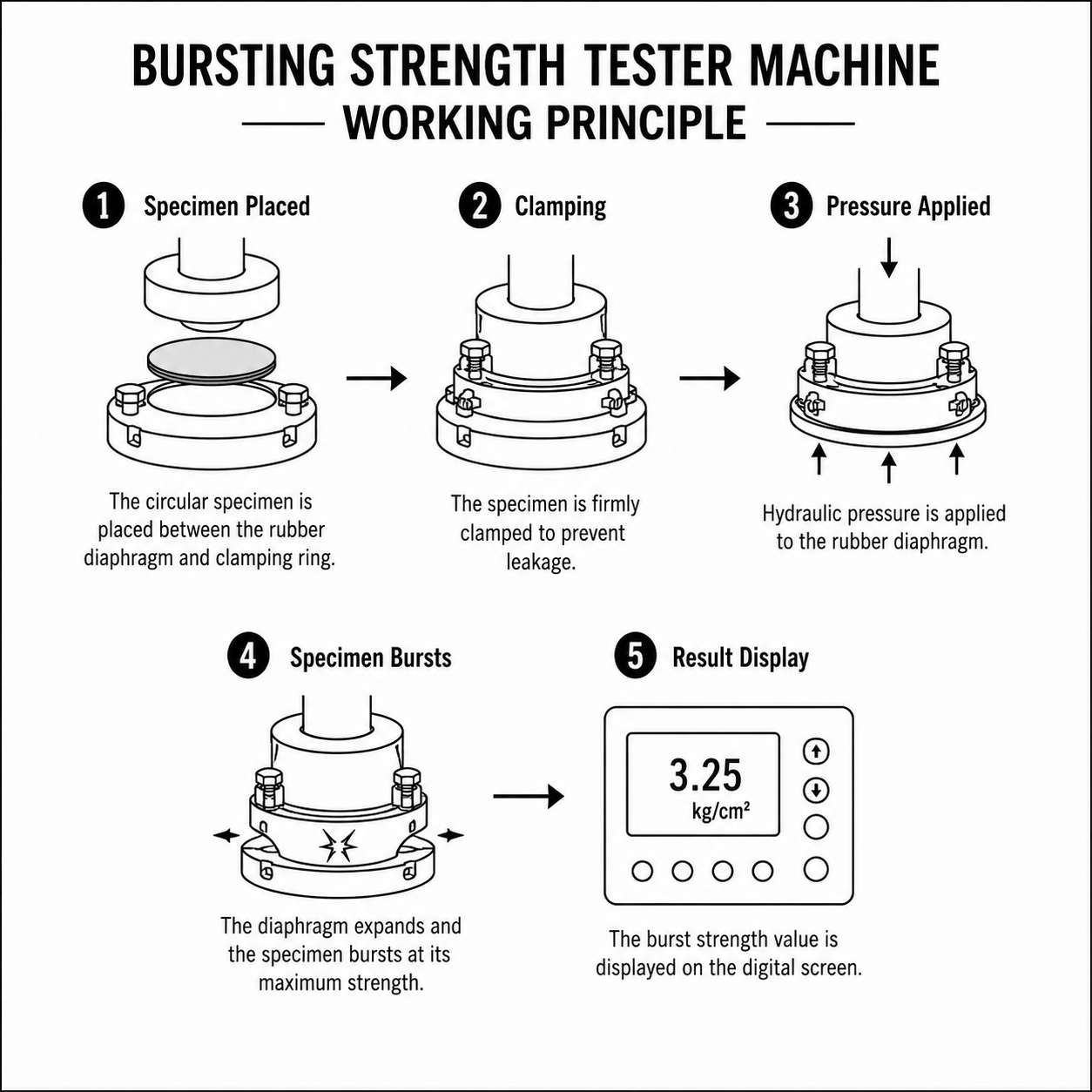
The machine primarily works on Pascal’s hydraulic pressure principle.
A rubber diaphragm beneath the sample expands upward when hydraulic fluid pressure increases. Since the material is tightly clamped, the pressure gets distributed evenly across the surface area.
The moment the material exceeds its elastic limit, rupture occurs.
Modern digital machines now use:-
- Servo-controlled pressure systems
- Precision hydraulic units
- High-accuracy pressure transducers
- Digital peak detection sensors
- Automatic calibration systems
Advanced systems can also eliminate operator dependency, which improves repeatability and reduces testing variation.
Industries today are moving toward automated testing because manual pressure variation often affects result consistency.
Testing solution providers like Presto Group are helping industries adopt more accurate and digitally controlled bursting strength testing systems for packaging quality assurance.
ASTM, ISO, and TAPPI Standards for Bursting Strength Testing
Global packaging industries follow standard testing frameworks to ensure result consistency and international acceptance.
Without standardization, bursting values from different labs may vary significantly.
1. ASTM Standards
ASTM International standards are widely followed across North America and industrial export markets.
Important ASTM standards include:-
- ASTM D774 for paper materials
- ASTM D3786 for textile bursting strength
ASTM standards define:-
- Sample dimensions
- Pressure application rate
- Conditioning environment
- Calibration requirements
- Result reporting methods
Manufacturers supplying packaging internationally often rely on ASTM-compliant testing for quality certification.
2. ISO Standards
International Organization for Standardization standards help maintain globally uniform testing procedures.
Key ISO standards include:
- ISO 2758 for paper
- ISO 2759 for board materials
ISO standards place strong emphasis on:
- Environmental conditioning
- Machine calibration accuracy
- Pressure stability
- Repeatable testing procedures
For export-oriented packaging manufacturers, ISO compliance is often mandatory.
3. TAPPI Standards
TAPPI standards are highly respected in paper and corrugated industries.
Widely used methods include:
- TAPPI T403
- TAPPI T810
These standards are specifically designed for:
- Corrugated board evaluation
- Fiber strength analysis
- Paper burst resistance testing
TAPPI standards are commonly followed by paper mills and corrugated packaging plants globally.
Bursting Strength Test of Corrugated Box
The bursting strength test of corrugated box plays a major role in packaging validation for logistics-heavy industries.
Corrugated boxes face multiple stress conditions during real transportation cycles:
- Compression loads
- Impact forces
- Vibration stress
- Dynamic handling pressure
- Warehouse stacking loads
Even small structural weakness in corrugated board can lead to:
- Box deformation
- Corner collapse
- Product damage
- Seal failure
That’s why large e-commerce and FMCG brands now demand strict burst strength specifications from packaging suppliers.
Factors Affecting Corrugated Box Bursting Strength
- Paper GSM quality
- Flute structure
- Adhesive bonding quality
- Moisture absorption
- Layer combination
- Fiber consistency
By testing corrugated boxes regularly, manufacturers can optimize packaging strength while also reducing unnecessary material usage.
How to Choose the Right Bursting Strength Tester Machine
Choosing the right bursting strength tester machine is not only about buying equipment. It directly affects testing reliability and packaging quality decisions.
- Accuracy and Repeatability: Machines should provide highly repeatable results with minimal variation.
- Digital Automation: Automated systems reduce manual testing errors.
- Pressure Stability: Consistent hydraulic pressure is essential for reliable testing.
- Compliance Support: The machine should support ASTM, ISO, and TAPPI testing standards.
- Calibration Support: Regular calibration ensures long-term testing accuracy.
Many industries now prefer digitally controlled systems from Presto Group because they provide industrial-grade accuracy along with technical support and calibration services.
Common Packaging Problems Identified Through Bursting Strength Testing
Advanced bursting strength analysis helps identify hidden packaging weaknesses before products enter the market.
Some commonly detected issues include:
- Weak recycled fiber quality
- Inconsistent board thickness
- Poor adhesive penetration
- Moisture-related degradation
- Uneven flute bonding
- Low GSM paper usage
Without proper testing, these problems often remain unnoticed until packaging failures begin appearing in actual supply chains.
Industries Benefiting from Bursting Strength Testing
Today, bursting strength evaluation is used across multiple industries where packaging reliability matters.
- E-commerce Packaging: Ensures safe delivery under rough logistics conditions.
- Pharmaceutical Industry: Protects sensitive medical products during storage and transportation.
- FMCG Sector: Maintains packaging integrity during bulk distribution.
- Electronics Industry: Prevents damage to fragile components.
- Food Packaging: Helps maintain packaging durability during moisture exposure and stacking.
As logistics networks become faster and more automated, packaging testing is becoming even more important than before.
Best Bursting Strength Tester Manufacturers
Selecting among the Best bursting strength tester manufacturers requires more than comparing machine prices.
Manufacturers should evaluate:
- Testing accuracy
- Compliance capabilities
- Service response
- Calibration support
- Machine durability
- Software integration features
Presto Group has become a recognized name in quality testing solutions because of its focus on precision-based testing instruments for packaging and material testing industries.
Their testing systems are widely used for accurate burst strength analysis, quality assurance labs, and industrial packaging validation applications.
Tips to Improve Packaging Bursting Strength
Packaging performance can often be improved without dramatically increasing material cost.
- Optimize Paper Combination: Proper liner and flute combinations improve structural integrity.
- Improve Fiber Quality: Higher fiber consistency increases pressure resistance.
- Maintain Controlled Moisture Levels: Excess humidity weakens paper strength significantly.
- Use Better Adhesive Bonding: Strong bonding improves board stability.
- Perform Routine Quality Testing: Regular testing helps detect variations before production failures occur.
Future of Packaging Strength Testing
The future of packaging is moving toward sustainable yet high-performance materials.
Because lightweight packaging often reduces raw material usage, manufacturers must ensure performance through advanced testing systems.
Modern testing technologies now include:
- Smart sensors
- Automated calibration
- Digital analytics
- Cloud-based reporting
- AI-assisted quality monitoring
As supply chains become more demanding, packaging validation will increasingly depend on precise laboratory testing methods.
Final Thoughts on Bursting Strength Testing in Packaging Industry
Strong packaging always reduces the chances of product damage during storage and transport. That’s why many industries now rely on the bursting strength test to check material durability before dispatch. With proper ASTM, ISO, and TAPPI testing methods, companies can maintain more reliable packaging quality. Presto Group provides testing solutions for accurate packaging evaluation.
Frequently Asked Questions (FAQs)
1) What is measured in a bursting strength test?
Ans: The test measures the maximum hydraulic pressure a material can withstand before rupturing or bursting.
2) Why is the bursting strength test of corrugated box important?
Ans: It helps determine whether corrugated packaging can survive stacking, handling, and transportation pressure without failure.
3) What is the bursting strength tester machine working principle?
Ans: The machine applies hydraulic pressure through a rubber diaphragm until the sample bursts and the peak pressure value is recorded digitally.
4) Which standards are used for bursting strength testing?
Ans: The most commonly followed standards are ASTM, ISO and TAPPI for paper, board, and corrugated packaging evaluation.
Contact Us
Looking for reliable packaging testing solutions for your industry?
 Phone: +91 9210 903 903
Mail: [email protected]
Get advanced quality testing solutions from Presto Group and improve your packaging performance with precision testing systems.
Recent Blogs
- Industrial Leak Testing: Methods, Technologies, Benefits, and Industry Applications
- Autoclave in Laboratories and Industry: Principle, Procedure, Components, and Applications
- Uses of BST in Packaging, Paper, and Corrugated Box Testing
- Leak Testing Procedures for Packaging Materials in Accordance with ASTM D6653
- Bursting Strength Testing: ASTM, ISO, and TAPPI Standards for Packaging Evaluation

Related Blogs