

- /
- Article / One Machine, Many Tests The Power of a Universal Testing Machine
One Machine, Many Tests The Power of a Universal Testing Machine
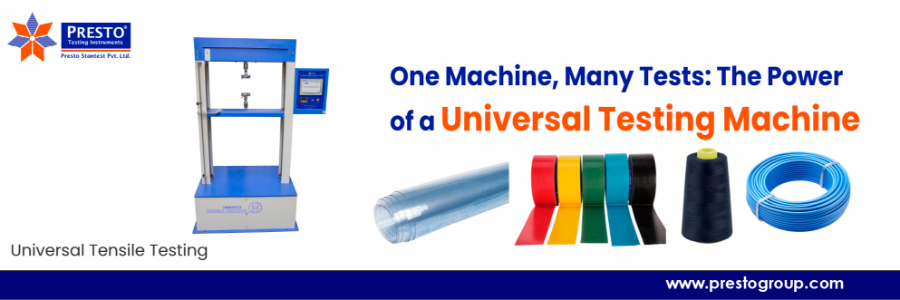
A Universal Testing Machine, or UTM, is used to measure how strong a material or part is under controlled force. Many people refer to it as a tensile testing machine because pulling tests are common in quality control, product design, and supplier checks. In reality, one Universal Testing Machine frame can handle several test types when operators change the grips, fixtures, and software method.
Test choice matters from the beginning. A plastic specimen may stretch far and then tear, while a metal sample may show a yield point and then neck down. Engineers decide what numbers define a pass or fail while checking sample shape, load range, and test speed.
How A Universal Testing Machine Performs Many Tests
A UTM applies force through a moving crosshead while a load cell measures the applied load. The machine also measures extension by crosshead travel or an extensometer attached to the specimen. This flexible setup supports different workflows without buying a separate machine for every method. Software collects the readings and calculates then stores them in a report .This evaluation improves consistency because the same control system can be used across multiple product lines. This facility matters because sometimes teams want faster approvals with fewer disputes between suppliers and customers.
Tensile Testing Method Overview
In a tensile test, the operator mounts the sample in grips, sets a speed, and runs the method until the endpoint is reached as the specimen is pulled until it permanently deforms and finally breaks. The results help confirm raw material grade and verify whether a production batch meets the target.
ASTM methods define specimen dimensions, conditioning rules, and calculation steps, which makes results easier to compare across sites and vendors and that's the reason many labs follow an ASTM tensile test machine-style procedure, even if the equipment brands are different.
Compression Testing Method Overview
Compression testing pushes a sample between platens to see how it shortens, buckles, or cracks. It is common for foams, rigid plastics, packaging structures, and some metal components. The key is stable alignment, so the force stays centred.
With compression platens and a suitable load cell, a universal testing machine can act like a compression testing machine for routine checks. For higher force work, facilities may add safety guarding and thicker fixtures to manage stored energy and fragment risk.
Other Tests Commonly Added By Fixtures
A single UTM can cover many day-to-day needs in a lab when accessories are selected carefully. These add-ons expand the capability without changing the main frame.
- Bend tests for rods, strips, and small sections
- Peel and adhesion tests for tapes and bonded layers
- Tear tests for films and flexible sheets
- Shear-oriented checks for fasteners and joints
- Configuring The UTM For Plastics And Metals
Material behaviour decides the setup. Plastics often need careful gripping to prevent slippage, and their results can change with temperature, humidity, and test speed. Metals usually require stronger grips, higher forces, and precise strain measurement near yield.
Because of these differences, suppliers often offer packages described as UTM for plastics or UTM for metals. The label helps buyers start the conversation, but performance depends on the correct load cell, grips, extensometer type, and reporting method. A practical selection focuses on what the lab actually tests, not just a general category.
Practical Setup Notes For Plastics
Many plastics stretch a lot and can shrink, so the gripping method becomes a major source of error. Thin samples also need better extension measurement than crosshead travel alone.
- Use grips that prevent slippage without crushing the sample
- Control test speed because plastics can be rate sensitive
- Condition samples as required, especially for moisture-sensitive polymers
- Consider a suitable extensometer or non-contact measurement for films
Practical Setup Notes For Metals
Metals usually need a higher capacity and a firm hold. Many standards also expect accurate strain data, not just crosshead movement.
- Use wedge or hydraulic grips for stable clamping
- Select a load cell with headroom above the expected peak load
- Use an extensometer suited to the expected strain range
- Machine specimens carefully to reduce edge defects and early breaks
Role Of Digital Control And Reporting
Modern UTMs rely on software to control motion, apply safety limits, and calculate test results. A digital UTM machine can store test methods, guide operators step by step, and reduce manual calculation mistakes. This matters in multi-shift plants where different people run the same test and management expects consistent reports.
Buying Considerations, Price Drivers, And Supplier Checks
A good purchase starts with a clear list of tests, materials, and sample sizes. The required force range, speed range, and measurement accuracy decide the base frame and load cell. After that, grips, platens, extensometers, and fixtures complete the system and often define the real usability.
Budget discussions about the UTM machine price should include these add-ons, plus calibration, installation, and training. Cheaper systems can become expensive if they lack the right grips or if service support is slow. A planned specification usually saves money because it reduces rework and repeated buying.
Questions To Ask Before Ordering
A capable universal testing machine manufacturer should share clear specifications and explain what accuracy means in daily use. They should also provide documentation for calibration and service plans.
- What standards and report formats are supported in the software
- What is included in the base quote versus optional accessories
- How often calibration is needed and what certificates are provided
- What is the service response time and spare part availability
Conclusion
A UTM delivers value because one frame can run multiple strength tests with controlled, repeatable data. When configured well, it supports both tension and compression work, along with common fixture-based methods used in daily quality checks. The best results come from choosing the right setup for the material, following a standard method, and selecting a supplier that supports calibration and long-term service.
Contact Presto Group Today!
Eliminate material failures, test errors, inaccurate load results, and other related inaccuracies. Choose from our range of dependable UTM machines for precise results and seamless performance.
Call us: +91 9210903903
Email: [email protected]
Visit: www.prestogroup.com
Recent Articles
- Climatic Chamber: Working Principle, Uses, Diagram, Price & Top Manufacturers in India
- Izod vs Charpy Impact Test: Difference, Method & Standards
- Colorimeter vs Spectrophotometer: Accuracy, Working Principle, and Industrial Uses
- Quality Assurance and Quality Control: Two Pillars of Product Excellence
- Hardness Test: Types, Testing Methods, Procedures, and ASTM Standards
Need more information
Connect with us for your business enquiries. Generally, we respond within one or two working days.