

- /
- Article / What is Tensile Strength? Complete Guide with Formula, Calculation & Industrial Use
What is Tensile Strength? Complete Guide with Formula, Calculation & Industrial Use
Tensile strength tells how strong a material is when you pull it. It means how much force something can handle before it breaks. From plastic bags to big bridges, this one thing helps keep products safe and working well. In this blog, we will explain tensile strength in simple words, with formula, how to test it, and where it's used in real life. We also added a table and some common questions so it's super easy to understand.
What is Tensile Strength?
Tensile strength is how much pulling force a material can take before it breaks. Imagine pulling on a rope or stretching a rubber band—tensile strength tells you how much force it can handle before it gives out. It’s super important for anything that gets stretched, like cables in a bridge or threads in a backpack.
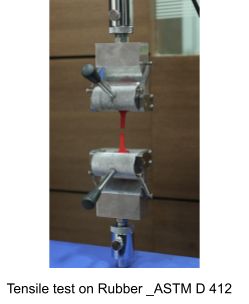
In simple terms, tensile strength is the max stress a material can deal with when it’s being pulled apart. It’s tested by yanking on a sample until it snaps, and that breaking point shows how strong it is.
How is Tensile Strength Measured?
Tensile strength is all about stress, which is the force applied divided by the material’s surface area. Here’s how it’s measured:
- Pascals (Pa): The basic unit, where 1 Pascal is 1 Newton of force per square meter.
- Megapascals (MPa): A bigger unit (1 MPa = 1 million Pa), since Pascals are pretty small.
- Pounds per square inch (psi): Used a lot in the U.S. for things like building or airplane parts.
For example, everyday steel might have a tensile strength of about 400–550 MPa, while super-tough steel can go way higher, like over 1,000 MPa.
Formula for Breaking Strength
Breaking strength is just another name for tensile strength—it’s the max force a material can take before it breaks. The formula is easy:-
Tensile Strength = Force at Break ÷ Surface Area
What that means:
- Tensile Strength: The stress the material can handle (in MPa or psi).
- Force at Break: The biggest pulling force before the material snaps (in Newtons or pounds).
- Surface Area: The cross-sectional area of the material (in square millimeters or square inches).
For instance, if a steel rod with a surface area of 0.01 square meters breaks at 50,000 Newtons, the tensile strength is:
50,000 N ÷ 0.01 m² = 5,000,000 Pa = 5 MPa
How to Calculate Tensile Strength?
Figuring out tensile strength is simple if you follow these steps:-
- Prep the Sample: Take a standard piece of material, often shaped like a dog bone, with a known surface area.
- Set Up the Machine: Put the sample in a testing machine that pulls it apart.
- Run the Test: The machine stretches the sample until it breaks and notes the highest force.
- Measure the Area: Check the sample’s original cross-sectional area.
- Do the Math: Use the formula (Tensile Strength = Force ÷ Area) to get the strength.
For example, if a material with a surface area of 25 mm² (0.000025 m²) breaks at 12,500 Newtons:
12,500 N ÷ 0.000025 m² = 500,000,000 Pa = 500 MPa
How is Breaking Strength Tested?
The test is done using a machine called tensile strength tester. It pulls the material until it breaks. It tells you:-
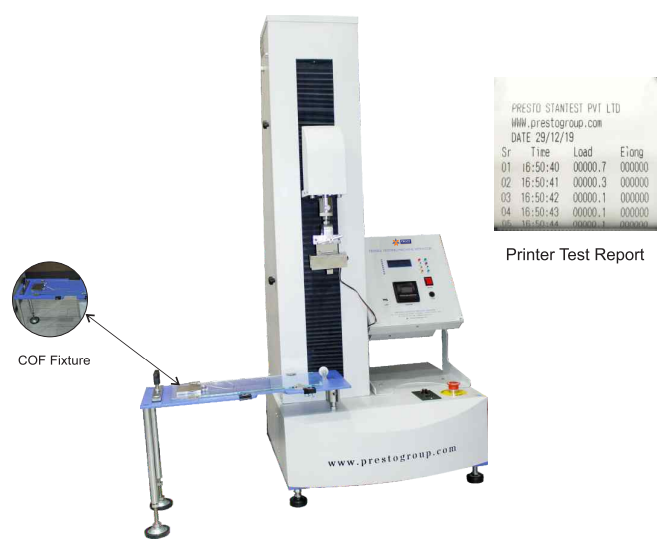
- Max strength before breaking
- Yield point (when material starts to bend for good)
- How much it stretches
- How stiff it is in beginning
Standards like ASTM D638 (for plastic) or ISO 527 are used so results stay trusted.
Yield Strength vs. Tensile Strength
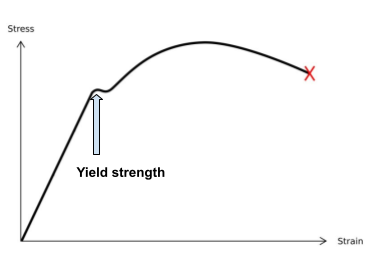
These two are not same:-
| Property | Yield Strength | Tensile Strength |
| What it means | When it starts bending | When it snaps completely |
| Failure point | Starts permanent bending | Full break |
| Measured during | Start of plastic behavior | End of pulling |
| Why it matters | Prevents long-term bending | Prevents total break |
| Example (steel) | ~250 MPa | ~400–550 MPa |
Where is Tensile Strength Used?
It is used in many places where pulling or stress happens:-
- Packaging: So bags don’t tear easily
- Buildings: Steel bars and cables must be strong
- Cars: Vehicle parts like frames must not break
- Textiles: Ropes and threads must hold well
- Medical tools: Stitches and implants must stay strong inside body
Without checking tensile strength, you risk choosing weak stuff that can fail and cost more later.
Factors That Affect Tensile Strength
Tensile strength isn't a constant. Several things shift it:-
Temperature — Most metals get weaker as temperature rises. Polymers soften. At low temperatures, many materials become more brittle — lower toughness, not necessarily lower tensile strength, but more likely to fracture suddenly.
Strain rate — Load a material quickly and it often appears stronger and more brittle than under slow loading. This is why impact testing and tensile testing measure different things.
Internal defects — Voids, inclusions, weld flaws, surface cracks — all act as stress concentrators. A small crack can cause fracture at a fraction of the material's nominal tensile strength.
Heat treatment — Quenching and tempering steel, age-hardening aluminium alloys — these processes can change tensile strength by hundreds of MPa.
Moisture absorption — Nylon loses 20–30% of its tensile strength when saturated with moisture. Composite materials can delaminate. Not a small effect.
Cross-section size — Thick sections of some materials test differently to thin ones. Worth checking if your test sample dimensions differ significantly from the actual part.
Industrial Applications of Tensile Strength
Construction and Civil Engineering Rebar, structural steel, bridge cables, anchor systems — everything that carries load has a tensile specification. Building codes set minimum requirements. Failure isn't just costly, it gets people killed.
Automotive Seatbelt webbing, chassis components, tyre cord, body panels — all tested. Modern cars use advanced high-strength steels that are stronger and thinner than older materials, which is how manufacturers reduce weight without reducing crash safety.
Packaging Stretch wrap, stand-up pouches, carrier bags, woven polypropylene sacks — tested to make sure they hold up through filling, sealing, palletising, and transport. In pharmaceutical and food packaging, a failed seal isn't just a mess — it's a contamination event.
Textiles and Technical Fabrics Climbing ropes, parachute cord, geotextiles, ballistic fabric — tensile properties are certified. A climbing rope has to handle not just a static load but a dynamic one — a falling climber generates forces well above their body weight.
Medical Devices Sutures, implants, catheters, stents — all subject to tensile loading inside the body. Regulatory approval for these products requires tensile data. A fracturing implant or snapping suture in a surgical setting is a serious event.
Aerospace Weight is always critical in aerospace. The relevant metric often isn't absolute tensile strength but specific tensile strength — strength per unit weight. That's why carbon fibre and titanium show up everywhere despite their cost.
Plastics and Rubber Rubber seals in hydraulic systems, plastic housings, film packaging, moulded components — tensile testing is part of incoming material inspection and product qualification for most manufacturers.
Common Questions About Tensile Strength
Q1: What’s the difference between tensile and yield strength?
A: Yield is when a thing starts bending and won’t return. Tensile is when it finally breaks.
Q2: Why it’s important for packaging?
A: It keeps things like plastic films or bags from tearing during use or transport.
Q3: How to choose a good tensile strength tester?
A: Pick one that has digital screen, adjustable speed, easy grips, memory saving, and follows ASTM/ISO.
Q4: Does every material has different tensile strength?
A: Yes! Rubber is soft, breaks fast. Steel or carbon fiber can handle very high force.
Final Words
Tensile strength helps in checking how strong and safe a material is before using it in real life—like in buildings, packaging, or machines. If you understand how to measure it, where to use it, and what it means, you can choose better materials and avoid accidents.
If you need expert help or want to buy a good tester, feel free to call us at +91 9210 903 903 or email at info@prestogroup.com.
Further Reading for You
Recent Articles
- Climatic Chamber: Working Principle, Uses, Diagram, Price & Top Manufacturers in India
- Izod vs Charpy Impact Test: Difference, Method & Standards
- Colorimeter vs Spectrophotometer: Accuracy, Working Principle, and Industrial Uses
- Quality Assurance and Quality Control: Two Pillars of Product Excellence
- Hardness Test: Types, Testing Methods, Procedures, and ASTM Standards
Need more information
Connect with us for your business enquiries. Generally, we respond within one or two working days.