
- /
- Blog / Corrosion Challenges in Oil & Gas: Detection, Testing, and Prevention Strategies
Corrosion Challenges in Oil & Gas: Detection, Testing, and Prevention Strategies
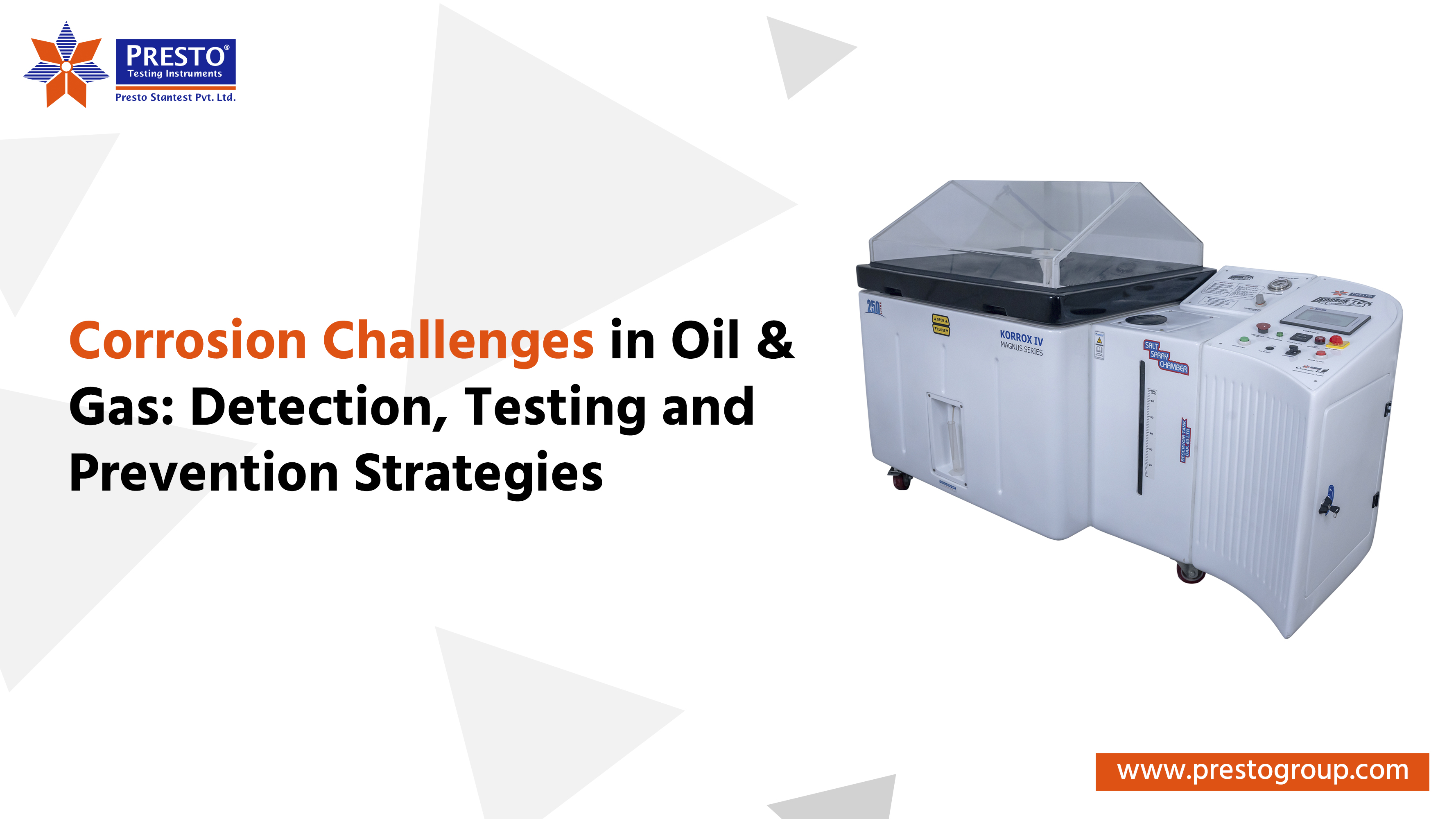
Corrosion is one of the most common problems in the oil and gas industry. Pipelines, storage tanks, and industrial equipment stay exposed to moisture, chemicals, salt, and changing weather conditions for years. Because of this, metal surfaces slowly start getting damaged. Sometimes the corrosion is visible on the outside, but many times it begins internally where it becomes difficult to notice in the early stage.
The problem is not only about rust marks. Corrosion can increase maintenance costs, reduce equipment life, and even create leakage or shutdown issues if companies ignore it for too long. Earlier, industries mostly focused on fixing the damage after it happened. But now the mindset is changing. Companies want to detect problems earlier and avoid failures before they become serious.
This is why testing methods like salt spray testing and modern corrosion testing equipment are now an important part of industrial quality checks.
Why Corrosion is a Big Problem in Oil & Gas Industry
Oil and Gas operations usually happen in rough environments. Offshore platforms face salty sea air all the time, underground pipelines stay exposed to moisture for years and the refinery equipment handles chemicals daily. Because of like this, metal surfaces slowly start reacting with their surroundings.
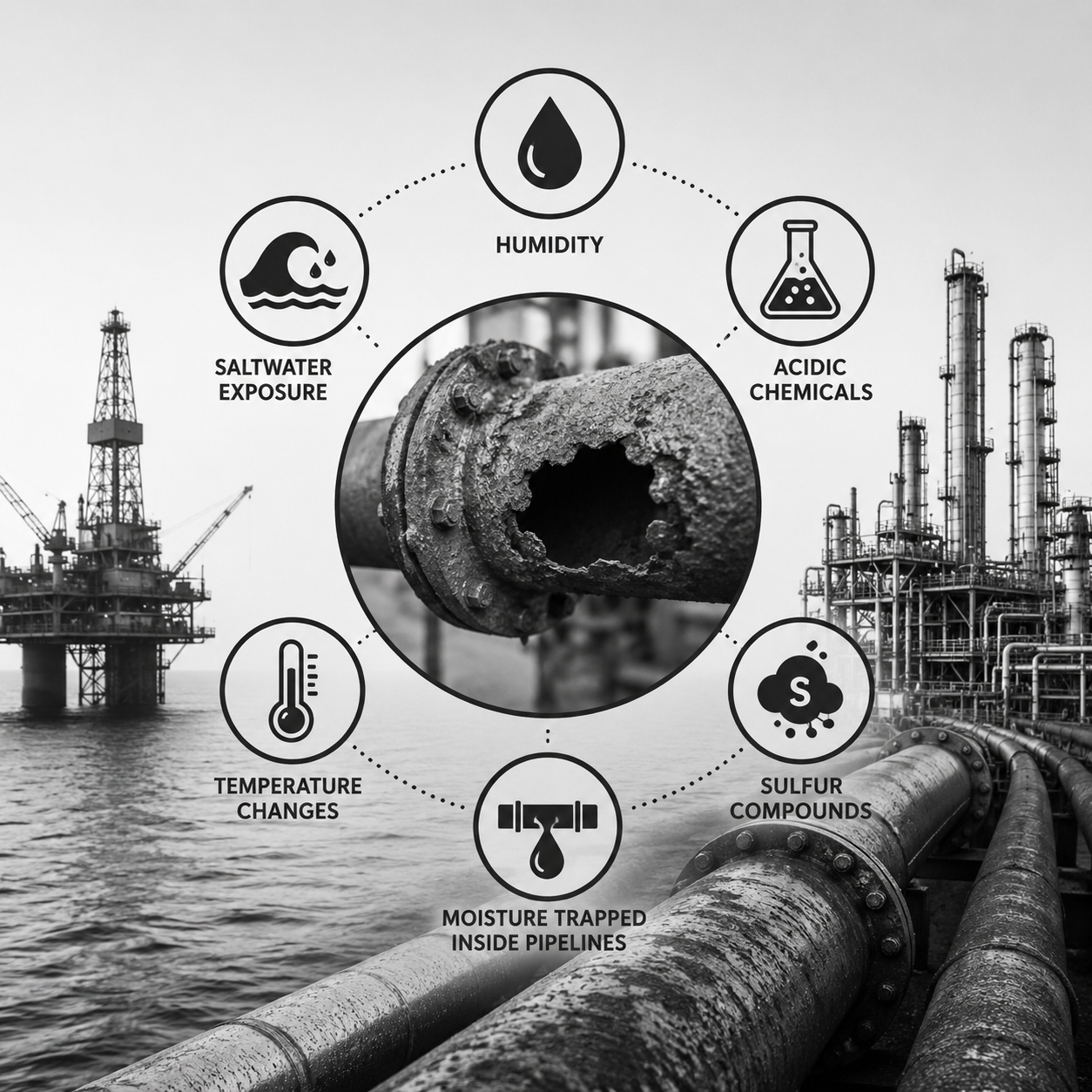
This reaction weakens the material over time.
Some common reasons behind corrosion are:
- Humidity
- Saltwater exposure
- Acidic chemicals
- Temperature changes
- Sulfur compounds
- Moisture trapped inside pipelines
The difficult part is that corrosion doesn’t always happen the same way. Different environments create different types of damage.
Common Types of Corrosion Seen in Oil & Gas
| Type of Corrosion | What Usually Happens | Where It Happens |
| Uniform Corrosion | Surface slowly wears evenly | Storage tanks, pipelines |
| Pitting Corrosion | Tiny holes form on the metal | Marine structures |
| Galvanic Corrosion | Happens between two metals | Pipe joints |
| Crevice Corrosion | Corrosion develops in gaps | Bolted connections |
| Stress Corrosion Cracking | Cracks form due to pressure | High-pressure systems |
Some corrosion looks minor at first but spreads faster than expected. That’s why industries now rely more on proper testing instead of guessing material performance.
Why Early Corrosion Detection Matters
One of the biggest mistakes industries make is waiting too long before inspection. By the time visible rust appears, and internal damage may already be serious.
Early detection helps companies avoid:
- Unexpected shutdowns
- Product leakage
- Costly repairs
- Safety risks
- Production loss
Today, industries use different methods to monitor corrosion regularly. Some of the commonly used techniques are:
- Ultrasonic inspection
- Surface examination
- Thickness measurement
- Magnetic testing
- Sensor-based monitoring systems
But field inspection alone is not enough. Before equipment is approved for industrial use, manufacturers also test materials inside laboratories using specialized lab testing equipment for corrosion.
This testing gives a better idea about how products will behave after long exposure to harsh conditions.
Importance of Salt Spray Testing
Among different corrosion testing methods, salt spray testing is one of the most commonly used processes. It is simple, effective, and widely accepted across industries.
In this types of test, metal or coated samples are placed inside a chamber where a fine salt mist is continuously sprayed. The environment inside the chamber accelerates corrosion, helping manufacturers study how resistant the material is.
The main purpose is to check:
- Rust resistance
- Coating durability
- Surface protection quality
- Material performance
Industries use salt spray testing because it gives quicker results compared to waiting for natural corrosion outdoors and etc.
This method is especially useful for oil and gas companies because many components operate near coastal or high-humidity areas where salt exposure is common.
Understanding the ASTM B117 Salt Spray Test
When we talk about corrosion testing, the ASTM B117 salt spray test is considered one of the standard methods used worldwide.
This test follows a controlled procedure where:
- A salt solution is prepared.
- Samples are placed inside the chamber.
- Salt fog is generated continuously.
- The surface is inspected after specific hours.
The ASTM B117 salt spray test helps manufacturers compare coating quality under the same testing conditions.
Industries like automotive, marine, aerospace, and oil & gas commonly use this standard because it gives reliable and repeatable results.
The test also helps companies improve coating formulations and reduce chances of early product failure.
How a Presto Salt Spray Chamber Helps Industries
Testing accuracy depends heavily on the quality of equipment being used. A poor testing setup may give inconsistent results, which can create problems later during actual product use.
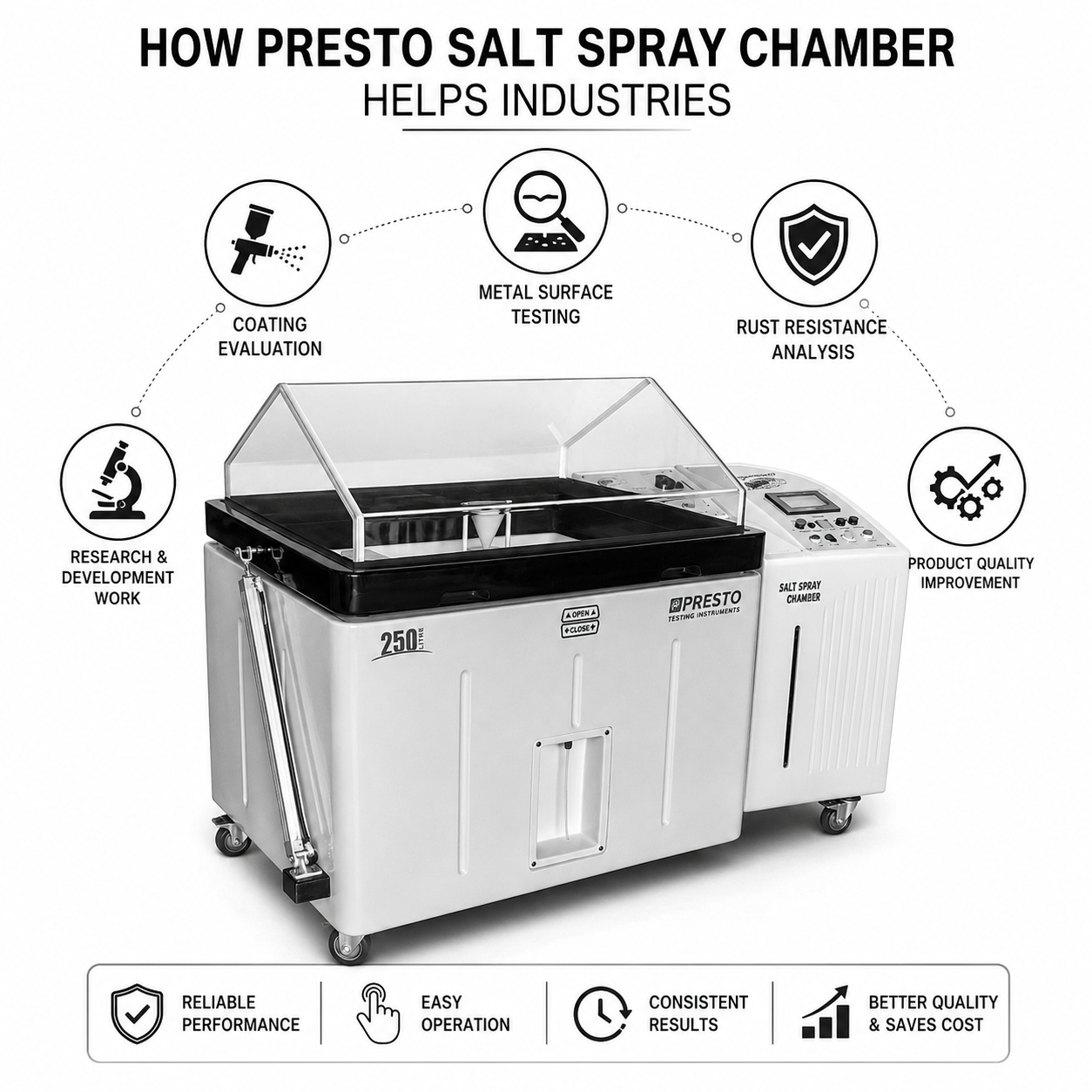
The Presto Salt Spray Chamber is designed to create a controlled corrosive environment for industrial testing. It helps manufacturers understand how products will react when exposed to moisture and salt for long durations.
Industries use the Presto Salt Spray Chamber for:
- Coating evaluation
- Metal surface testing
- Rust resistance analysis
- Product quality improvement
- Research and development work
One thing industries usually prefer about Presto Group equipment is its reliable performance and easy operation. Since industrial testing often runs for long hours, consistency becomes very important.
Good testing equipment not only improves quality checks but also saves companies from future maintenance issues.
Different Corrosion Testing Methods Used in Industries
Salt spray testing is important, but it’s not the only method industries use. Depending on the application, companies perform different corrosion tests.
1. Salt Spray Testing
Used for checking coating and metal resistance in salty environments.
2. Cyclic Corrosion Testing
This method combines salt exposure, humidity and drying cycles to create more realistic conditions.
3. Immersion Testing
Materials are dipped inside chemicals or liquids for long periods to study degradation.
4. Electrochemical Testing
Used to study corrosion rate and metal reaction behavior.
5. Environmental Simulation Testing
Modern corrosion testing machine systems can recreate industrial conditions like humidity, heat, and chemical exposure.
Using multiple testing methods gives better understanding of material durability.
Prevention Strategies That Actually Help
Testing helps identify problems, but prevention is what saves industries from expensive failures.
Oil and gas companies usually follow a combination of methods to reduce corrosion risks.
Protective Coatings
Protective coatings act like a barrier between metal and the surrounding environment.
Common coatings include:
- Epoxy coatings
- Zinc-rich coatings
- Polyurethane coatings
Before approval, these coatings are usually checked using corrosion testing equipment salt spray systems to see how long they can survive under corrosive conditions.
Material Selection
Using better materials reduces corrosion chances naturally.
Industries often use:
- Stainless steel
- Duplex steel
- Nickel alloys
These materials cost more initially, but they usually last longer in harsh environments.
Cathodic Protection
This technique is mostly used for underground pipelines and tanks. It uses electrical systems to reduce metal corrosion.
Many oil and gas companies use this method because it works well for large structures.
Regular Inspection
Routine maintenance still remains one of the simplest and most effective solutions.
Companies usually perform:
- Cleaning
- Surface inspection
- Rust removal
- Leak checking
- Coating repair
Small maintenance activities often prevent much bigger repair costs later.
Why Corrosion Testing is Worth the Investment
Some companies think corrosion testing only increases project cost. But in reality, proper testing saves money in the long run.
Without testing, industries may face:
- Unexpected equipment failure
- Downtime losses
- High repair expenses
- Safety incidents
- Environmental penalties
Reliable corrosion testing equipment helps manufacturers improve product life and reduce future risks.
This is one reason why many industries choose trusted manufacturers like Presto Group for industrial testing solutions.
Why Smart Corrosion Testing is Becoming Essential for Oil & Gas Industries
Corrosion has been a headache for oil and gas companies for a long time. Pipes, tanks, and offshore machinery stay around moisture, chemicals, and salty conditions almost all the time, so metal damage slowly becomes unavoidable. In many cases, companies don’t even notice the problem early because everything looks normal from outside. Later, the same issue can lead to leakage, shutdowns, or expensive repair work. That’s why proper testing matters so much today. Methods like salt spray testing and the ASTM B117 salt spray test give manufacturers a practical idea about material performance. Equipment such as the Presto Salt Spray Chamber also helps industries test products more accurately before actual use.
FAQs
Why is corrosion a big issue in oil and gas industry?
Ans: Because equipment stays exposed to moisture, chemicals, pressure, and salty conditions for long time. This slowly damages metal and can cause leakage or costly repairs.
What do companies check in salt spray testing?
Ans: They mainly check how long a coating or metal surface can resist rust. The sample is kept in a salty environment so companies get an idea about real working conditions.
Which industries use corrosion testing equipment?
Ans: Industries like sach as a oil & gas, marine, automotive, aerospace, and heavy engineering use corrosion testing systems regularly.
How does the Presto Salt Spray Chamber help manufacturers?
Ans: It helps manufacturers test product durability under controlled corrosive conditions before actual industrial use.
Contact Presto Group
Want reliable solutions for corrosion testing and quality analysis?
Get in touch with Presto Group today.
 Phone: +91 9210 903 903
Mail: info@prestogroup.com
Recent Blogs
- What is MFI (Melt Flow Index)? Full Form, Formula, Benefits, Limitations, and Industrial Testing Applications
- Injection Molding: Process Steps, Machine Operation, Diagrams & Testing Instruments
- Peel Strength and Heat Seal Strength Testing for Flexible Packaging
- Industrial and Laboratory pH Meters: Working, Diagram, Uses and Selection Guide
- Industrial Leak Testing: Methods, Technologies, Benefits, and Industry Applications

Related Blogs
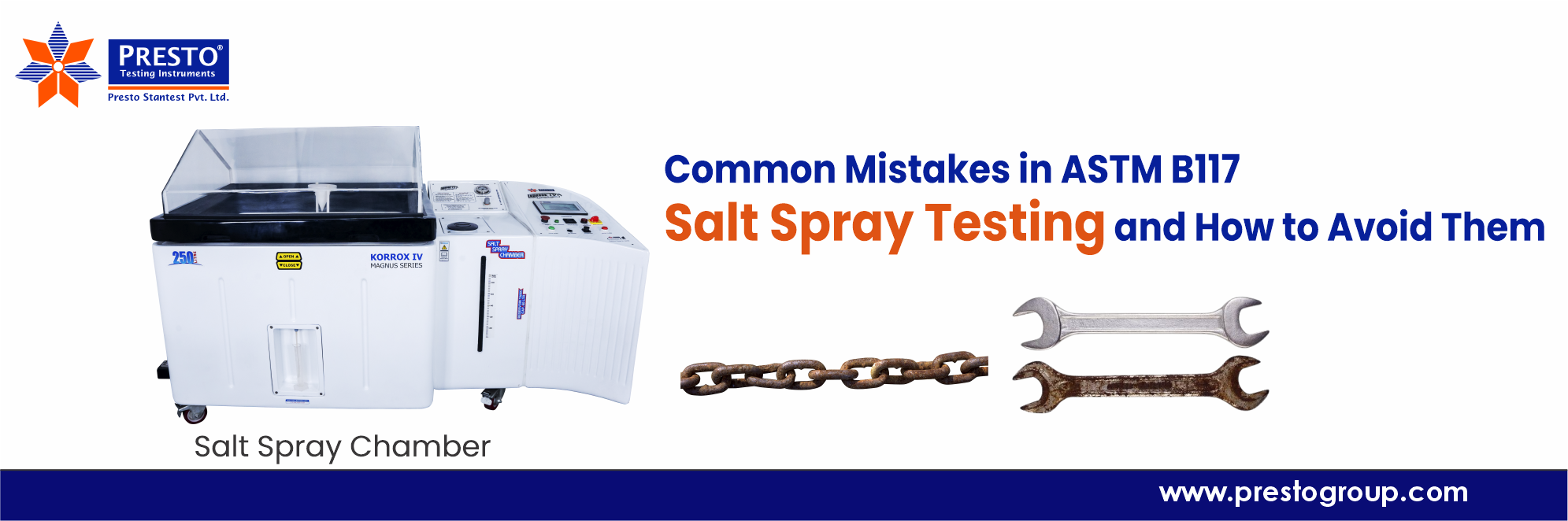
Common Mistakes in ASTM B117 Salt Spray Testing and How to Avoid Them
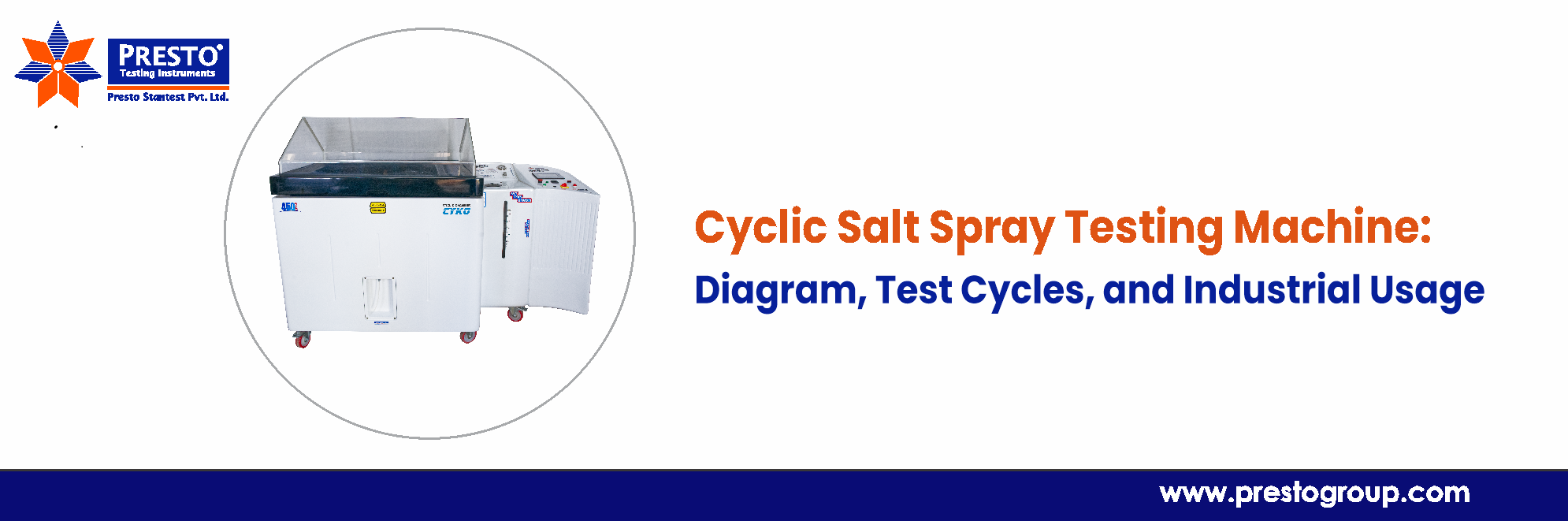
Cyclic Salt Spray Testing Machine: Diagram, Test Cycles, and Industrial Usage