
- /
- Blog / Difference Between CASS and NSS Test in Corrosion Resistance Testing
Difference Between CASS and NSS Test in Corrosion Resistance Testing
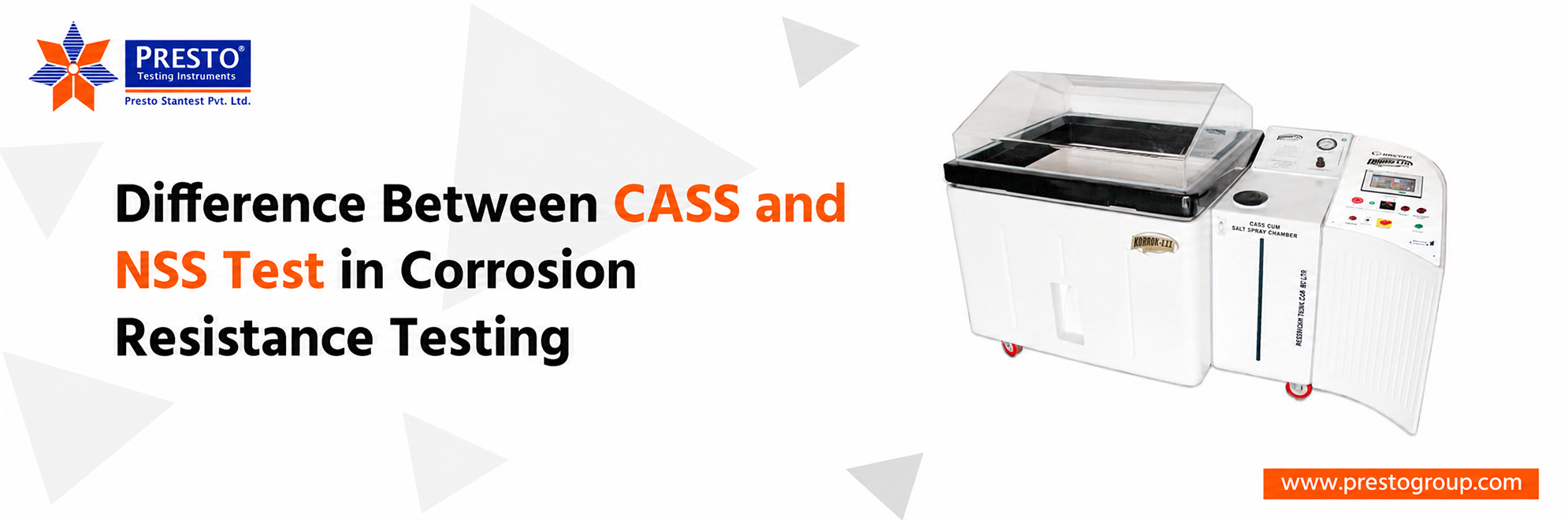
Corrosion can damage a component's strength, aesthetics, and service life. The automotive, aerospace, electronics, and metal finishing industries rely heavily on corrosion testing to ensure product quality and reliability. The CASS Test and the NSS Test are two of the most popular methods in the corrosion testing industry.
Both tests use a corrosion testing chamber to replicate harsh environments, but differ significantly in terms of testing conditions, speed and usage. Knowing what this means in practical terms will help manufacturers make informed decisions about their best choice for coating and material testing.
In this guide, we discuss CASS Test vs NSS Test, test principles and applications, and how searching for the right test method can help your business. Using the advanced Presto testing technology, manufacturers can perform reliable, repeatable corrosion testing in accordance with international standards.
CASS Test vs NSS Test: Which Corrosion Test is Better?
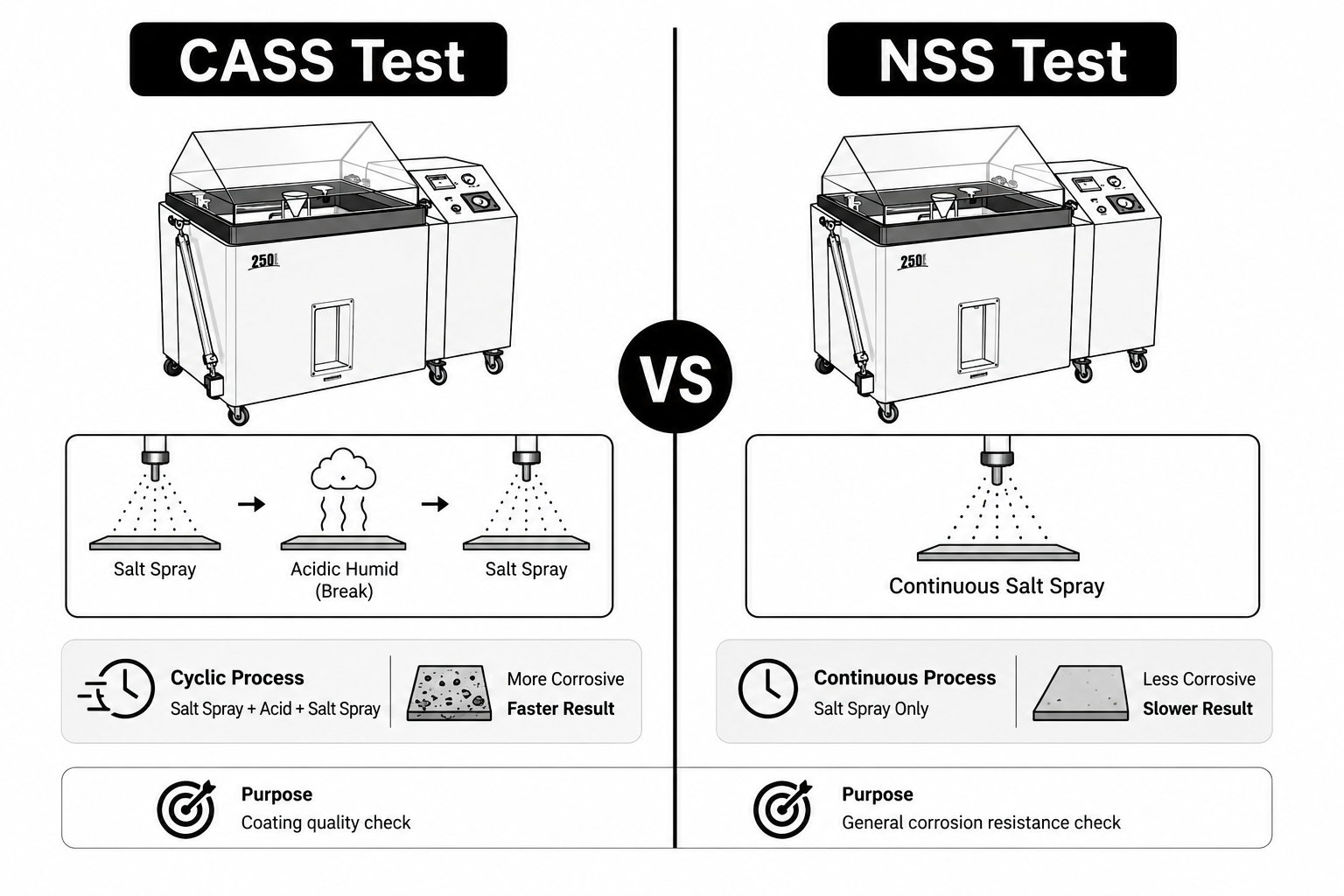
There's no clear answer to which test is better because they have different applications.
- The NSS Test is best used for testing general corrosion resistance.
- The CASS Test is used where more rapid testing and harsher conditions are required.
Factors to consider include:
- Material type
- Type of surface coating
- Industry requirements
- Expected environmental conditions
A CASS Tester is preferably used for decorative coatings subjected to harsh environments, and NSS testing is most common for long-term quality control.
CASS Full Form and NSS Full Form for Corrosion testing
It is essential to understand the terminology before comparing these tests.
What is the CASS Full Form?
The CASS Full Form is Copper-Accelerated Acetic Acid Salt Spray.
This is an accelerated corrosion test which uses:
- Sodium chloride solution
- Acetic acid
- Copper chloride
The addition of copper chloride to the test solution makes the corrosivity of the test more severe, based on the corrosive nature.
The CASS method, as specified by ISO 9227, is best suited to evaluate decorative coatings such as nickel-chromium systems and aluminium coatings.
What is the NSS Full Form?
The NSS Full Form is Neutral Salt Spray Test.
This is the most widely used salt spray test, carried out with a neutral sodium chloride solution.
The Neutral Salt Spray Test is known worldwide under various standards such as ASTM B117 and ISO 9227 for testing corrosion resistance.
What is a CASS Test? Purpose and Testing Process
The CASS Test is created to produce a severe corrosive environment within a short duration.
Purpose of the CASS Test
The primary aim is to:
- Check decorative metal coatings.
- Evaluate chromed parts
- Test aluminium surface finishing.
- Determine coating life under harsh exposure.
How Does a CASS Tester Work?
A CASS Tester sprays an acidic salt solution containing copper chloride inside a controlled chamber.
The process typically includes:
- Preparing the test solution.
- Adjusting the pH to acidic.
- Setting up the specimens properly.
- Controlling the chamber conditions as per standards.
- Testing for corrosion after exposure.
Copper-Accelerated Acetic Acid Salt Spray is a great above-standard NSS testing that highly accelerates corrosion compared to standard NSS testing.
The following method is used by experts when they request a quick test and do not want to wait for the normal exposure times.
What is an NSS Test? Working Principle and Applications
The Neutral Salt Spray test is the most established and commonly used testing method for corrosion testing.
Working Principle of NSS Testing
The NSS Test dispenses a fine mist of sodium chloride solution on the test specimens continuously.
The test environment is controlled to provide a repeatable exposure.
According to ASTM B117, the NSS Test is used for testing coatings with accelerated salt exposure.
Applications of NSS Testing
The Applications of CASS Test and NSS Test are used for various applications.
Typical applications of NSS are:
- Galvanised Coatings
- Paint Coatings
- Zinc Plated Parts
- Hardware
- Fittings and Fasteners
NSS Testing is often used in routine quality assurance programmes by many manufacturers.
Difference Between CASS and NSS Test: Key Parameters Compared
The following table sums up the main differences between the CASS Test and NSS Test:
| Parameter | NSS Test | CASS Test |
| NSS Full Form | Neutral Salt Spray Test | Copper-Accelerated Acetic Acid Salt Spray |
| Test Solution | Sodium chloride solution | Sodium chloride + acetic acid + copper chloride |
| pH Level | Neutral | Acidic |
| Corrosion Severity | Moderate | High |
| Typical Applications | General coatings | Decorative coatings |
| Testing Speed | Slower | Faster |
| Standards | ASTM B117, ISO 9227 | ISO 9227 |
| Industries | Automotive, hardware | Automotive trim, electroplating |
Applications of CASS and NSS Tests in Industrial Testing
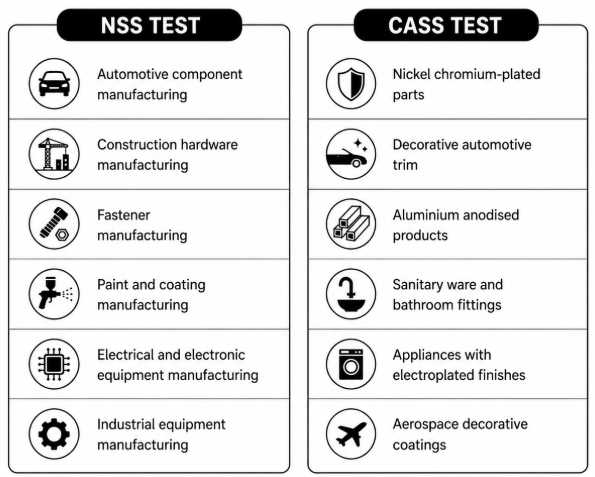
The Applications of the CASS Test and NSS Test vary depending on the type of coating and industrial applications. Both of these tests are conducted to ensure the corrosion performance of materials before they are sold in the market.
Application of NSS Test
The Neutral Salt Spray test is used for routine quality control testing and product development. It's also used to test corrosion protection for coatings.
The following industries would typically find themselves using the NSS test:
- Automotive component manufacturing
- Construction hardware manufacturing
- Fastener manufacturing
- Paint and coating manufacturing
- Electrical and electronic equipment manufacturing
- Industrial equipment manufacturing
The NSS test is used by manufacturers to compare the coating performance and to test compliance with customer requirements.
Application of CASS Test
The CASS test is used where the application of the decorative coatings requires a more aggressive testing of the cyclic corrosion.
Typical applications include:
- Nickel chromium-plated parts
- Decorative automotive trim
- Aluminium anodised products
- Sanitary ware and bathroom fittings
- Appliances with electroplated finishes
- Aerospace decorative coatings
Copper-accelerated Acetic Acid Salt Spray testing is rapid, so it's helpful when manufacturers need a fast turnaround during newer product development and ongoing quality assurance.
Corrosion Test Chamber: Significance of salt spray Testing
The Corrosion Testing Chamber is the single most important piece of equipment used for NSS and CASS testing. Test accuracy largely depends on the chamber's ability to maintain stable test conditions.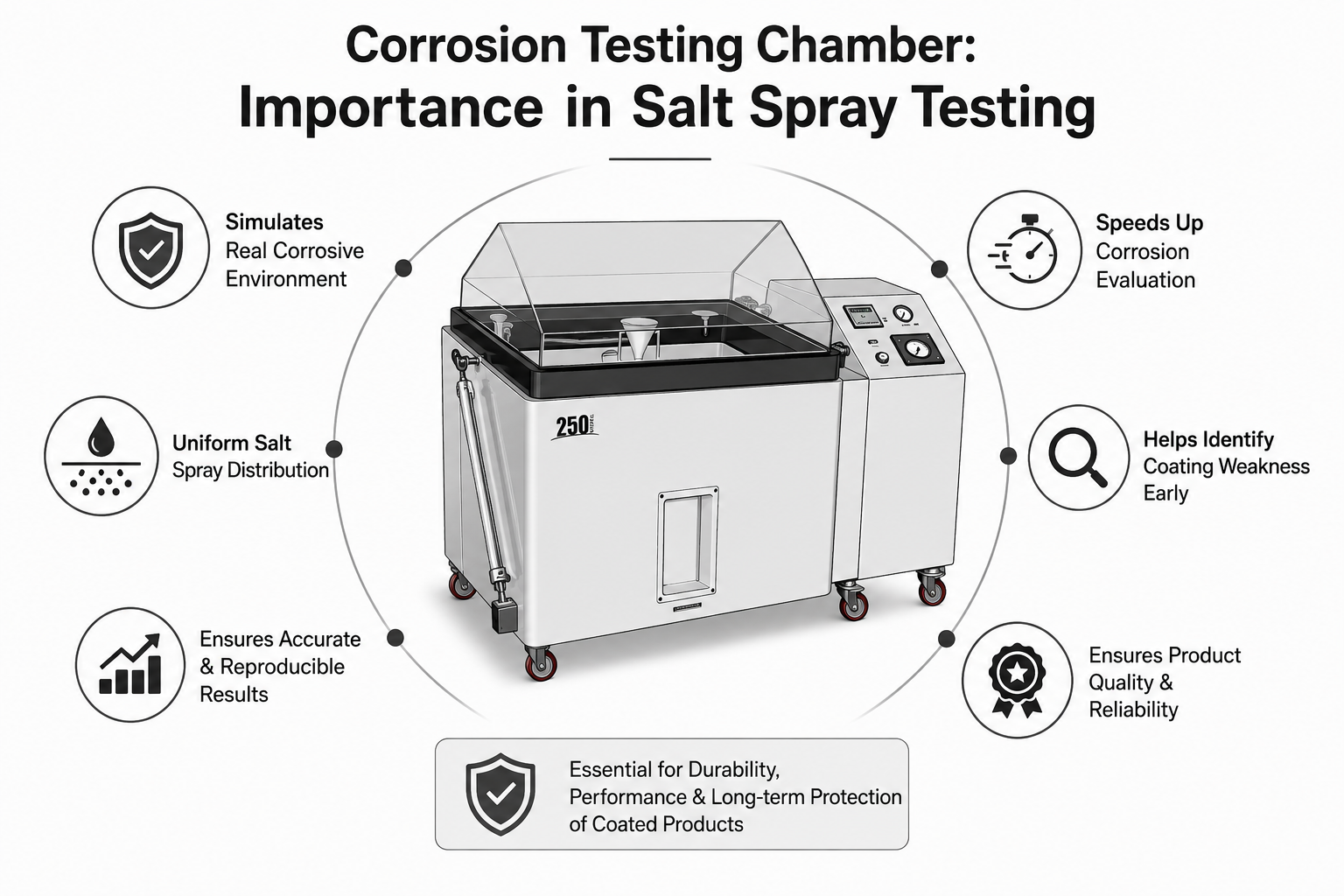
Why a Corrosion Testing Chamber Is Important?
A high-quality chamber contributes to:
- A uniform salt fog
- Accurate temperature control
- Repeatable test conditions
- Compliance with testing standards
- A reduction in operator error
- Confidence in testing results
Outdoor testing chambers also typically include user-friendly controls, solid construction and rapid test operation and are thus a good fit for fast-moving laboratories.
Presto Stantest Corrosion Testing Equipment
Presto Stantest provides a range of high-quality corrosion testing chamber solutions that deliver reliable, precise corrosion testing performance. Presto's testing chambers are built to meet recognised testing standards and provide the confidence manufacturers need to rate the reliability of their products.
Key features include:
- A solid chamber
- User-friendly controls
- Uniform salt spray
- Consistent temperature control
- Reliable NSS and CASS testing performance
In many sectors, testing is a core part of the product life cycle, as product reliability is an essential part of a company's brand reputation, so investing in reliable testing equipment is essential.
How to Choose Between CASS and NSS Testing Methods
Choosing between a CASS Test and an NSS Test involves considering several factors.
Opt For NSS Testing If:
- A general corrosion resistance assessment is required.
- Zinc-coated or painted products must be tested.
- Routine quality control is the primary goal.
- The industry suggests NSS testing.
- A neutral testing environment works for your needs.
Opt For CASS Testing If:
- Decorative coatings must be assessed.
- You need rapid corrosion information.
- Nickel-chromium-plated products are tested.
- The industry requirements specify severe testing.
In the end, what matters most are product applications, customer requirements and testing standards in place.
Need equipment for reliable corrosion testing? Check out PRESTO's cutting-edge testing solutions and select the optimal chamber for your Quality Assurance needs.
Get Reliable Corrosion Testing Solutions from Presto Stantest
Looking for accurate and standards-compliant CASS and NSS corrosion testing equipment? Presto offers advanced corrosion testing chambers designed for precise, repeatable, and dependable performance. Contact our experts today to find the right solution for your testing requirements.
Call: +91 9210 903 903
Email: info@prestogroup.com
 Connect with our testing experts today and ensure superior corrosion resistance testing with Presto's trusted quality assurance solutions.
Recent Blogs
- What is MFI (Melt Flow Index)? Full Form, Formula, Benefits, Limitations, and Industrial Testing Applications
- Injection Molding: Process Steps, Machine Operation, Diagrams & Testing Instruments
- Peel Strength and Heat Seal Strength Testing for Flexible Packaging
- Industrial and Laboratory pH Meters: Working, Diagram, Uses and Selection Guide
- Industrial Leak Testing: Methods, Technologies, Benefits, and Industry Applications

Related Blogs
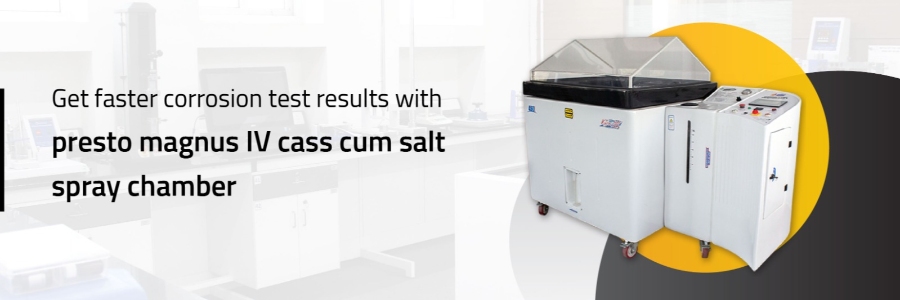
Get Faster Salt Spray Test Results with Cass cum Salt Spray Chamber
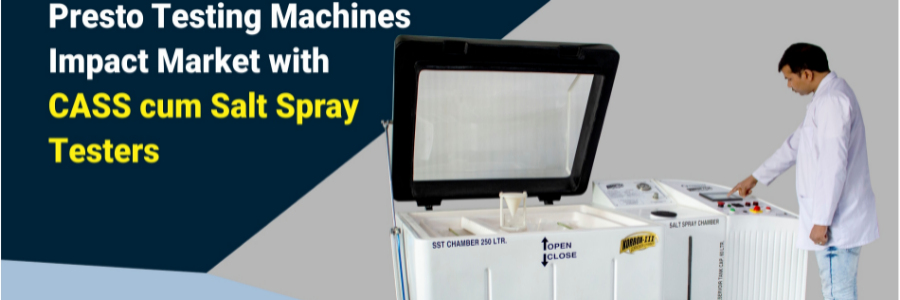
Presto Testing Machines Impact Market with CASS cum Salt Spray Testers
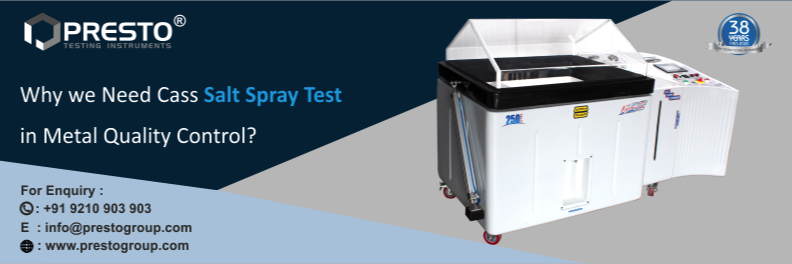
Why we need CASS Salt Spray Test in Metal Quality Control?