
- /
- Blog / What is Adhesion Test? Standards, Methods and Industrial Applications
What is Adhesion Test? Standards, Methods and Industrial Applications
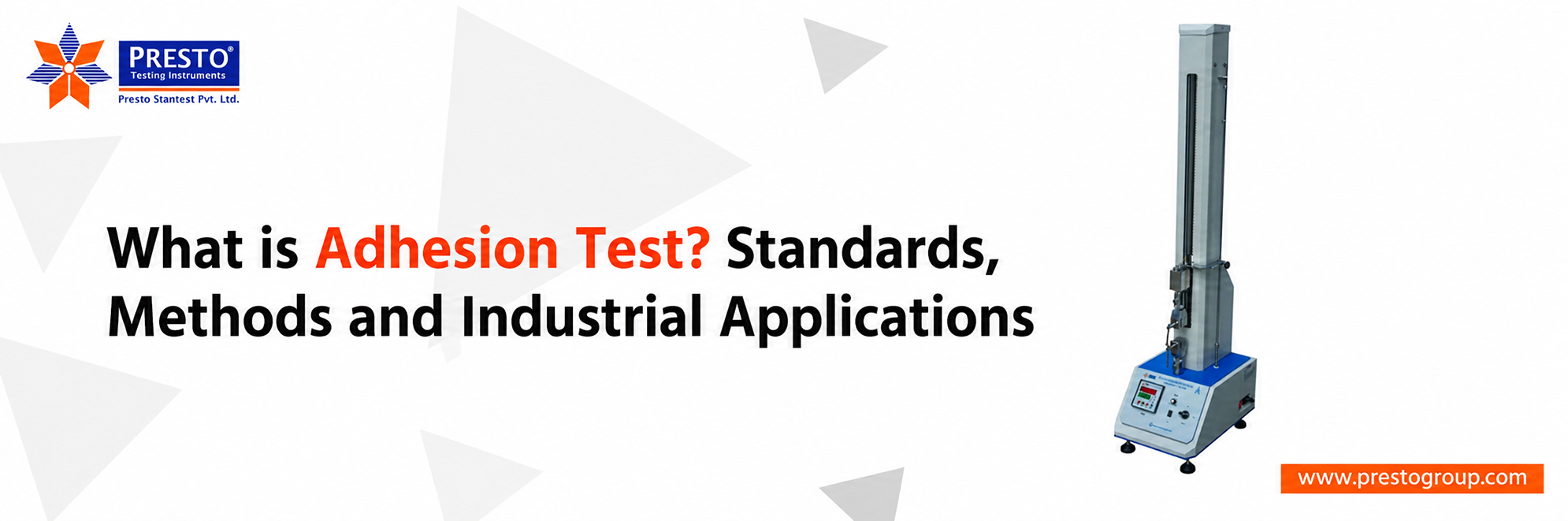
An adhesion test allows manufacturers to test the adhesive force or bonding between two substances. Used in tapes, labels, films, coatings, laminates, packaging seals, etc and many other “bonded materials”.
Provides understandable information on bond strength. It aids teams in determining if a material can withstand pulling force, peeling, handling, storage, and/or real-use conditions. Manufacturers can decrease failures and provide greater consistency using the proper Adhesion Strength Tester or Peel Strength Tester.
What is an Adhesion Test? Purpose and Importance
An Adhesion Test is a type of testing to measure the strength of adhesion between two materials. The bond can also be between a coating and a metal, tape and plastic, a label and a bottle, film and paperboard, or a seal and flexible packaging.
The prime purpose of Adhesion Testing is to confirm whether or not this adhesion is adequate for using the product. For instance, food pouch seals are to be opened during transit. A label shouldn’t fall off a bottle. A coating should not flake off a surface.
ASTM D3359 refers to tape adhesion testing used to determine the ability of coating film(s) to adhere to a cut made in the coating when subjecting it to pressure-sensitive tape.
An Adhesion Test is provided to assist manufacturers in testing:
- Inspect products before delivery
- Test and compare various adhesives or materials
- Reduce customer complaints
- Improve production control
- Satisfy industry testing requirements
- Prevent seal or label failure, or coating of the surface on bonded materials.
This makes Adhesion Testing very useful for packaging, printing, automotive, electronics, paints, coatings, and Adhesive Product industries.
Adhesion Testing Methods for Accurate Bond Strength Evaluation
Various products must be tested using different methods of adhesion. The right method is dependent on the material, the nature of the bond, the coating thickness, the dimension of the product, and the goal of testing.
Also available are common methods of adhesion testing.
1. Peel Adhesion Test
Measures the material's strength to separate two bonded materials. Commonly used in the manufacture of tapes, labels, films, laminates, and flexible packaging. Typically, a Peel Strength Test is conducted at a predetermined angle, like 90° or 180°.
2. Cross-Hatch Adhesion Test
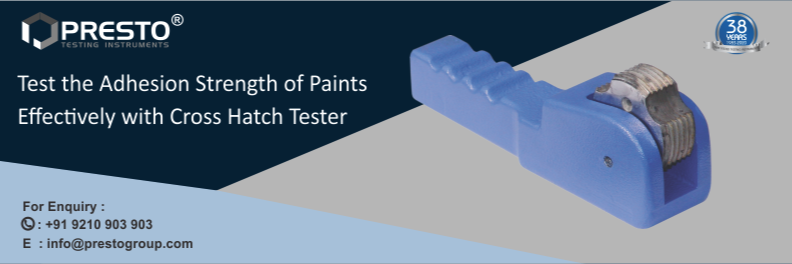
Small cuts are made in a coating in a grid pattern, as in this method. Tape is put on and taken off. This coating is then tested to determine the amount of coating lost. This process is frequently used with paints and coatings.
3. Pull-Off Adhesion Test
This one determines the force required to remove a coating from a surface. It can be used for surface layers, paints, and coatings. Pull-off adhesion-testing methods are often referenced by ASTM D4541 and ISO 4624.
4. Lap Shear Test
This method tests the integrity of the bond when the bonded parts are subjected to forces in a different direction. It can be used during structural bonding adhesive, such as structural bonding glue.
5. T-Peel Test
For two flexible materials to be joined, this method is used. The peel resistance is obtained by sampling in a T shape.
Each of these Adhesion Testing Methods will give the manufacturer insights into the way a bond responds to the application of force.
Adhesion Test Standards and Testing Requirements
The Adhesion Test Standard provides a predetermined way to test. It instructs the user on how to prepare the sample, set up the machine, apply the force, take readings, and report the results.
Common standards used in Adhesion Testing include:
- ASTM D903 – Peel or stripping strength of adhesive bonds
- ASTM D3330 – Peel adhesion of pressure-sensitive tape
- ASTM D3359 – Tape test for coating adhesion
- ASTM F88 – Seal strength of flexible barrier materials
- ISO 4624 – Pull-off test for paints and varnishes
- ISO 2409 – Cross-cut test for coatings
PRESTO's computer-controlled peel, seal, bond, and adhesion tester complements the requirements of ASTM D903, ASTM D3330, ASTM D882, and ASTM D904.
Peel Strength Test: Procedure, Calculation, and Key Benefits
The Peel Strength Test is the measure of force required to separate a bonded material from a surface. One of the most widely used Adhesion Testing Methods for packaging and adhesive products.
The sample is secured in the machine grips for the normal Peel Strength Test. The material is then pulled by the tester at a constant speed and angle. The force required to break the bond is recorded by the machine.
Peel testing is performed by applying a tensile force to a flexible material to separate it from another flexible or rigid material. This test helps evaluate the adhesive bond strength and overall adhesion performance between bonded surfaces.
Peel Strength Test Calculation
The general formula for this series is:
Peel strength (average) – Average force applied to peel the sample divided by the width of the sample.
For instance, with an average force of 20N, and a sample width of 25mm:
Peel Strength = 20 / 25 = 0.8 N/mm
This value guides the manufacturer in the risks involved in the bond.
Key benefits of a Peel Strength Test include:
- Provides measurable bond strength information
- Supplies and compares a variety of adhesives and materials
- Analyses of the quality of sealants and laminates by checks.
- Reduces product failure
- Supports standard-based testing
- Improves production control
Adhesion Strength Tester: Working Principle and Applications
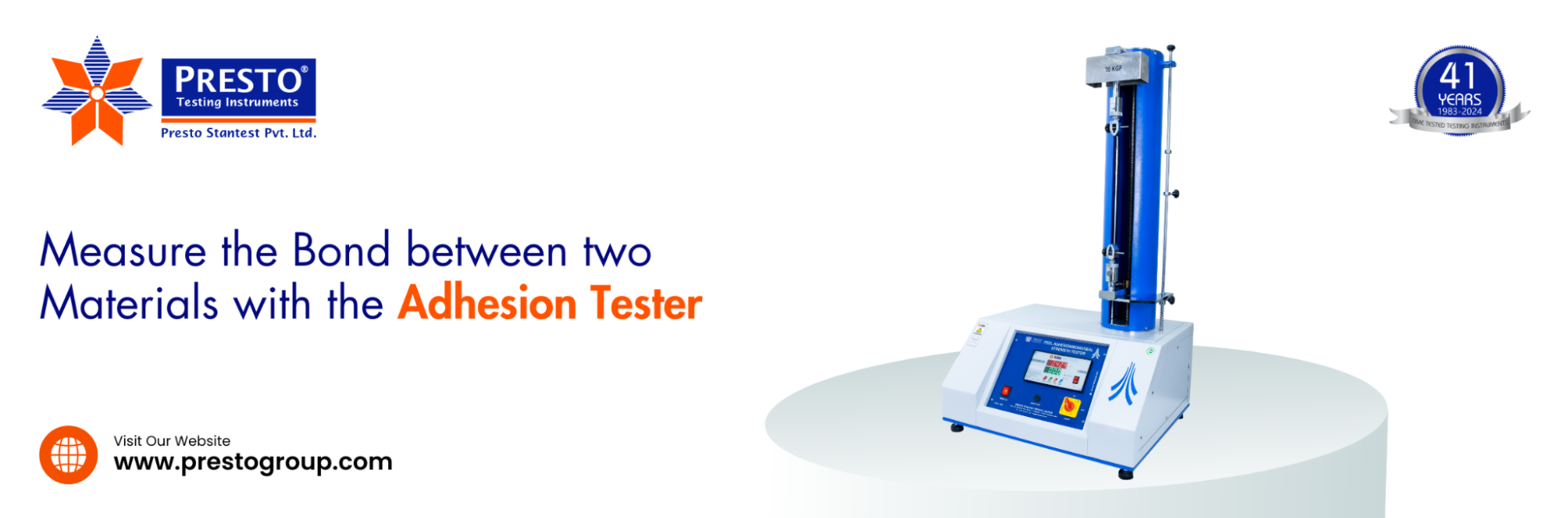
Adhesion Strength Tester is a device that is used for measuring the force required to pull apart bonded materials. It does so by securely maintaining the sample in place and then adding a controlled amount of force until the bond begins to peel, pull, or break.
The ideal Adhesion Strength Tester features repeatable force measurement, stable grip, clear display, and accurate force measurement. With digital and computerized models, it is easier to record data with greater accuracy.
To measure the peel ability and permanence of the adhesion of pressure-sensitive materials, Presto Stantest adhesion strength tester is used.
An Adhesion Strength Tester can be used in the following applications:
- Testing self-adhesive tapes
- To examine labels and stickers
- Measuring seal strength
- Testing laminated films
- Checking packaging bonds
- Testing coated materials
- Evaluating adhesive quality
Manufacturers can pinpoint weak bonding issues using an Adhesion Strength Tester before their products reach customers.
Peel Strength Tester: Features and Testing Capabilities
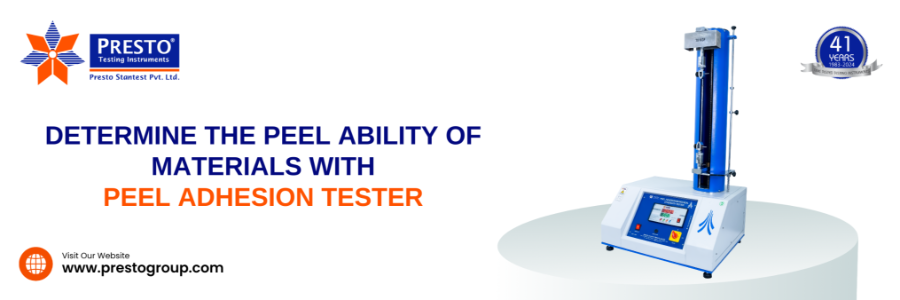
A Peel Strength Tester is specially designed for performing peel adhesion tests. Used to see the amount of force required to separate a material from a different surface.
Presto Stantest peel strength tester provides routine and peel testing with an 180° gripping clamp, with an option for a 90° clamp for other testing needs.
When choosing a Peel Strength Tester, it is important to consider the following features:
- Accurate load measurement
- Strong sample grips
- Digital display
- Fixed test speed
- Test options include peels at 90 ° and 180 °.
- Microprocessor-based controls
- Easy result reading
- Standard-based test support
A Peel Strength Tester makes the peeling resistance of adhesive products testable in a simple and repeatable manner to assist the QC teams.
Industrial Applications of Adhesion Testing in Quality Control
Adhesion Testing is used across various industries where it is essential to know the quality of the bond.
Packaging Industry: For pouches, seals, labels, laminated films, and flexible films.
Adhesive Tape Industry: Simulated application of pressure-sensitive tapes, masking, double-sided tape, and industrial tape.
Paints and Coatings Industry: To determine the ability of coatings to adhere to metal, plastic, wood, or other substrates.
Automotive Industry: Materials used for trims, decals, panels, insulation materials, and coated parts.
Electronics Industry: Used for screen films, labels, protective layers, and bonded parts.
Medical Packaging Industry: Suitable for sealed packs, sterile packaging, and adhesive labels.
Printing and Label Industry: It is used for testing the adhesion of the label, ink coating, and surface bonding.
Good Adhesion Testing assists manufacturers in having stable quality and decreasing the failure of their products on the market.
Choosing the Right Adhesion Testing Equipment for Your Needs
There is a machine for every product/testing objective. Prior to the purchase of an Adhesion Strength Tester or Peel Strength Tester, take note of these points:
- What material do you need to test?
- Do you need 90°, 180°, or T-peel testing?
- What kind of Adhesion Test Standard do you follow?
- How much load range is required?
- Need computing/electronic output?
- What is the anticipated amount of use for the machine?
- Is the report required for audits or customers?
- Do they offer any technical support?
Peel strength, seal strength, bond strength, and adhesion strength measuring instruments are available for Presto Stantest. The machines enable better control and confidence in the quality of adhesives used in these industries.
Whether you require results that are dependable for products to meet standards, for product development, or for quality control process testing, Presto Stantest offers a practical solution that avoids costly second testing.
Get Accurate Adhesion Testing Solutions from Presto Stantest
Need reliable adhesion and peel strength testing for your products? Presto Stantest offers advanced Adhesion Strength Testers and Peel Strength Testers to evaluate bond strength, seal integrity, and adhesive performance in accordance with industry standards. Call +91 9210 903 903 or email info@prestogroup.com to discuss your testing requirements.
 Ensure stronger bonds, reduce product failures, and maintain consistent quality with PRESTO’s precision adhesion testing solutions.
Recent Blogs
- What is MFI (Melt Flow Index)? Full Form, Formula, Benefits, Limitations, and Industrial Testing Applications
- Injection Molding: Process Steps, Machine Operation, Diagrams & Testing Instruments
- Peel Strength and Heat Seal Strength Testing for Flexible Packaging
- Industrial and Laboratory pH Meters: Working, Diagram, Uses and Selection Guide
- Industrial Leak Testing: Methods, Technologies, Benefits, and Industry Applications
Related Blogs
Measure the Bond between two Materials with the Adhesion Tester
Determine the Peel Ability of Materials with a Peel Adhesion Tester
Conduct Tape Adhesion Test Using Automated Test Machine