

- /
- Article / GSM in Fabric and Paper: Full Form, Calculation & Industry Applications
GSM in Fabric and Paper: Full Form, Calculation & Industry Applications
Ever get your hands on a piece of paper or cloth and wonder what makes it feel so good? Perhaps it is the weight, the thickness, or the way it flows. That is where GSM comes in a word that is like a secret code for anyone who deals with paper, fabric or textiles. GSM, which stands for Gram per Square Meter, is a measure of how heavy a material is and is widely used in printing, fashion, and packaging, among other materials. In this blog, we are going to break down everything about GSM: what it means, how to calculate it, and how important it is for things like your favorite t-shirt or even that fancy business card. Let’s brew ourselves a cup and see what we’re curious about!
GSM Full Form
GSM means Gram per Square Meter. It is used to measure the weight of materials like paper, cardboard, fabric and packaging sheets. In easy words, GSM tells you whether the material is light, thick, soft or strong.
A paper with higher GSM usually feels more thick and premium in hand. On the other side, lower GSM materials are lighter and easier to fold or carry. That’s why different industries use different GSM according to their needs.
For example: normal printing paper comes with lower GSM, but shopping bags, packaging boxes, and business cards mostly use higher GSM for extra strength. It also helps manufacturers maintain proper quality and choose the right material without wasting extra cost.
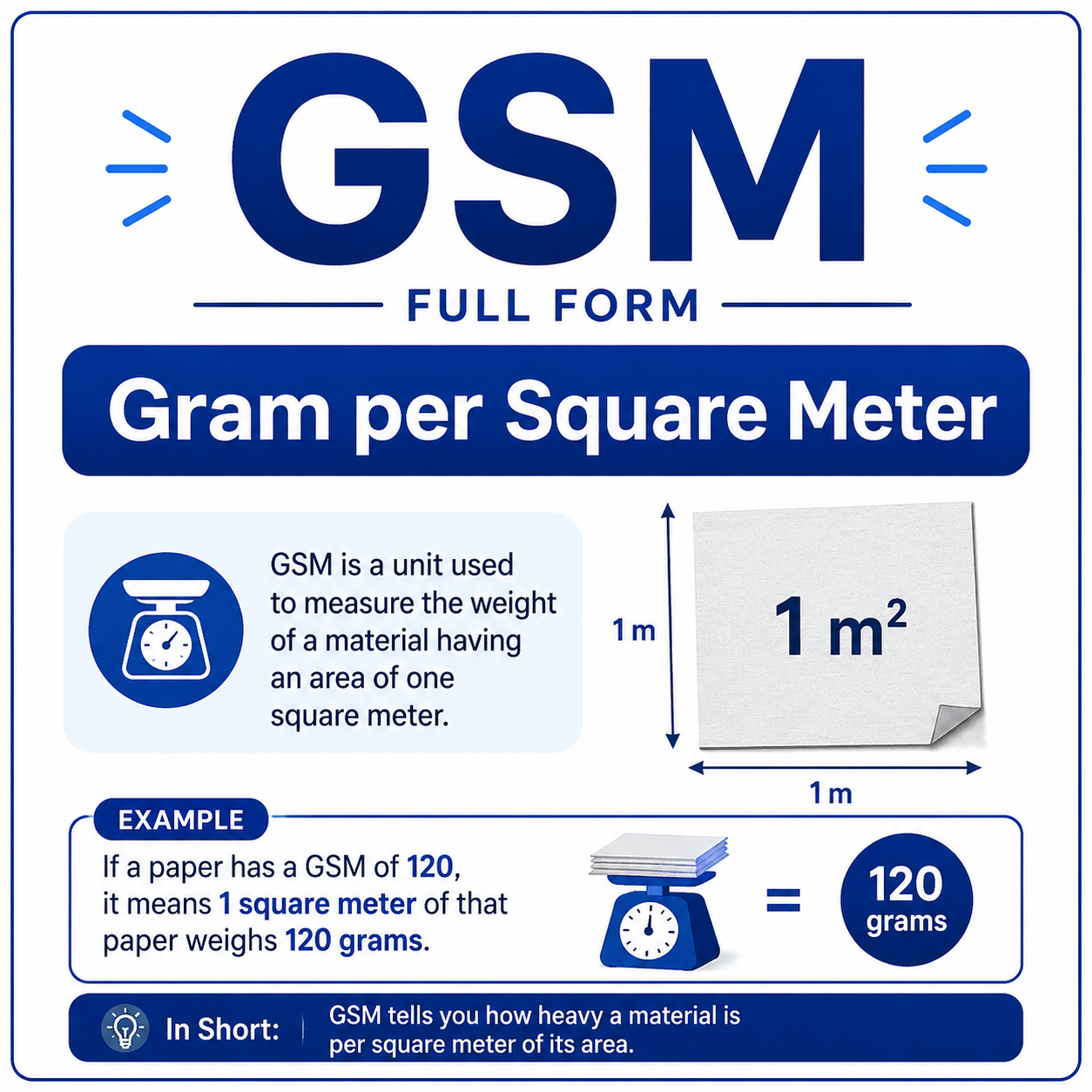
So whenever you hear about GSM, it simply means the weight and quality level of the material.
Here’s how the GSM full form applies across different fields:
- GSM for paper: When it comes to paper, GSM tells you how heavy the sheet actually is. The paper we use in printers every day is usually light, somewhere around 70–80 GSM. But things like wedding cards, menu cards, or fancy brochures use much thicker paper, so the GSM goes higher there.
- GSM for fabric: In fabrics, GSM gives a rough idea of how light or heavy the cloth will feel. A summer T-shirt normally has lower GSM because the fabric needs to stay soft and breathable. Winter clothes are different. Hoodies and sweatshirts mostly use higher GSM fabric since they are made to feel warmer and thicker.
- GSM for textile: In the textile industry, GSM is used almost like a standard measurement. Manufacturers check it before selecting fabric because it helps them keep the quality consistent. It also makes comparing fabrics a lot easier, especially when different materials look similar from outside.
GSM is like a universal yardstick that helps everyone designers, manufacturers, even shoppers pick the right material for the job. But how do you actually figure out what a material’s GSM is? That’s where some simple math comes in.
Calculating GSM: The Gram per Square Meter Formula
Don’t worry if numbers aren’t your best friend—calculating GSM is pretty easy once you get the hang of it. The Gram per Square Meter formula is:
GSM = Weight (in grams) ÷ Area (in square meters)
Here’s how to do it step by step:-
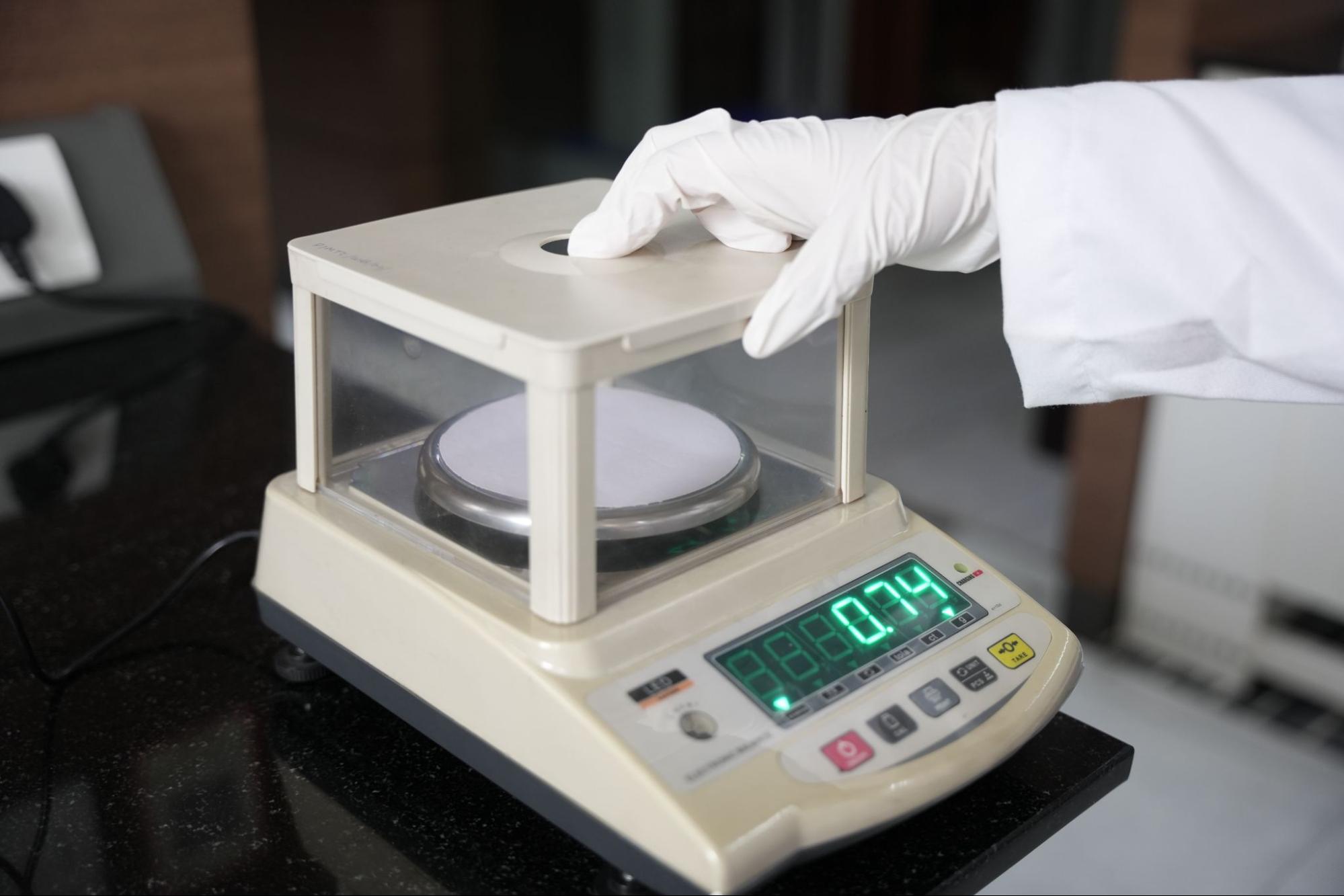
- Weigh the material:- Grab a sample of your paper or fabric and put it on a digital scale. Make sure the weight is in grams
- Measure the area:- Figure out the sample’s area in square meters. For example, if your sample is 1 meter long and 0.5 meters wide, the area is 0.5 square meters (1 × 0.5)
- Do the math: Divide the weight by the area, and voilà you’ve got the GSM!
A Quick Example
Let is say you’ve got a piece of cloth that weighs 75 grams and measures 1 meter by 1 meter (so, 1 square meter). Plug it into the formula:
GSM = 75 grams ÷ 1 square meter = 75 GSM
This cloth is super lightweight, maybe perfect for a sheer blouse or a delicate curtain.

The GSM Calculator Shortcut
If you’d rather skip the math, a GSM calculator is your new best friend. These are usually online tools or apps where you punch in the weight and dimensions, and they spit out the GSM in seconds. Some factories even have fancy machines that measure GSM automatically for big rolls of material. Whether you’re crunching numbers by hand or using a calculator, knowing the GSM gives you a clear picture of what you’re working with.
Why GSM Is a Big Deal in Paper and Textiles
GSM isn’t just a random number—it’s a game-changer for deciding how a material will behave in the real world. Let’s see how it’s used in two major industries: paper and textiles.
GSM in the Paper Industry
When it comes to paper, GSM is like the DNA of the sheet. It tells you how thick, strong, or flexible it is, which decides what it’s good for. Here’s the breakdown:-
- Everyday Printing: Most printer paper is 70-100 GSM—light enough to keep costs down but sturdy enough for reports or handouts.
- Marketing Materials: Flyers, posters, or brochures often use 120-150 GSM paper for a bit more heft and a premium feel.
- Packaging and Cards: Think cardboard boxes or business cards—these are usually 200 GSM or higher to handle weight and wear.
- Art and Specialty: Watercolor paper or fancy stationery can hit 300-400 GSM, giving artists the texture and durability they need.
Picking the right GSM means your paper won’t tear in a printer or feel flimsy in a client’s hands.
GSM in the Fabric and Textile Industry
In the world of fabric and cloth, GSM is just as crucial. It helps you choose the perfect material for everything from clothes to couch covers. Here’s how it works:-
- Lightweight Fabrics (100-150 GSM): These are your go-to for t-shirts, summer skirts, or flowy scarves. They’re soft, breathable, and perfect for warm weather.
- Medium-Weight Fabrics (150-250 GSM): Think button-up shirts, chinos, or light jackets. These strike a balance between comfort and durability.
- Heavyweight Fabrics (250+ GSM): This is where you find denim, canvas, or upholstery fabrics—tough materials for jeans, bags, or furniture that need to last.
GSM also affects how a fabric feels and moves. A low-GSM silk might float like a dream but tear easily, while a high-GSM cotton is built to take a beating but might feel stiff.
GSM Ranges and Uses
Here’s a table to sum up common GSM ranges and their applications:
| Material | GSM Range | Common Uses |
| Paper | 70-100 GSM | Printer paper, notebooks, handouts |
| Paper | 120-150 GSM | Flyers, brochures, posters |
| Paper | 200+ GSM | Business cards, packaging, art paper |
| Fabric | 100-150 GSM | T-shirts, summer dresses, scarves |
| Fabric | 150-250 GSM | Shirts, pants, light jackets |
| Fabric | 250+ GSM | Denim, canvas, upholstery |
This table gives you a snapshot of how GSM translates to real-world uses, whether you’re printing a flyer or sewing a jacket.
Other Uses of GSM
GSM isn’t limited to paper and textiles. It’s also used for:-
- Non-Woven Materials: Things like face masks or reusable shopping bags rely on GSM for the right mix of weight and function.
- Leather and Synthetics: Some makers use GSM to measure materials for shoes or bags.
- Home Decor: Curtains, carpets, or bedding use GSM to nail the perfect look and feel.
GSM is like a Swiss Army knife for material selection across industries.
Beyond Paper and Textiles
GSM Pops Up in Other Places Too:-
- Non-Woven Materials: Disposable face mask or reusable grocery bags have weight in GSM to balance their weight and strength.
- Leather and Synthetics: Leather and synthetic material such as what is used for wallets or shoes is also measured in GSM.
- Home Décor: Draperies, carpeting or bedding are said to rely on GSM to achieve just the right look and feel.
In short, GSM is a reliable guide for anyone working with materials that need to perform in a specific way.
What Affects GSM?
A material’s GSM isn’t set in stone—it depends on a few factors:-
- Type of material: Cotton has a different weight than polyester and recycled paper has a different weight than virgin paper.
- Structure: The tighter the weave, the higher the GSM (think denim versus gauze). Paper density also depends on the processing.
- Finishing: Dyes, coatings or waterproofing may also add additional weight to the paper, therefore increasing the gsm.
- Moisture: Fabrics and paper can take up water, and this will influence their weight temporarily.
Knowing these factors helps manufacturers keep GSM consistent and hit the sweet spot for their products.
How to Choose the Right GSM
Whether you’re designing a dress, printing a poster, or DIY-ing a project, here are some tips for picking the perfect GSM:-
- Match the Purpose: Need paper for a quick memo? Go for 70-80 GSM. Want fabric for a cozy sweatshirt? Aim for 200-300 GSM.
- Check Samples: Always test a swatch or sheet to see if the GSM feels right before buying in bulk.
- Think About Cost: Higher GSM usually means pricier materials... (The sentence seems to cut off here, so I’ll complete it naturally: ...more expensive materials, so weigh quality against your budget.
- Use Tools: A GSM calculator or testing equipment ensures accuracy, especially for professional projects.
FAQs About GSM in Fabric and Paper
Got questions? Here are answers to four common ones about GSM:
1. What’s the difference between GSM for paper and fabric?
GSM measures weight per square meter for both, but the context differs. In paper, it’s about thickness and printability. In fabric, it’s about weight, drape, and durability for things like clothes or curtains.
2. How do I choose the appropriate GSM for my project?
what you're creating. When it comes to paper, 80 GSM is adequate for printing but 200+ GSM is best for cards or packaging. For textile 100-150 GSM is good for light clothes and 300+ GSM for heavy items such as coat.
3. Can I calculate GSM myself?
Absolutely! Weigh your material in grams, measure its area in square meters, and divide weight by area. Or, use a GSM calculator online for a quick answer.
4. Does higher GSM mean better quality?
Not always. Higher GSM means heavier material, but “better” depends on your needs. A 500 GSM paper is overkill for a flyer, just like a 100 GSM fabric won’t hold up for a backpack.
GSM Explained: Key Takeaways
What Does GSM Mean? This Small Number Has More Meaning Than You Could Imagine.
Curious how to pick the right paper weight for your wedding invitation or the best fabric for your new jacket? Knowing GSM – or Gram per Square Meter – and applying the same formula or even better: Outshine your friends and their baffled looks when they ask your opinion on how there’s just more to this magical number. It is like having superpowers to choose materials based on exactly how you want them to look, feel and perform.
So next time you are holding a piece of paper or a roll of fabric, look for the GSM: that is how you make sure you are getting exactly what you want.
Get the Best Gram per Square Meter Price Today!
Looking for accurate and affordable testing solutions? Contact us now to learn more about our Gram per Square Meter testers and get the best price tailored to your needs.
Call us: +91 9210 903 903
Email: [email protected]
Further Reading for You
GSM Full Form in Paper, Fabric, Cloth, and Textile: Your Ultimate Guide
How to Calculate GSM of Materials?
Perfect Fabric Cuttings Guaranteed with Fabric GSM Testing Machine
What are the key components and features of a GSM Machine for Fabric Testing?
7 Reasons Why the GSM Testing Machine is Essential for Industrialists in the Paper Industry
Recent Articles
- Climatic Chamber: Working Principle, Uses, Diagram, Price & Top Manufacturers in India
- Izod vs Charpy Impact Test: Difference, Method & Standards
- Colorimeter vs Spectrophotometer: Accuracy, Working Principle, and Industrial Uses
- Quality Assurance and Quality Control: Two Pillars of Product Excellence
- Hardness Test: Types, Testing Methods, Procedures, and ASTM Standards
Need more information
Connect with us for your business enquiries. Generally, we respond within one or two working days.