
- /
- Blog / Peel Strength and Heat Seal Strength Testing for Flexible Packaging
Peel Strength and Heat Seal Strength Testing for Flexible Packaging
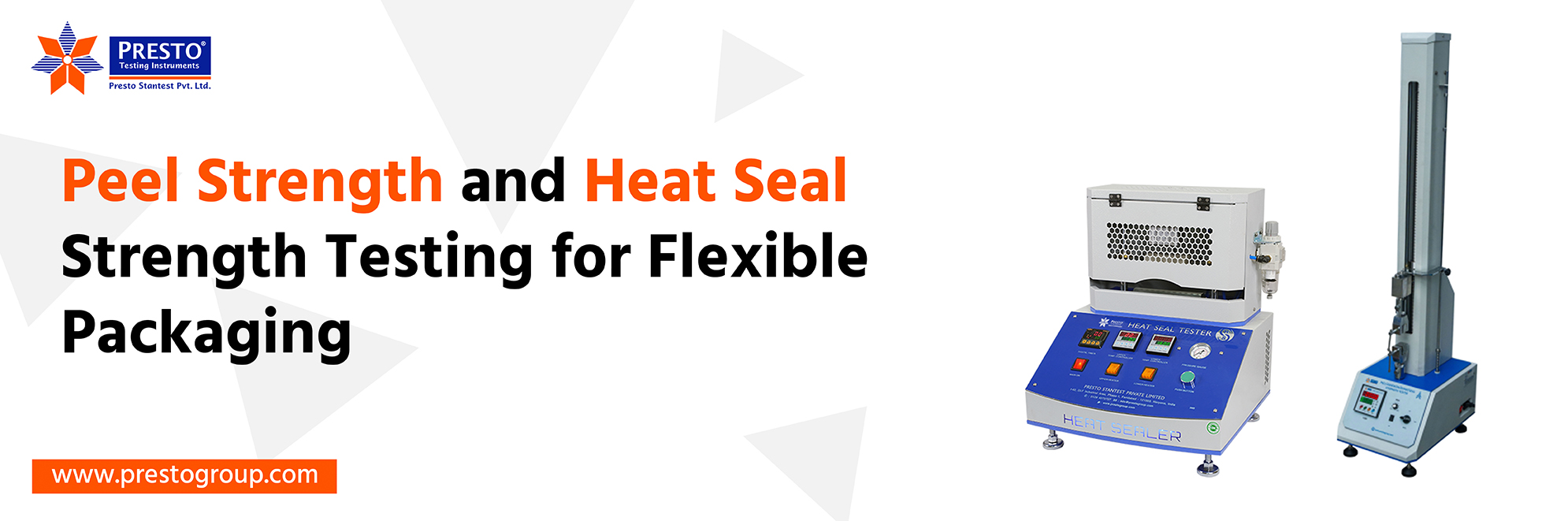
Food, medicine, personal care products, and various industrial products are packaged in flexible packaging. The strength of the package seals largely determines the quality of the package. Leakage, contamination, spoilage, reduced shelf life, and damage during product transport may occur as a result of a weak seal.
That is why flexible packaging testing is a significant part of quality control. The peel strength test and the heat seal strength test are two of the most crucial tests. These tests can be used by manufacturers to determine the strength of two materials bonded together and the ability of the package to endure handling, storage, and transportation. ASTM F88 and other standards offer a valuable means of testing the efficacy of seals and guarantee uniformity of packaging quality.
Presto provides powerful testing solutions enabling manufacturers to provide precise, repeatable, and industry-conformable testing research to evaluate the quality of packaging.
Why Peel Strength and Heat Seal Strength Matter in Flexible Packaging
| Test | Purpose | Common Standard |
| Peel Strength Test | Measures the force needed to separate bonded layers | ASTM F88 |
| Heat Seal Strength Test | Evaluates the strength of heat-sealed packaging | ASTM F88 |
Packaging is not merely a covering. It maintains product freshness, prevents contamination, and ensures products are delivered safely to consumers.
A seal strength test evaluates whether the seal between the two layers of the package is robust enough to sustain the product under normal conditions. If the seal is too weak, the package might open during shipping. In the event that it is too good, customers might struggle to open it.
Likewise, a peel strength test determines the effort necessary to peel bonded material. It assists manufacturers in testing the quality of adhesives, laminate performance, and performance with heat-sealed joints.
Proper flexible packaging testing helps manufacturers:
- Improve package durability
- Prevent product leakage
- Maintain product freshness
- Reduce customer complaints
- Meet quality standards
- Increase production consistency
Such tests are very popular in food packaging, pharmaceuticals, medical packaging, cosmetics, and industrial products.
Peel Strength Test Principle, Procedure and applications.
A peel strength test measures the amount of force required to separate two bonded materials at an angle and speed. It is generally applicable in assessing adhesives, laminated films, tapes, labels, and heat-sealed items.
Principle
The peel test uses a force that is carefully exerted to pull the bonded layers apart. The force required indicates the quality of the bond. The more adhesive needed, the more force is required.
Depending on the application, the test may be performed using 90° or 180° peel methods.
Basic Procedure
- Prepare the test specimen.
- In the testing machine, secure both ends.
- Use a pulling force that is under control.
- Measure the force it takes to part the bonded layers.
- Determine an average and maximum peel strength.
The findings assist manufacturers in knowing whether the adhesive or seal is up to the product requirements.
Applications
A peel test is usually applied in the case of:
- Flexible plastic films
- Laminated packaging
- Pressure-sensitive tapes
- Medical packaging
- Labels and stickers
- Protective films
- Foil laminates
The peel test is applied in industries to enhance the choice of materials and the quality of products.
Heat Seal Strength Test: How it Works and Why It Matters
A heat seal strength test measures the strength of seals achieved by heat, pressure, and time during packaging.
Many versatile packaging materials, like PE, PP, PET, and laminated films, rely on heat sealing to form airtight packages.
How It Works
The heat seal tester first applies controlled pressure and heat and creates a seal on the product. After sealing, the specimen is tested using a tensile or peel testing machine to determine the force required to separate the seal.
The measured value represents the heat seal strength of the package.
Why It Matters
A good, reliable test of heat seal strength assists manufacturers:
- Verify sealing quality
- Improve shelf life
- Prevent leakage
- Reduce package failure
- Optimize sealing temperature
- Quality of production is to be maintained.
Testing can also be used to identify the most appropriate sealing temperature, pressure, and dwell period of various packaging materials.
ASTM F88 Standard for Seal Strength Testing
ASTM F88 is also considered to be one of the most common standards for determining seal strength of flexible barrier materials.
The standard outlines methods for calculating the force needed to separate materials that have been heat sealed. It finds common usage in food, pharmaceutical, and medical packaging industries.
As per ASTM F88, the test provides the following:
- Average seal strength
- Maximum seal strength
- Sealing failure mode.
- Uniformity of sealing process.
The standard also promotes quality validation, process control, and consistency in production. It can be used for flexible-to-flexible, flexible-to-rigid, and flexible-to-semi-rigid packaging materials.
Factors That Affect Peel and Seal Strength Results
Seal and peel strength measurements are dependent on several factors.
Material Properties
Bonding characteristics of different films and Laminates vary.
Sealing Temperature
Incorrect temperature may produce weak or damaged seals.
Pressure
Asymmetrical pressure during sealing decreases bond quality.
Dwell Time
Inadequate or excessive sealing time interferes with the final seal.
Surface Cleanliness
Adhesion is decreased by dust, moisture, or contaminants.
Testing Speed
The pulling speed during the peel strength test should follow the specified testing standard.
Environmental Conditions
Adhesive performance and repeatability of the tests could be influenced by temperature and humidity.
Heat Seal Tester: Features, Working, and Test Capabilities
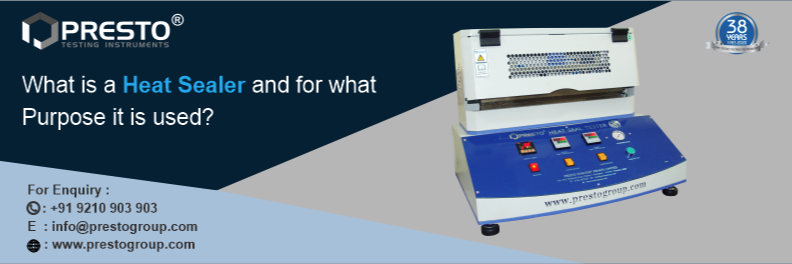
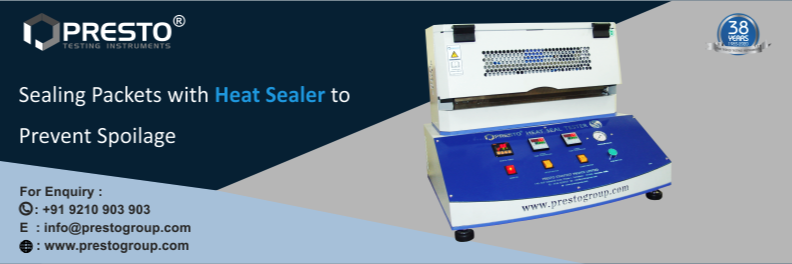
The purpose of using a heat seal tester is to test how a product will react under the conditions of real packaging, which involves the application of controlled pressure and heat on packaging materials.
The contemporary Presto heat seal tester provides sound control of sanctioned parameters of sealing, enabling manufacturers to perform reliable tests before examination of the seal performance.
Key Features
- Accurate temperature control
- Adjustable sealing pressure
- Digital timer
- PID temperature controller
- Uniform heating jaws
- Microprocessor-based controls
- Repeatable testing conditions
Working
A specimen is inserted in a set of heated jaws by the operator. The machine uses the temperature, pressure, and dwell time of choice to form the seal. A peel or tensile testing machine is then used to measure the seal strength of the sealed specimen.
Test Capabilities
Testing in the equipment can be carried out on:
- PE films
- PP films
- PET laminates
- Composite packaging
- Foil laminates
- Medical packaging materials
- Food packaging films
Common Packaging Failures Identified Through Seal Strength Testing
Regular seal strength tests help control issues within products before delivery to end users.
There are some typical failures, such as:
- Weak heat seals
- Incomplete sealing
- Delamination of laminates
- Adhesive failure
- Seal channel leaks
- Uneven sealing
- Material tearing
- Seal contamination
This enables manufacturers to make corrections to machine settings to enhance materials and minimize production losses as a result of early detection.
Best Practices for Reliable Flexible Packaging Testing
Testing of flexible packaging has to be done based on correct testing and equipment.
Use these best practices:
- Use calibrated testing instruments.
- Follow ASTM F88 procedures carefully.
- Prepare specimens correctly.
- Ensure a steady rate of testing.
- Regulate temperature and humidity in the laboratory.
- Take several samples to be more accurate.
- Compare and record results regularly.
- Observe production variations.
Good packaging quality, fewer product failures, and customer satisfaction are some of the benefits that rely on good test material delivered by reputable manufacturers such as Presto. Whether it is a peel adhesion test, peel strength test, or heat seal strength test, consistent testing offers reasonable information to enhance the performance of the packaging and achieve acceptable industry standards.
Looking for Accurate Flexible Packaging Testing Equipment?
Improve product quality and packaging performance with Presto Stantest Pvt. Ltd. advanced Heat Seal Testers and Peel Strength Testing Machines. Our solutions help manufacturers optimize sealing parameters, reduce packaging failures, and ensure consistent production quality.
Request a free consultation or product demo today!
Call us: +91 9210903903
Email: info@prestogroup.com
Visit: https://www.prestogroup.com/contact-us/
Recent Blogs
- Peel Strength and Heat Seal Strength Testing for Flexible Packaging
- Industrial and Laboratory pH Meters: Working, Diagram, Uses and Selection Guide
- Industrial Leak Testing: Methods, Technologies, Benefits, and Industry Applications
- PET Preform Quality Test Using Preform Measurement Instruments — Step-by-Step Guide
- How to Test and Prevent Metal Corrosion Using a Salt Spray Chamber

Related Blogs
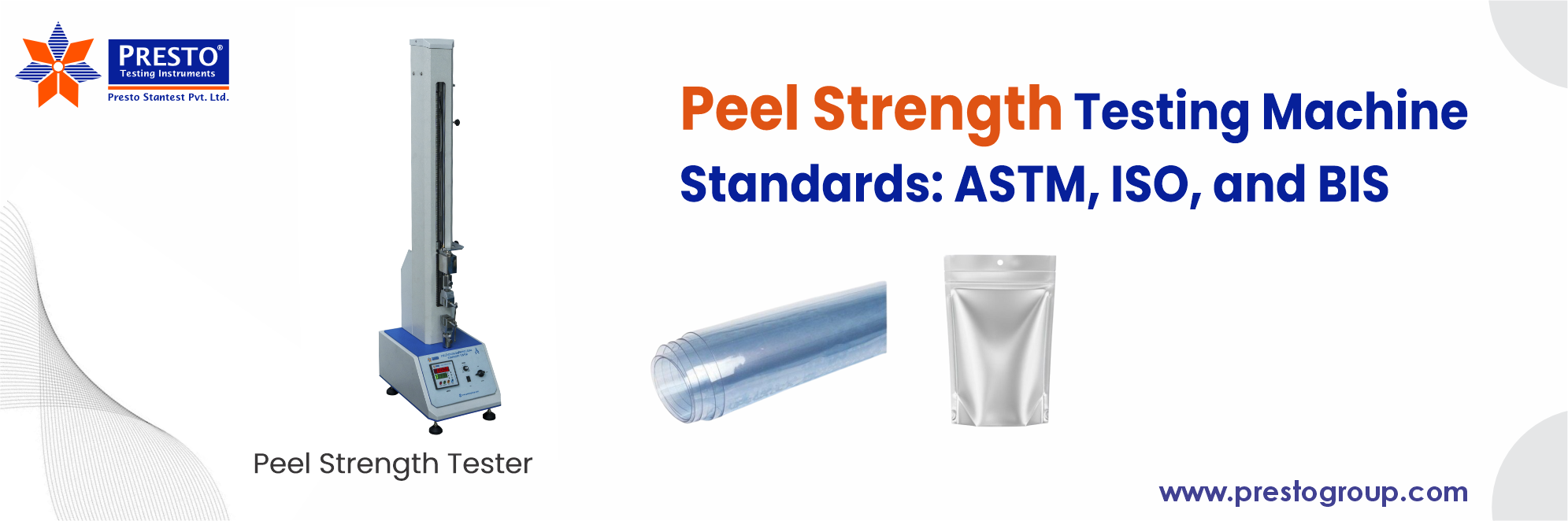
Peel Strength Testing Machine Standards ASTM, ISO, and BIS
What is a Heat Sealer and for What Purpose it is used?
Sealing Packets With Heat Sealer To Prevent Spoilage