
- /
- Blog / How Bottle Burst and Drop Testing Solve Real-World FMCG Packaging Problems
How Bottle Burst and Drop Testing Solve Real-World FMCG Packaging Problems
Introduction
FMCG logistics subject packaging to severe kinematic stress and complex environmental variables. High-speed supply chains induce unpredictable mechanical loads on primary and secondary containers. Modern facility managers require highly precise laboratory instrumentation to ensure polymer dimensional stability. Simple visual inspections simply cannot detect microscopic structural weaknesses.
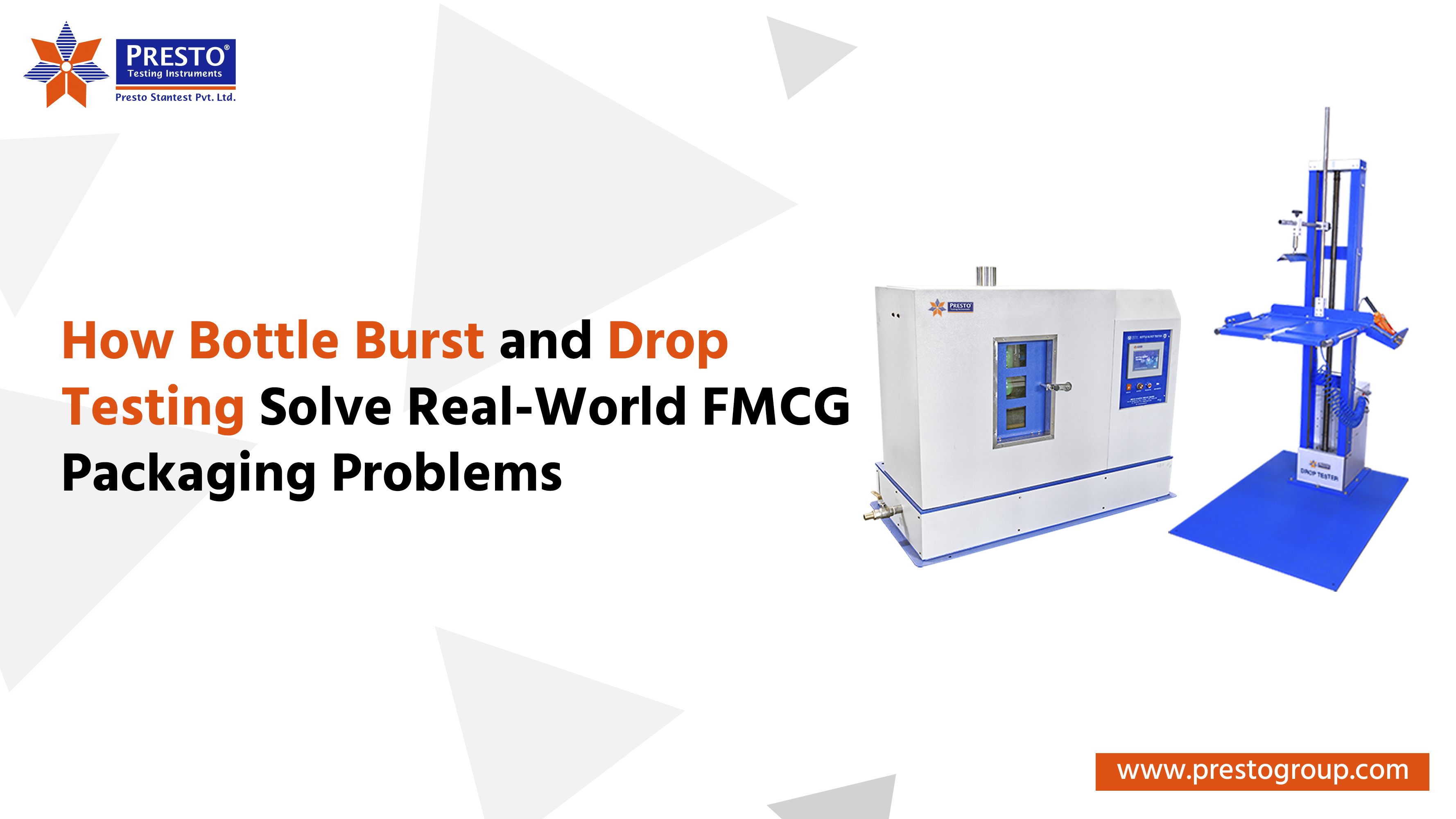
A Bottle Burst Tester and a Drop Tester quantify absolute physical limits under simulated hydrostatic and kinetic stress before dispatch. Understanding material tensile strength and yield points prevents catastrophic mechanical failures completely. Proactive empirical testing neutralizes severe logistical risks and optimizes modern container engineering.
Common FMCG Packaging Problems
Walk into any large distribution center today to observe widespread material failures. Packaging degradation happens frequently and drains massive amounts of corporate capital. Identifying the exact mechanical root causes helps packaging engineers design significantly stronger polymer containers.
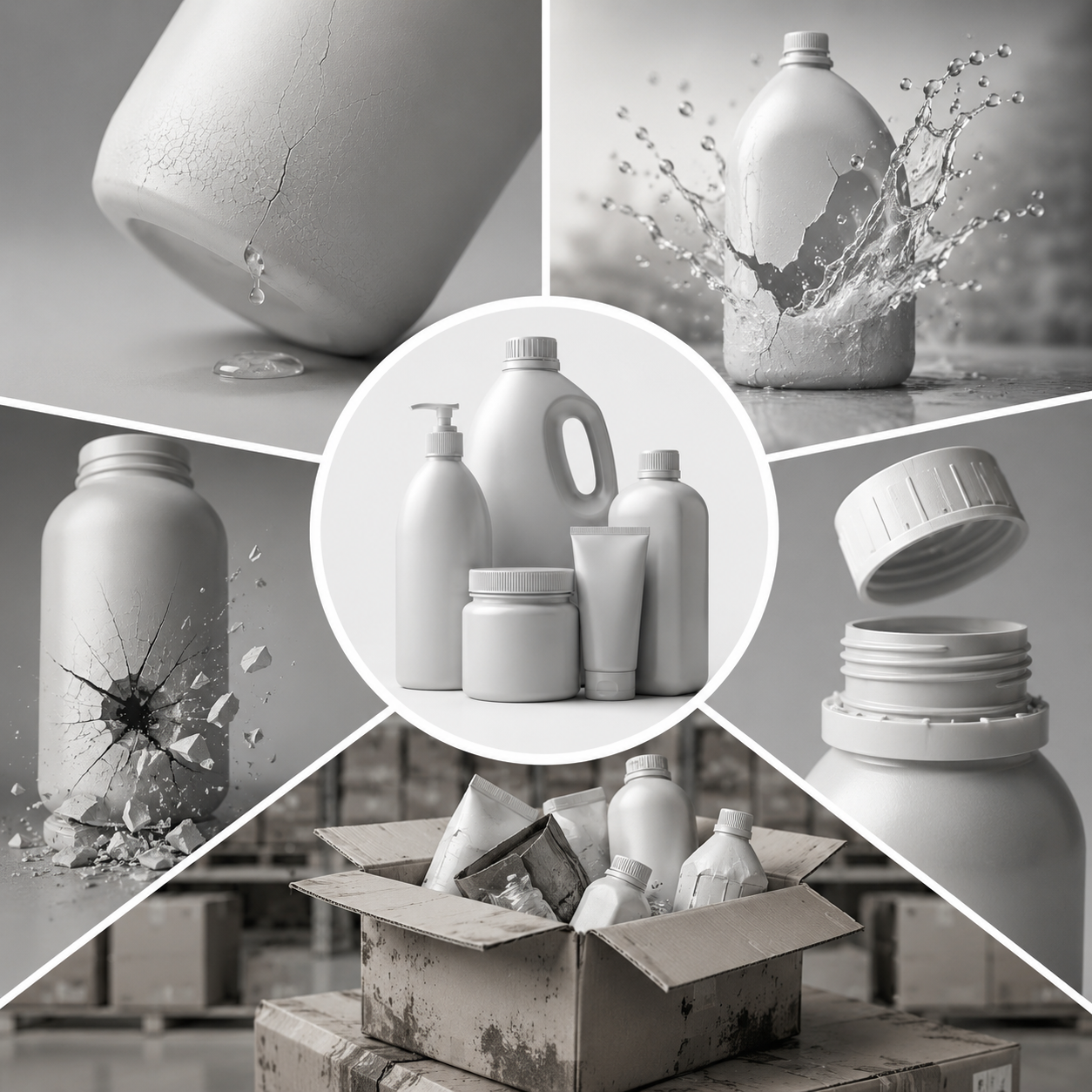
These daily operational challenges destroy hard-earned brand credibility quickly:
- Micro-Capillary Leakage: Polymer micro-fissures allow fluid egress during continuous transit vibrations. These microscopic cracks compromise the internal sterile environment and contaminate surrounding inventory.
- Hydrostatic Burst Failures: Internal pressure frequently exceeds the tensile yield strength of the container wall. This mathematical imbalance leads to catastrophic structural rupture during temperature fluctuations.
- Impact-Induced Fractures: Mechanical shocks create invisible hairline stress fractures. These initial impact points propagate over time and cause delayed shelf failures inside retail stores.
- Torque Decay and Seal Integrity: Vibrational loosening of threaded closures triggers severe regulatory non-compliance. Loss of proper seal torque invites immediate aerobic contamination and heavy product spoilage.
- Supply Chain Wastage: Every structurally compromised unit represents raw material degradation. Handling this excessive product wastage adds massive reverse logistics costs to the corporate financial ledger.
What is Bottle Burst Testing?
Evaluating pressure resistance demands highly specialized pneumatic and hydrostatic equipment. Engineers must quantify the exact internal stress thresholds a container can tolerate safely. This specific quality control method evaluates structural integrity by calculating ultimate yield points.
Definition and Working Principle
A Bottle Burst Tester evaluates the maximum internal pressure a container can withstand before structural failure. The core working principle revolves around stressing the structural integrity of the bottle by simulating the aggressive internal pressures experienced during high-speed filling, carbonation, and distribution.
The testing procedure follows a highly specific technical sequence to guarantee accurate measurements:
- The Mechanism: The testing apparatus features an airtight clamping mechanism that securely seals the neck or finish of the bottle.
- Media Injection: A controlled medium is steadily pumped into the securely clamped bottle. Technicians usually utilize water for precise volumetric expansion and safety, or compressed air for fast-paced testing environments.
- Pressure Ramping: The system applies a steady, escalating rate of pressure. This typically increases by a set number of psi or kgf/cm² per second.
- Stress Response: As internal stress increases, it exerts multi-directional hoop stress and longitudinal stress on the bottle walls. Engineers calculate this using the fundamental formula: σ_hoop = (P × r) / t (Where 'P' is pressure, 'r' is radius, and 't' is wall thickness).
- Failure Identification: The test halts the exact moment the container ruptures or leaks. High-speed sensors and data acquisition modules, displayed via an HMI touchscreen, instantly log the peak pressure and volume at the failure point.
Pressure Resistance and Durability Assessment
This crucial empirical data helps manufacturers assess overall PET bottle strength accurately. Internal pressure simulation exposes thin spots resulting from asymmetric blow molding processes. These manufacturing defects remain completely invisible to the human eye. Scientific hydrostatic evaluations expose these critical weak spots immediately.
Importance for Carbonated Beverages and Liquid Products
Carbonated soft drinks undergo severe thermal expansion. Summer heat spikes cause internal gas pressure to rise drastically during long transit routes. A PET bottle pressure testing failure becomes a massive corporate liability. Evaluating these liquids validates new geometric structural designs against sudden volumetric spikes flawlessly.
What is Drop Testing?
Internal pressure represents only a fraction of the physical equation. Packages must also survive severe external mechanical impacts constantly. Products fall off high shelves and crash into solid concrete floors. Evaluating this specific physical trauma prevents massive inventory losses.
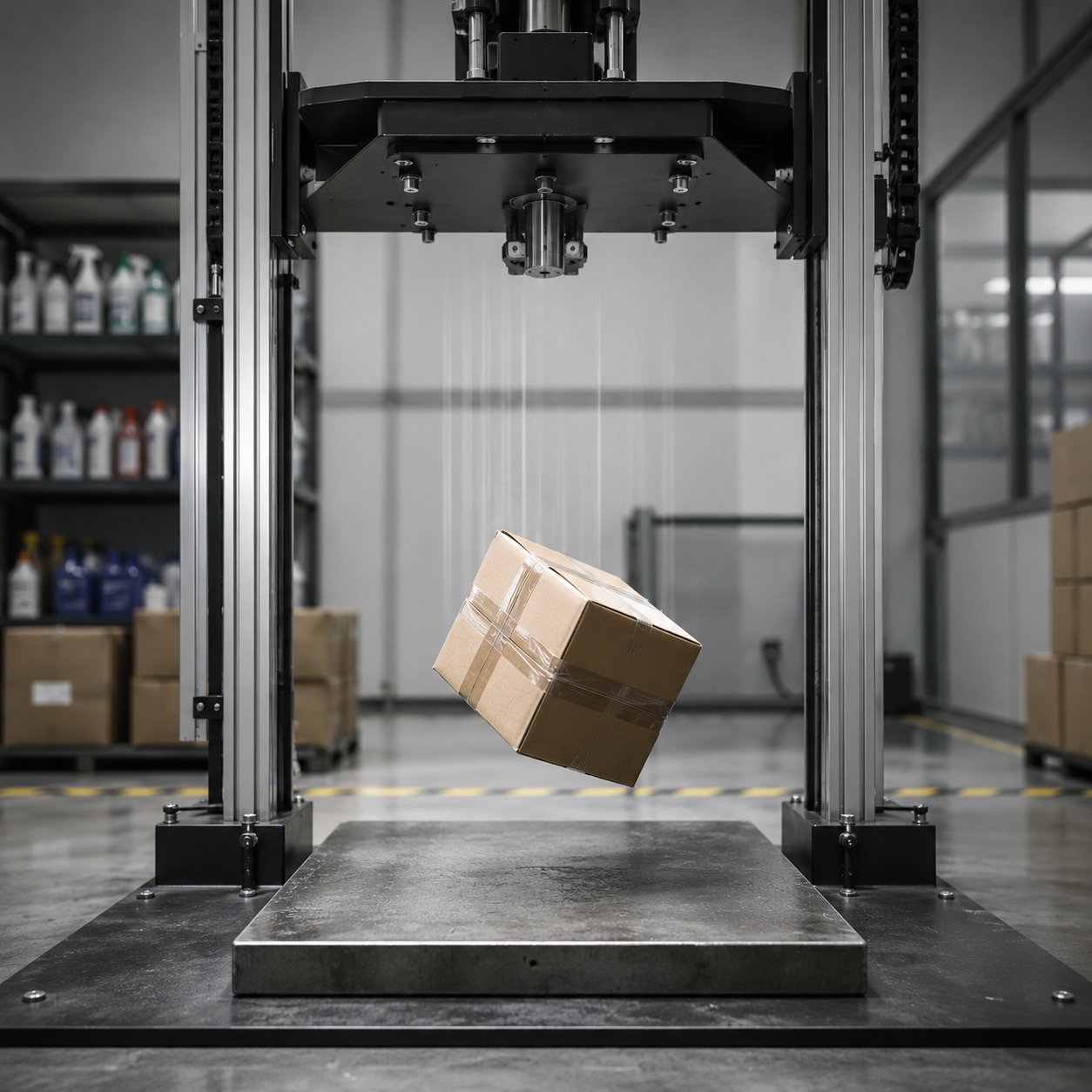
Modern supply chains treat packages incredibly roughly. A single shipment faces automated sorting machines and heavy forklift handling. A modern Drop Tester simulates brutal free-fall conditions perfectly inside the laboratory. The machine releases a fully packaged product from a strictly controlled height. It drops the item onto a massive, solid steel plate. Technicians perform these free-fall testing methods using different physical orientations. They target flat bases, sharp corners, and delicate top edges. This systematic approach replicates accidental impacts flawlessly. This diagnostic method identifies structural weak points brilliantly. It ensures total handling & shipping safety across complex global networks.
- Warehouse handling involves boxes dropping from high shelves daily.
- E-commerce shipping subjects courier parcels to repeated impacts during final delivery.
- Export packaging validation requires testing for extended transit times and cargo transfers.
- Finding weak base edges and neck junctions allows engineers to reinforce the structural design.
Real-World FMCG Applications
Different liquid products face entirely unique physical challenges daily. Soda bottles deal with gas expansion while heavy detergents face vertical crushing forces. Adapting testing protocols to specific chemical industries ensures total quality control. Let us explore how different sectors utilize this technology effectively.
Beverage Industry: Carbonated Drink Bottles
The beverage industry relies heavily on these specific diagnostic tools. A leading soda brand recently faced massive customer complaints regarding leaking summer shipments. Diagnostics revealed their plastic supplier had secretly altered the polymer resin grade. Catching this structural flaw early prevented a massive national product recall.
Cosmetics: Shampoo and Lotion Containers
Cosmetics companies ship high-viscosity lotions globally. They discovered their premium shampoo bottles cracked constantly when dropped from standard supermarket shelf heights. A tiny geometric redesign of the bottle shoulder redistributed the impact forces and eliminated this failure completely.
Household Chemicals: Detergent Bottles
Household chemical manufacturers deal with extremely heavy fill weights. They frequently utilize a Top Load Tester to verify mechanical resistance during vertical warehouse stacking. Corrosive detergents require flawless closures to prevent severe chemical burns. Using a Secure Seal Tester validates vacuum retention and cap sealing integrity effortlessly.
Pharmaceuticals: Syrup Packaging
Pharmaceutical companies use these combined methods to meet strict medical packaging laws. Burst testing ensures glass and plastic syrup bottles withstand extreme autoclave sterilization pressures. Drop testing guarantees child-resistant caps remain fully functional after severe kinetic impacts.
Benefits of Bottle Burst and Drop Testing
Integrating empirical evaluations into daily manufacturing workflows delivers highly measurable returns. Statistical process control prevents transit disasters and saves massive amounts of capital. The financial benefits vastly outweigh the initial laboratory equipment costs.
Minimized Product Degradation
Pre-emptive structural testing eliminates mechanical transit failures entirely. Identifying weak polymer matrices early prevents expensive replacement shipping fees.
Optimized Return Logistics
Lowering packaging failure rates mathematically reduces reverse supply chain overhead. Fewer damaged deliveries translate directly into highly profitable business quarters.
Enhanced Quality Assurance Metrics
Standardized testing builds statistical process control and brand reliability. Improved consumer satisfaction builds immense brand loyalty across international markets.
Strict Regulatory Compliance
Generating empirical test data satisfies rigorous ASTM and ISO safety mandates perfectly. Better compliance prevents expensive regulatory fines by maintaining proper diagnostic records.
Sustainable Packaging Engineering
Precise physical data allows for exact material thickness optimization. Engineers reduce plastic usage safely without sacrificing structural integrity or transit reliability.
Why Packaging Strength Testing Is Essential for Safe Product Delivery and Quality Assurance
Packaging failure represents a massive unquantified liability. Undetected structural flaws destroy corporate profitability immediately upon delivery. Proactive empirical testing neutralizes these severe logistical risks completely. Following strict ASTM and ISO compliance benchmarks guarantees legal protection and mechanical reliability. You must deliver products safely across increasingly rough shipping routes.
Ensure Stronger FMCG Packaging with Reliable Bottle Burst and Drop Testing
Protect your FMCG products from leakage, breakage, and transit damage with advanced testing solutions from Presto Group. Our high-precision bottle burst and drop testing instruments help manufacturers improve packaging durability, maintain product quality, and meet industry compliance standards with confidence.
Call us: +91 9210903903
Email: info@prestogroup.com Deliver safer packaging, reduce product returns, and strengthen customer trust with Presto’s reliable testing solutions.
Recent Blogs
- What is MFI (Melt Flow Index)? Full Form, Formula, Benefits, Limitations, and Industrial Testing Applications
- Injection Molding: Process Steps, Machine Operation, Diagrams & Testing Instruments
- Peel Strength and Heat Seal Strength Testing for Flexible Packaging
- Industrial and Laboratory pH Meters: Working, Diagram, Uses and Selection Guide
- Industrial Leak Testing: Methods, Technologies, Benefits, and Industry Applications