
- /
- Blog / What is a Water Bath? How It Works, Types, Applications, and Diagram
What is a Water Bath? How It Works, Types, Applications, and Diagram
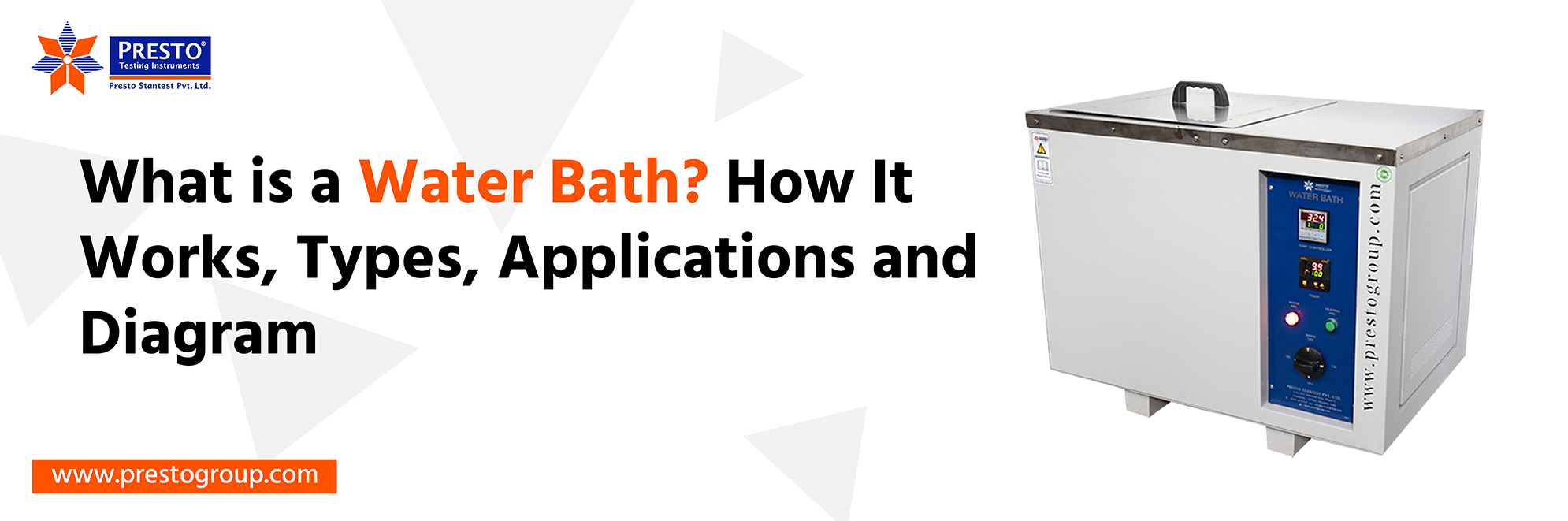
Each lab requires a means to heat the samples, but not to burn them or make any immediate chemical reactions. At this point, a water bath is introduced, one of the most reliable, trusted inputs in any laboratory; these are used daily to warm, incubate, and test samples at a specific temperature.
At Presto, we are developing laboratory apparatus to enable scientists to obtain reliable and reproducible measurements. This article discusses the definition of a water bath; its functionality, components, categories, and the process of selecting the appropriate water bath.
What is a Water Bath and Why is it Used in Laboratories?
A water bath is a laboratory piece of equipment used to maintain a constant temperature and control the samples by using heated water beneath a container. Rather than using a flame or hot plate to heat the sample, it immerses the sample in warm water, which is gentle and avoids scalding of the delicate samples or possible bursts of high temperatures.
.png)
A laboratory water bath is used in microbiology labs, chemistry labs, food testing centers, and pharmaceutical units. Some standard procedures are warming reagents, thawing frozen specimens, incubating bacterial cultures, and assisting some chemical reactions to occur safely. This equipment maintains samples at a constant temperature for prolonged periods and is therefore reliable for long incubation times.
Water baths are also safer when using flammable liquids, as there is no open flame. That is why hot water baths may be much more appropriate than direct heating when working with solvents or volatile chemicals.
Working Principle of Water Bath and Its Key Components
The Working Principle of the water bath is based on indirect heat transfer. A heating element heats the water in the tank, and the heat dissipates throughout. The sample is put in a test tube, flask, or beaker to absorb the heat, and this heat does not get eliminated by a direct flame, but by the surrounding water.
An inbuilt sensor measures the water temperature and transmits it to a controller. If the water cools below the set point, the heater switches back on; once it hits the target, the heater cuts off or reduces power. It is a cycle that maintains the temperature during the experiment.
Water Bath Components
Knowing the Water Bath Components makes it easier to operate and maintain the equipment. Major sections are:
- Container / Tank: Often stainless, a vessel that contains the water and is resistant to corrosion and heat.
- Heating Element: Heats the water to the needed temperature.
- Thermostat/ Controller: Controls and maintains the desired temperature.
- Thermometer or Digital Sensor: Determines the real temperature of the water.
- Lid: Prevents evaporation and retention of heat.
- Indicator Light: Indicates when the next unit is actively heating.
- Drain Outlet: Drains easily and facilitates cleaning.
These combined components provide efficient, constant, and reliable heating, making the water bath a necessity in the laboratory.
Types of Laboratory Water Baths and Their Applications
There are several types of laboratory water baths, each suited to a different kind of work.
1. Circulating Water Bath: Also called a stirred bath, it actively moves water using a pump, giving very even heating. Suited to enzyme research and to close temperature regulation.
2. Non-Circulating Water Bath: It is based on natural convection. Less precise yet simple and low-cost, a stirring accessory can enhance the heat distribution.
3. Shaking Water Bath: Vigorously stirs the water and samples, and is used in microbiology where continuous mixing is necessary to grow cell cultures evenly.
4. Analog Water Bath: A basic model with a dial for setting temperature. Cost-effective and yet not displaying the real-time reading.
5. Digital Water Bath: A more modern one with its electronic display and accurate control, discussed below.
The correct choice will depend on the sensitivity of your samples and the extent to which you need to regulate temperature.
Water Bath Diagram: Construction and Major Components Explanation.
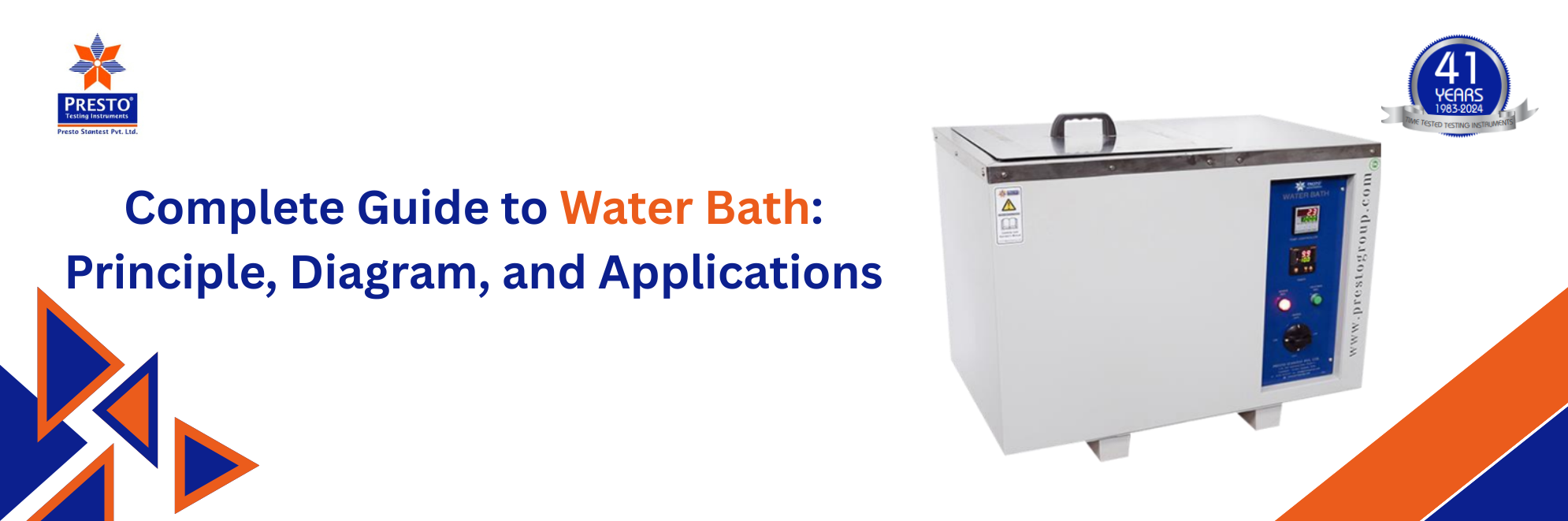
A simple hot water bath is an insulated tank filled with hot water, and a simple Water Bath Diagram illustrates the tank with a heating element installed at the bottom or on the inner walls. The removable lid, which minimizes heat loss and evaporation, is located above the water level. The outer body is provided with either a thermostat or a digital control panel, which is connected internally to a temperature sensor dipped into the water.
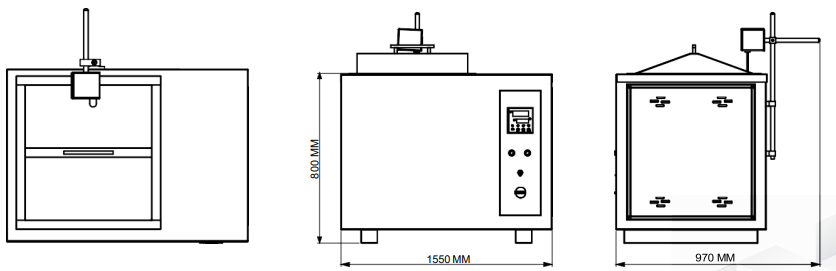
Samples are in racks or holders that hold the test tubes and flasks upright and submerged. Circulating models involve a small pump or stir pad to keep the water moving, and a drain tap at the bottom easily allows water to be removed when used.
Designed to allow even distribution of heat but without any over- or under-heating of parts in the sample, this layout is simple. The lab water baths of Presto are built on this time-tested design, except that they have heavier insulation and safer electrical connections to be used daily in laboratories.
Digital Water Bath: Features, Temperature Control, and Benefits
A Digital Water Bath has an electronic display and push-buttons in place of the manual dials, which makes it much easier to adjust and read the temperature correctly. Here, water bath digital temperature control is an excellent choice because both the temperature in the water bath and the set temperature appear on the screen; hence, no guessing is required.
Key benefits of a Water Bath Digital unit include:
- Precise temperature setting, often accurate to a fraction of a degree
- Easy-to-read display for set and actual readings
- Safety alarms for overheating or low water level
- Automatic shut-off timers.
- Increased consistency between experiments.
Due to this precision, digital models are common in pharmaceutical tests, food quality tests, and research laboratories where the outcome must remain the same. The most common factor labs consider when replacing an older analog unit is reliable digital temperature control in the water bath.
How to Use a Laboratory Water Bath: Operating Procedure and Best Practices
Proper Use of a laboratory water bath can save your samples and equipment.
The following are easy steps:
- Fill the tank with distilled water so that minerals do not accumulate on the heater.
- Make sure that the heating element is completely covered with water.
- Turn on the power and adjust the necessary temperature.
- Allow the water to stabilize at the desired temperature, then add the samples.
- Put samples in a rack, completely submerged, and close the lid.
- Supervise the screen while it is running.
- Use, turn off, empty the water, and dry the tank.
- Clean weekly to prevent algae or mineral deposits.
Strict adherence to a work-safety guide in the use of a laboratory heater, e.g., should never fill the bath full, should unplug without draining, etc., prevents accidents and prolongs the life of the equipment.
Applications of Water Bath Across Different Industries
The uses of a water bath go far beyond a single type of lab. These are the key industries in which it is involved:
- Microbiology and Life Sciences: Culturing and incubating either bacterial or cell cultures at body temperature.
- Pharmaceuticals: Conducting warm ointments, running drug dissolution and stability tests.
- Chemistry: Running reactions that require low, constant temperature without an open flame.
- Food Testing: Determining moisture content, thawing, and quality tests.
- Clinical Labs: Warming of blood samples and reagents used in diagnostic tests, as described in this summary of biomedical instrumentation.
- Environmental Testing: Sample preparation for water and soil analysis.
This variety of applications explains why a water bath is one of the central pieces of equipment, accompanied by tools such as incubators, centrifuges, and ovens.
How to Choose the Right Water Bath for Your Laboratory
The choice of water bath is dependent on a couple of practical factors:
- Temperature range: Most water baths can be used near 99.9 °C. An oil bath is better suited to higher temperatures.
- Precision: Select a digital model for applications that need tight, repeatable control.
- Sample volume: Adjust the tank size to match the volume of samples you handle each day.
- Circulation: Go for a circulating type if uniform heating is critical.
- Safety features: Enquire about low-water cut-off, overheat protection, and alarms.
Presto sells lab water baths designed to be accurate, durable, and suitable for daily laboratory use. Visit the Presto Group website and test out the entire line of testing and lab equipment.
FAQs
Q1. What is the use of a water bath?
Ans: To warm, heat, or incubate samples at a constant temperature without flame contact.
Q2. What is the working principle of a water bath?
Ans: Indirect heat transfer - The warmed water is used to warm the sample in an even and gentle manner.
Q3. What is the difference between an analog and a digital water bath?
Ans: In the analog type of bath, the dial is used; in the digital type, the exact temperature of the bath can be displayed on a display screen.
Q4. Which temperature span does a water bath have?
Ans: Water baths operating in most laboratories are generally safe up to 99.9 °C.
Q5. How often should a water bath be cleaned?
Ans: Once a week, the water should be changed regularly to avoid the accumulation of minerals and the growth of microorganisms.
Looking for the Right Water Bath for Your Lab?
Need a water bath that actually holds its temperature steady, batch after batch? At Presto Stantest, we build water baths for labs that can't afford drift — research setups, pharma QC, food testing, you name it. If you're not sure which model fits your workflow, just call us and we'll walk you through it.
Phone: +91 9210 903 903
Mail: info@prestogroup.com
Reliable heating, simple controls, and a team that actually knows lab equipment.
Recent Blogs
- What is MFI (Melt Flow Index)? Full Form, Formula, Benefits, Limitations, and Industrial Testing Applications
- Industrial Leak Testing: Methods, Technologies, Benefits, and Industry Applications
- Autoclave in Laboratories and Industry: Principle, Procedure, Components, and Applications
- What is a Water Bath? How It Works, Types, Applications, and Diagram
- What is Adhesion Test? Standards, Methods and Industrial Applications
Related Blogs
Complete Guide to Water Bath: Principle, Diagram, and Applications